DRM Systems Around the World – How the Major Players Actually Stack Up
A streaming platform, an ebook retailer, and a game publisher are all solving a similar underlying problem, but they are almost never using the same tools to do it.
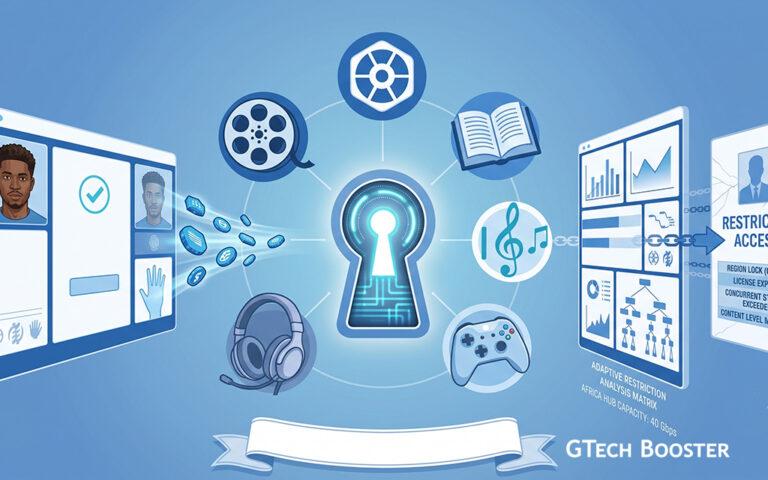
Digital Rights Management is not one single technology, it is a patchwork of competing systems, each built by a different company, targeting a different ecosystem, and offering a genuinely different balance of security, compatibility, and cost. A streaming platform, an ebook retailer, and a game publisher are all solving a similar underlying problem, but they are almost never using the same tools to do it. This article lines up the major DRM systems actually in use across the planet today, video, gaming, and ebooks specifically, and compares how they actually perform against one another in practice.
Video Streaming DRM: The Popular Three
Video streaming is where DRM competition is most direct, because nearly every major streaming service has to support more than one of these systems simultaneously just to reach its full audience. Three systems dominate this space entirely: Google’s Widevine, Apple’s FairPlay, and Microsoft’s PlayReady.
Widevine (Google)
Widevine is the most widely deployed video DRM system in the world, built into Android, every Chromium-based browser including Chrome and Edge, Fire TV, Roku, and the majority of smart TVs sold globally. Its reach alone makes it close to mandatory for any streaming service seeking genuinely broad global coverage.
Widevine operates across three security levels. L1 performs both decryption and video rendering entirely inside a hardware-based Trusted Execution Environment, and this hardware-backed tier is what studios require for HD and 4K UHD content under their licensing terms. L2 decrypts content securely in hardware but hands rendering off to software, a middle tier used less commonly in practice. L3 is pure software, with no hardware security backing it at all, and is generally capped at standard definition resolution as a direct consequence, a restriction that is a contractual and licensing decision rather than a strict technical limitation. A meaningful practical wrinkle here is that most consumer desktop and laptop computers, including desktop Chrome, typically only qualify for L3 because they lack the required Trusted Execution Environment hardware, meaning even a fully paid, legitimate subscriber on a regular laptop is often technically capped below the resolution the same service delivers to their phone or smart TV.
FairPlay (Apple)
FairPlay Streaming is Apple’s proprietary system, and it is exclusive to Apple’s own ecosystem, iOS, iPadOS, macOS Safari specifically, and Apple TV. It cannot be used on any non-Apple device or browser, including Chrome running on a Mac. FairPlay uses AES-128 encryption in CBCS mode, and on modern Apple hardware equipped with Apple’s Secure Enclave, it delivers hardware-enforced key protection considered roughly equivalent in strength to Widevine’s top L1 tier. Apple controls certificate issuance directly, giving it tighter centralized control over the entire ecosystem than either of its competitors maintains over theirs.
PlayReady (Microsoft)
PlayReady, active since 2007 as the successor to the earlier Windows Media DRM, is required for Xbox and native Windows playback, and it is also widely built into smart TVs from Samsung, LG, and other major manufacturers, making it a genuinely necessary third leg for any streaming service that wants full smart TV coverage. PlayReady uses its own tiered security model, running from SL3000, its hardware-backed tier roughly comparable to Widevine L1, down through SL2000, its software-only tier.
How the three actually compare
The honest technical answer is that these three systems are far more similar than different in their underlying security architecture. All three use AES-128 encryption, all three offer a hardware-backed tier that unlocks HD and 4K playback and a software-only tier that gets capped at lower resolution, and all three are considered adequate by major Hollywood studios for premium content when properly implemented at their top security tier. The meaningful difference between them is not security strength, it is reach. No single one of the three covers the whole device landscape: Apple devices accept only FairPlay, Xbox accepts only PlayReady, and a genuinely complete streaming service therefore has no choice but to implement and maintain all three simultaneously, an ongoing engineering and licensing cost that smaller platforms often struggle to justify compared to the two dominant global players, Google and Apple, whose ecosystems already cover the bulk of the world’s devices between them.
Gaming DRM: A Genuinely Different Arms Race
Gaming DRM has followed a much more adversarial, publicly visible trajectory than video streaming DRM, largely because game files themselves, unlike a streamed video signal, generally have to be fully present and executable on the end user’s own machine, giving attackers a much larger and more accessible attack surface to work against.
Denuvo: the industry’s most infamous anti-tamper system
Denuvo Anti-Tamper became, for roughly a decade, the industry’s most widely deployed and most controversial PC game protection system, adopted specifically to protect the commercially critical launch window when the overwhelming majority of a game’s sales typically occur. Independent academic research examining 86 Denuvo-protected Steam games released between 2014 and 2022 found that Denuvo protected a mean of roughly 15 percent, and a median of roughly 20 percent, of a game’s total revenue from piracy displacement, but that this protective effect collapsed to essentially zero once a game survived roughly twelve weeks post-launch without being cracked, indicating Denuvo’s real economic value was almost entirely concentrated in that early window rather than functioning as meaningful long-term protection.
That already narrow value proposition collapsed further and more dramatically during 2026. Following a hypervisor-based bypass technique first demonstrated against Persona 5 Royal in late 2025 and subsequently refined and scaled up by cracking groups, pirates were bypassing new Denuvo-protected releases, including titles like Resident Evil: Requiem, within roughly an hour of launch by early 2026. By late April 2026, piracy communities were publicly declaring that no non-VR Denuvo-protected game remained uncracked, a claim significant enough that multiple technology publications ran headlines describing Denuvo as having effectively lost the DRM war it had waged for over a decade. Notably, the technique does not remove or defeat Denuvo’s code directly, it installs a custom hypervisor running beneath the operating system itself that feeds Denuvo’s hardware identification checks false information, tricking the protection into believing it is running on a legitimately licensed machine. In response, some publishers, including 2K Games, have begun layering in additional, separate protections such as forced online authentication checks every fourteen days, even for entirely single-player titles, a workaround widely criticized as burdening legitimate paying customers far more than it burdens the pirates it is nominally meant to stop.
Valve’s Steamworks DRM
Steam’s own built-in DRM, bundled into its Steamworks development platform, is used by a large share of PC game publishers, though notably it is entirely optional, and a meaningful and growing number of publishers choose to ship their games on Steam completely DRM-free. Steamworks DRM is generally considered less aggressive and less invasive than Denuvo, and correspondingly, it has never carried the same reputation for either strong anti-piracy performance or for the kind of intrusive performance complaints leveled against Denuvo.
The honest state of gaming DRM today
Gaming DRM’s central lesson, reinforced dramatically by 2026’s events, is that no PC-based anti-tamper system has proven durably uncrackable against a sufficiently motivated, well-resourced piracy community over any meaningful stretch of time. Even Denuvo, widely regarded for most of its history as the most sophisticated and expensive option on the market, ultimately fell to a systematic bypass technique applicable across essentially its entire protected catalog. This has left publishers in a genuinely difficult position: layering on more aggressive protections, such as recurring online authentication, treats every paying customer as a suspect while pirates, working around a fully cracked or bypassed copy, frequently experience a smoother, less encumbered version of the same game.
Ebook DRM: A Single Dominant Walled Garden
Ebook DRM looks less like a genuine multi-vendor competition and more like one dominant proprietary system surrounded by a handful of smaller, more open alternatives.
Amazon’s Kindle DRM
Amazon’s Kindle ecosystem uses its own proprietary DRM system, and it remains the dominant force in the ebook market by a wide margin. Books purchased through the Kindle store are generally locked to Amazon’s own reading apps and devices, and cannot be read on a non-Amazon e-reader or app without additional, often technically involved conversion steps. This tight ecosystem lock-in has drawn sustained criticism specifically because it ties a customer’s entire purchased library to a single retailer indefinitely, a meaningfully different, more restrictive proposition than the video DRM landscape, where at least multiple competing systems exist side by side across an open field of competing hardware manufacturers.
Adobe Digital Editions and EPUB-based DRM
Outside Amazon’s own ecosystem, a large share of the broader ebook market, particularly library ebook lending services and many non-Amazon retailers, relies on Adobe’s DRM system layered on top of the open EPUB file format. This approach is meaningfully more interoperable than Kindle’s proprietary system, since it works across a wider range of compatible reading apps and devices rather than being locked to a single retailer’s own hardware and software.
DRM-free as a genuine, growing alternative
Ebooks are also where the DRM-free movement has gained real, concrete commercial traction. A number of publishers and independent authors sell titles entirely without DRM, betting that removing the restriction improves customer goodwill and cross-device flexibility more than it meaningfully increases piracy, a calculation broadly similar to the one that led the major recorded music industry to abandon DRM on purchased downloadable tracks back in 2009.
Beyond the Popular Three: HarmonyOS, Tizen, and the Smaller Platforms
The video DRM landscape does not stop at Widevine, FairPlay, and PlayReady. A second tier of platforms, some backed by major manufacturers and some run by small, independent communities, reveals just how much device support still depends on which company controls the underlying operating system.
HarmonyOS and WisePlay (Huawei)
Huawei’s HarmonyOS ecosystem, having moved away from Android compatibility entirely with HarmonyOS NEXT, brought its own proprietary video DRM system along with it: WisePlay DRM. As Huawei’s device footprint has grown, particularly across Asia, Eastern Europe, and Latin America, WisePlay has become a genuine fourth system that streaming platforms increasingly have to account for alongside the traditional big three, supported through the same kind of cloud licensing infrastructure vendors already use for Widevine, FairPlay, and PlayReady. This mirrors, in the video DRM space specifically, the same broader pattern discussed elsewhere regarding HarmonyOS: a major manufacturer deliberately building its own closed, self-controlled ecosystem layer rather than relying on Google’s infrastructure, extending from app distribution and services all the way down into content protection itself.
Tizen (Samsung)
Unlike Huawei, Samsung did not build its own proprietary DRM system for Tizen, the platform that runs the majority of its smart TVs. Instead, Tizen natively supports the two dominant hardware-backed systems directly, PlayReady and Widevine, alongside Verimatrix, through Samsung’s own AVPlay API. Samsung’s approach here reflects Tizen’s overall strategy, discussed elsewhere as quietly powering an enormous share of the global smart TV market without trying to compete head-on for control of the underlying protection technology itself, instead simply supporting whichever systems the content industry already uses. In practice, this has still produced real fragmentation on the ground: PlayReady support varies by TV model year, ranging from version 1.2 on 2012 to 2013 models up through version 3.3 on 2018 and later sets, and Widevine implementation has shifted from the older Widevine Classic on pre-2017 models to Widevine Modular since, creating a genuinely uneven compatibility picture across the installed base of Tizen TVs still in active use, one that streaming platform engineering teams have to test against directly rather than assuming uniform behavior across every Tizen device in the field.
Sailfish OS, Ubuntu Touch, and the smaller Linux-based platforms
The smaller, community-driven mobile Linux platforms discussed elsewhere for their approach to bloatware, Sailfish OS and Ubuntu Touch, reveal DRM’s least forgiving edge case. Because Widevine and the other major DRM systems are proprietary, closed-source components that must be specifically licensed, certified, and integrated by a device manufacturer, platforms without a major commercial backer generally cannot offer native, fully functional DRM support at all. Sailfish OS users have documented Android compatibility layer crashes specifically tied to Widevine DRM calls, since the underlying Widevine components ship as part of Google Play Services, itself absent from a platform deliberately built outside Google’s ecosystem. The practical workarounds available to users on these platforms mirror the same ones available to ordinary desktop Linux users generally: manually installing a Widevine Content Decryption Module inside a browser, capped permanently at the lowest L3 software-only security tier since there is no vendor-certified hardware trust chain behind it, or running a full Android compatibility container such as Waydroid specifically to extract and load Widevine components originally built for ChromeOS or Windows Subsystem for Android. Even when these workarounds succeed, playback typically remains capped at standard definition or 720p at best, with no path to full HD, 4K, or HDR streaming, since those tiers require the hardware-backed L1 certification these platforms have no realistic way to obtain without a manufacturer-level commercial licensing relationship with Google, the same kind of relationship neither Sailfish OS’s nor Ubuntu Touch’s small, community-driven backers have ever had reason or resources to pursue.
What this second tier actually shows
Looking at HarmonyOS, Tizen, and the smaller Linux-based platforms together alongside the original big three reveals a consistent underlying pattern: DRM support tracks commercial backing almost perfectly. A manufacturer with the scale and resources to either build its own proprietary system, as Huawei did with WisePlay, or to properly license and integrate the existing major systems, as Samsung did across Tizen, ends up with a functional, if sometimes fragmented, path to premium streaming content. A platform without that kind of backing, however technically capable the underlying operating system may otherwise be, ends up structurally locked out of the higher tiers of video DRM entirely, not due to any deliberate hostility from the DRM vendors, but simply because the certification and licensing infrastructure these systems depend on was never built with community-run, non-commercial platforms in mind.
Looking across video, gaming, and ebooks together, a few clear patterns emerge about how DRM performs differently depending on what it is actually protecting.
Video DRM is the most technically mature and the most genuinely effective at scale, but only on platforms with real commercial backing. Because video streaming DRM is built around continuous licensing checks and hardware-backed key management rather than a single static crack target, and because the content itself is streamed rather than delivered as a persistent file sitting on the user’s own machine, it has proven considerably more durable against piracy than gaming DRM, even though none of the major systems, Widevine, FairPlay, PlayReady, or WisePlay, are claimed by their own creators to be flawlessly unbreakable. That durability, however, is unevenly distributed: it depends entirely on a device manufacturer having the scale to either build a proprietary system or properly license the existing ones, which is precisely why Tizen and HarmonyOS reach full hardware-backed security while Sailfish OS and Ubuntu Touch remain permanently capped at software-only, standard-definition playback.
Gaming DRM has proven the least durable relative to how aggressively it has been engineered. Despite Denuvo representing, for years, the single most heavily invested, most technically sophisticated consumer anti-piracy system on the market, it ultimately suffered a near-total, catalog-wide collapse within a matter of months during 2026, a considerably worse long-term outcome than either video or ebook DRM has experienced, and one that has reopened a genuinely serious industry debate about whether aggressive anti-tamper investment is worth its cost and its impact on paying customers at all.
Ebook DRM is the least fragmented but arguably the most restrictive for customers. Rather than facing genuine multi-vendor technical competition the way video DRM does, the ebook market is dominated overwhelmingly by a single proprietary ecosystem, Amazon’s Kindle platform, making the practical customer experience less about choosing between competing technical approaches and more about accepting a single company’s specific ecosystem lock-in as the price of admission to the largest available ebook catalog.
Platform backing, not technical merit, is the single biggest predictor of DRM access. Comparing the major streaming systems against HarmonyOS’s WisePlay, Tizen’s multi-vendor support, and the effectively locked-out position of Sailfish OS and Ubuntu Touch makes this pattern impossible to miss: whether a platform gets full, hardware-backed access to premium video content has far more to do with whether its maker has the commercial scale to negotiate and certify that access than with any actual difference in the platform’s underlying technical capability.
Wrapping Up
There is no single “best” DRM system in any absolute sense, because each of these systems is solving a differently shaped problem under different constraints. Video streaming DRM has achieved genuine, durable, multi-decade effectiveness by leaning on continuous server-side licensing and hardware-backed key management rather than static, crackable code, though that effectiveness is only ever as strong as the commercial relationship backing a given platform, as the gap between Tizen and HarmonyOS on one side and Sailfish OS and Ubuntu Touch on the other makes clear. Gaming DRM, by contrast, has repeatedly proven that even the most aggressively engineered anti-tamper systems eventually fall to a sufficiently motivated piracy community, a lesson 2026’s dramatic, near-total collapse of Denuvo drove home more forcefully than a decade of smaller individual cracks ever had. And ebook DRM remains less a story of competing technical systems and more a story of ecosystem lock-in, dominated overwhelmingly by a single retailer’s proprietary approach. Understanding these systems side by side, across every major platform rather than just the three most commonly discussed ones, gives a far more accurate picture of where digital rights management genuinely succeeds at protecting content today, and where, despite years of investment, it demonstrably does not.
More Information ℹ


















Conversation
Login to comment.
Log In / Register