Solar + EV + Smart Home: The Energy-Independent Household
Learn how solar panels, an electric vehicle and a smart home system work together to cut power bills, survive outages and free your household from the grid.
What energy independence really means
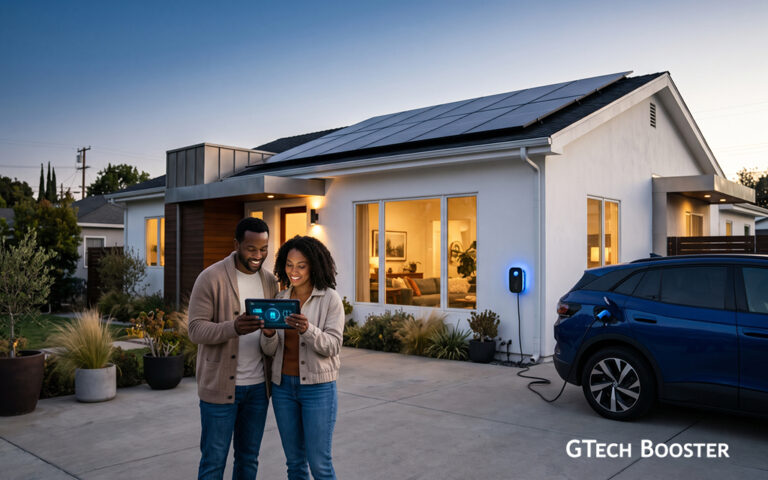
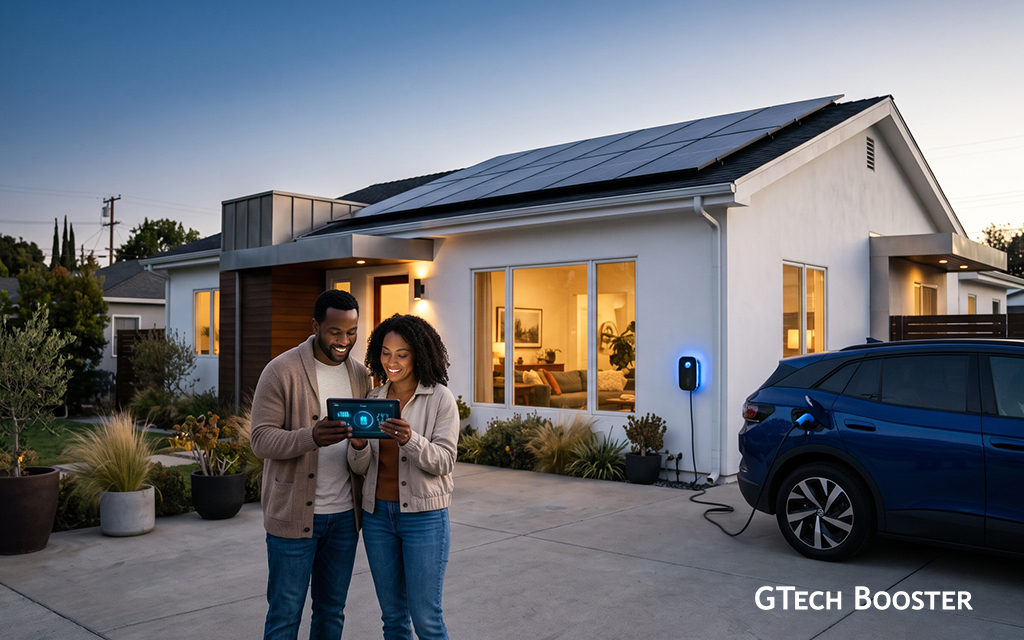
Energy independence does not have to mean living in a cabin with no utility connection. For most households it means producing a large share of the electricity you use, storing it for when you need it, and controlling when and where it is spent. Three technologies make this realistic today: rooftop solar, an electric vehicle and a smart home system that coordinates the two. Each is useful alone. Together they form a loop in which the sun powers the house and the car, the car and battery cover the night, and software keeps everything running at the lowest cost. This feature explains how each piece works, how they connect, what to size and buy, and where the common mistakes are.
The three building blocks
Before looking at how the pieces connect, it helps to understand the job each one does.
Solar panels: the source
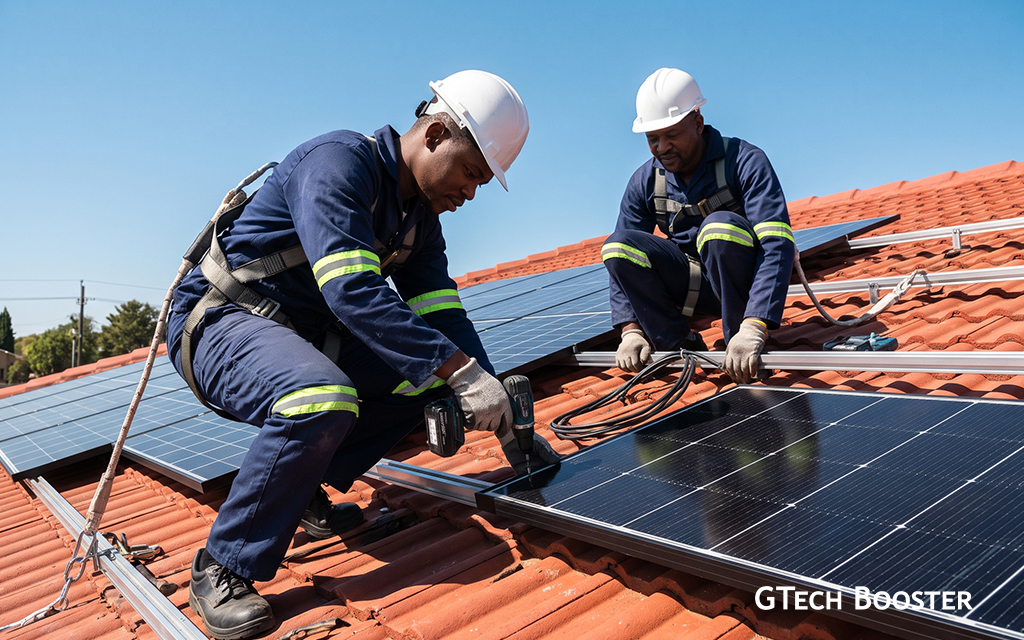
Solar panels turn sunlight into direct current electricity. A device called an inverter converts that into the alternating current your appliances use. Panels are rated in watts, and a typical modern panel is around 400 to 600 watts. A system made of several panels is described in kilowatts (kW), which is its peak power on a bright day. What matters for your bill is how many kilowatt hours (kWh) it produces over a day, and that depends on sunshine hours, panel angle, shade and dust.
The EV: a large moving battery
An electric vehicle is both a way to travel and a very large battery. Most EVs hold between 30 and 80 kWh, while a typical home battery holds 5 to 15 kWh. This means your car can store several times more energy than a household battery. The key point is that a car is usually away from home during the day, which is exactly when solar produces the most, so planning when it charges matters.
The smart home: the brain
A smart home system is the software and hardware that watches energy flows and makes decisions. It includes smart meters or current sensors, a smart charger for the car, controllable switches for heavy appliances like water heaters and air conditioners, and an app or controller that ties them together. Without it, you still have solar and an EV, but you will waste free energy or pull expensive power from the grid at the wrong times.
How the system fits together
Understanding the flow of energy is the single most important step, because every purchase decision follows from it.
The hybrid inverter and home battery
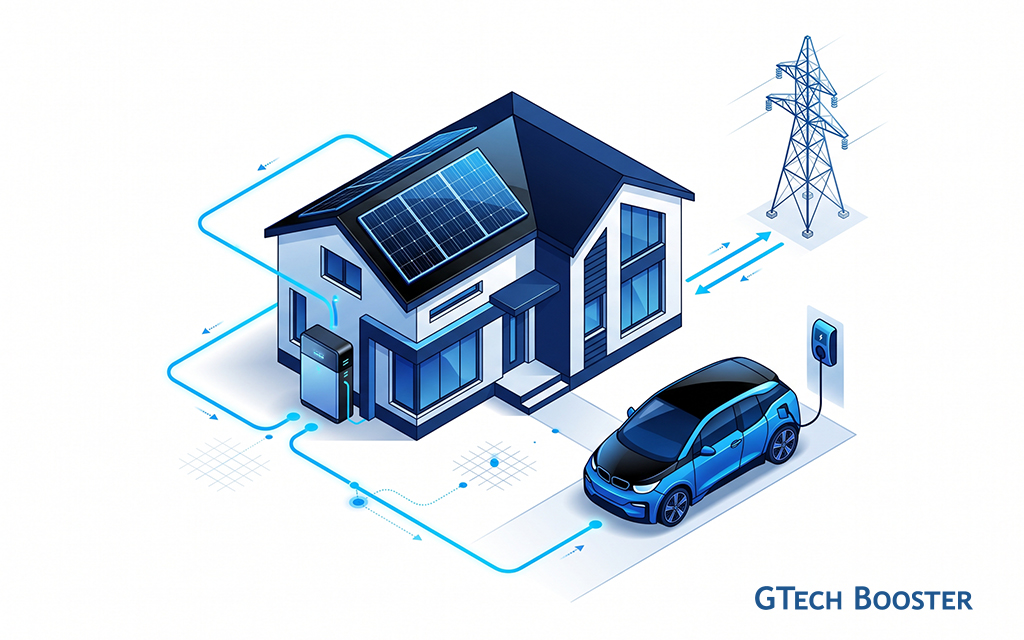
The centre of a modern setup is a hybrid inverter. It accepts power from the solar panels, from the battery and from the grid, and it decides where each unit of energy goes. Solar power first serves the house, then charges the battery, and any extra can charge the car or be exported to the grid where that is allowed. When the sun sets, the battery and the car (if it supports it) supply the house, and the grid acts as a backup.
The smart EV charger
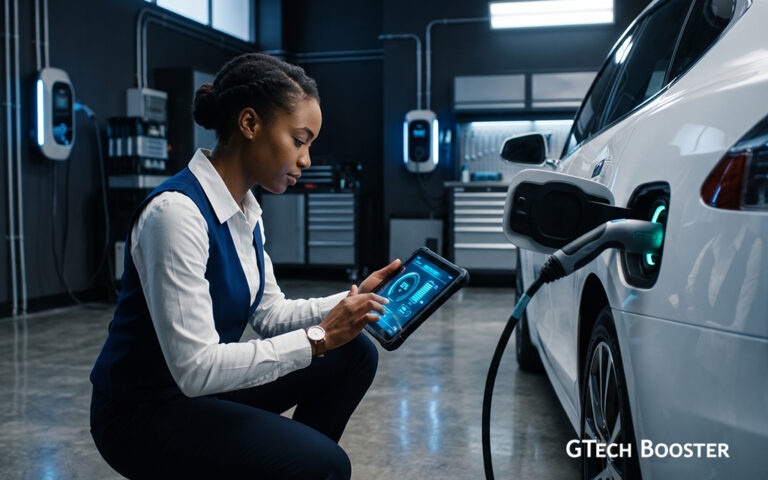
A smart charger is more than a socket. It can speed up or slow down charging depending on how much solar power is available. Many can run in a solar surplus mode, where the car charges only with energy that would otherwise be wasted or exported. This is how you fill your car mainly with free sunlight instead of paid electricity.
Vehicle to home and why it matters
Some EVs support vehicle to home (V2H) or vehicle to load (V2L) functions. With V2L, the car powers appliances through a socket on the vehicle itself. With V2H, a compatible bidirectional charger lets the car power the whole house during an outage or at night. Not every car or charger supports this, and it depends on the charging standard and on what the manufacturer allows, so check before you buy. If your car does not support it, a home battery does the same job at a smaller scale.
Smart control and automation
The software layer ties the system into routines. For example, the water heater runs at midday when solar is strong, the washing machine starts when the battery is nearly full, and the car charges only when the household load is low. A simple rule such as running heavy appliances in the middle of the day can lift your use of your own solar power dramatically without any extra equipment.

Sizing the system with a worked example
Sizing is where many people go wrong, so a clear example makes it easier. The numbers below are illustrative, and your own bills and driving habits will change them.
Step one: measure the household
Imagine a home that uses 12 kWh of electricity per day, which you can find on your utility bills or a smart meter. Most of it is used in the morning and evening, with some in the day.
Step two: add the car
Suppose the owner drives 40 km a day in a car that uses about 16 kWh per 100 km. That is roughly 6.4 kWh per day for the car. The total daily energy need becomes about 18.4 kWh.
Step three: size the solar array
If your location gets around 4.5 useful peak sun hours a day, and you allow for system losses of about 20 percent, the array should produce roughly 18.4 divided by (4.5 times 0.8), which comes to about 5.1 kW. Using 550 watt panels, that is around ten panels. A slightly larger array of 6 kW leaves room for cloudy days and future growth.
Step four: size the battery
The battery only needs to cover the hours when the sun is down. If evening and night use is around 7 kWh, a home battery of 10 kWh usable capacity covers the household comfortably. If you use the car as backup storage, you can choose a smaller battery to save money.
Step five: choose the inverter and charger
The inverter should handle your peak load, meaning the most power drawn at one moment, with room to spare. A 5 to 8 kW hybrid inverter suits many homes. A car charger of 7 kW is enough for overnight or daytime charging, and a smart model that follows solar output is worth the extra cost.
The money side
Energy independence is only attractive if the numbers make sense, so it is worth looking at both savings and upfront costs.
Where the savings come from
Savings come from three places: electricity you no longer buy, fuel you no longer burn in a petrol car, and avoided costs from outages such as generator fuel or spoiled food. In regions with high tariffs, frequent power cuts or expensive petrol, these savings add up quickly, and payback periods can be short.
Upfront costs and ways to spread them
The main costs are the panels, inverter, battery, charger, installation and the car itself. Many households do not buy everything at once. A common path is to install solar and an inverter first, add a battery next, and buy the EV when it makes financial sense. Design the inverter and wiring from day one so that each later piece plugs in without replacing what you already own.
Do not forget the hidden costs
Remember mounting hardware, cabling, protection devices, permits, and eventual battery replacement. Ask installers for a full written quote that lists every item, the warranty on each, and the expected performance of the system.
Reliability, safety and everyday living
A home that produces its own energy also takes on responsibility for how that energy is handled safely.
Surviving outages and unstable power
In places where the grid is unreliable, a hybrid inverter with a battery can switch to backup mode within a fraction of a second, so lights, fridge, internet and fans keep running. Decide in advance which circuits are essential, such as lighting, refrigeration, communication and medical equipment, and put them on a protected backup circuit. Heavy loads like electric ovens can stay off it to protect battery life.
Safety and installation quality
Solar and battery systems carry high currents and high voltages, so installation must be done by a qualified electrician or certified installer. Look for proper earthing, surge protection, correctly rated cables and circuit breakers, and fire safe placement of batteries with good ventilation. A cheap installation done badly is the most common cause of failures and fires.
Maintenance and keeping performance high
Panels need cleaning, especially in dusty or sandy areas, because a layer of dust can reduce output noticeably. Check the system’s app regularly. A sudden drop in production, compared with similar sunny days, is a sign that something needs attention. Keep the firmware of your inverter, charger and battery up to date.
Common mistakes to avoid
Most disappointments come from a handful of avoidable errors, and knowing them in advance saves money and frustration.
Buying parts that do not talk to each other
Panels, inverters, batteries and chargers must be compatible in voltage, communication protocol and brand approvals. Ask installers to confirm that your chosen battery and charger work with your inverter, and that the smart system can actually read data from all of them.
Oversizing or undersizing
Too small a system leaves you reliant on the grid and generator, while too large a system wastes money on energy you cannot store or sell. Use your actual usage data, not guesses, and allow for future needs such as a second car or air conditioning.
Ignoring grid rules
Some utilities require approval for solar connections, limit exports, or have specific metering rules. Check the local requirements before installing, so you do not end up with a system you are not allowed to switch on.

A practical path to start
You do not need to transform your home in a weekend. A sensible order helps you learn as you go and spread the cost.
Start with data
Record your electricity use for a month, note when you use the most, and estimate your driving distance. This gives you the numbers needed for accurate sizing.
Build in stages
Begin with solar and a hybrid inverter, add a battery when your budget allows, then add a smart charger and an EV. Make the smart controls the final layer, tying everything together once the hardware is in place.
Review and refine
After a few months, look at your app. See how much solar you used directly, how much you bought from the grid and when. Small adjustments to appliance timing and charging schedules often deliver the biggest gains.
Final thoughts
An energy-independent household is built from three ideas working together: generate your own power, store it smartly, and use it intelligently. Solar provides the energy, the EV and home battery provide the storage, and the smart home provides the decisions. Start with your real usage, size each part with care, insist on quality installation and build step by step. The result is a home that costs less to run, keeps working when the grid does not and gives you control over one of your largest ongoing expenses.







Conversation
Login to comment.
Log In / Register