When Open Worlds Meet Online Role-Playing – Shared Cities, Streamers and Platform Owners
When open world games meet online role-playing, shared cities, streamers and platform owners reshape play. A detailed look at GTA roleplay, FiveM, MMO-lite games, the business and design tensions, and what it means for Africa.
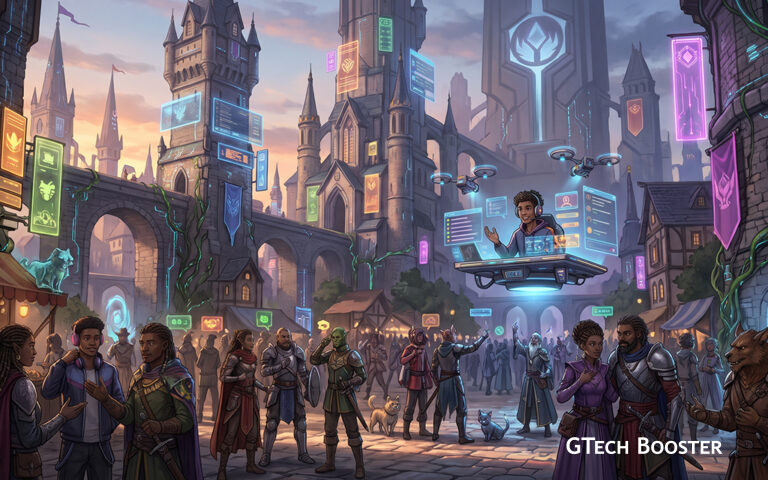
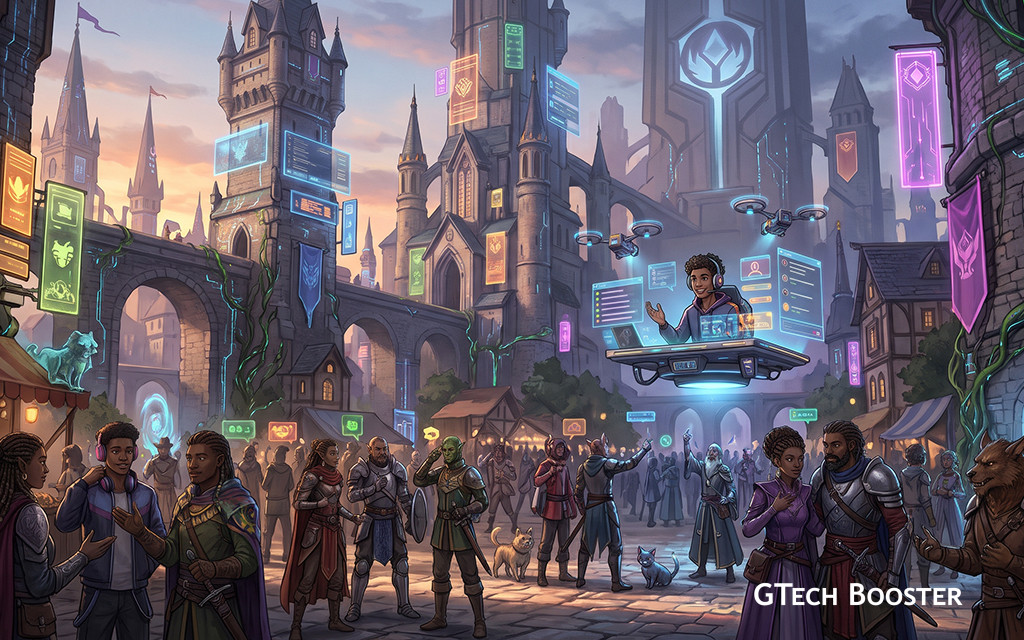
Imagine a city that never closes. Its streets have traffic, its shops have owners, its hospital has a night shift and its police station has a duty roster. Nobody wrote the story of any evening in that city in advance. A mechanic haggles over a repair bill, a rookie officer makes a nervous arrest, a street vendor tries to start a business, and an argument in a car park turns into a three week feud that thousands of strangers follow on a live stream. Every person in the city is a real human being performing a character, and the city itself is a video game. This is what happens when two long running ideas in games meet: the open world, a large, persistent and explorable game space, and online role-playing, in which many people share a fiction and play parts inside it.
The meeting has produced some of the most watched content on live streaming platforms, has caused one of the world’s biggest game publishers to change its stance on community modifications, and has influenced how new games are designed and sold. In November 2026 it also reached a notable moment, because Grand Theft Auto VI, the most anticipated open world game of the decade, arrived while the roleplay communities of its predecessor were more active and more commercially important than ever. This article explains the subject in depth. It defines the key ideas, traces the history, examines how open worlds and role-playing fit and clash, analyses the business and legal tensions between platform owners and communities, looks at the state of online role-playing games in 2026, considers what all this means for Africa, where games are played mostly on phones and data is costly, and offers practical advice for players, community builders, developers and parents. It is written for gamers, designers, students and curious readers, and every term is explained when it first appears. Release dates, policies and figures in this fast moving area change often, so check official sources before relying on any detail.
Two ideas that are easy to confuse
The word role-playing is used in two different senses, and the whole subject becomes clearer once they are separated. The first sense is mechanical. A role-playing game, or RPG, is a genre in which a character has attributes, skills, equipment and levels that grow over time. In this sense, the player manages numbers and makes choices that change them. Many RPGs are single player, and the characters in them are authored by designers. The second sense is theatrical. Roleplay, in the sense used by online communities, means acting as a character: speaking in character, making decisions as that person would, and treating the shared world as if it were real. In this sense, the player is an improviser, and the story is whatever the participants make of it. Online role-playing games, a term that covers the massively multiplayer online role-playing games known as MMORPGs, usually combine both senses to varying degrees, but the communities that call themselves roleplay communities care mostly about the second.
The open world is a design idea about space and freedom. An open world game offers a large environment that players can explore in largely any order, with activities scattered throughout it, instead of a sequence of separate levels. Some open worlds are heavily authored, with missions, characters and scripted events, and some are sandboxes in which players make their own goals. Persistence, meaning that the world continues to exist and change, is a related idea. When the open world is shared among many players, and when those players adopt characters and keep to a fiction, you get what this article calls the meeting of open worlds and online role-playing.
A short history
The roots go back to the late 1990s. Ultima Online, released in 1997, was one of the first graphical online worlds in which thousands of people shared a persistent space with player economies, houses and player versus player conflict, and its players developed their own social orders, including crafters, merchants and outlaws. EverQuest and later World of Warcraft, released in 2004, brought the MMORPG to the mass market, with large shared worlds built around quests, classes and group content. Within these games, roleplay communities formed on special servers with rules that required players to stay in character. Other online spaces, such as Second Life, offered open ended virtual worlds in which people built and acted as they pleased.
A second line of development came from modifications of single player and sandbox games. Community modders turned military simulation and sandbox titles into role-playing platforms: servers for Garry’s Mod hosted social and criminal roleplay modes, and mods for games such as Arma and DayZ created survival and life simulations. When Rockstar’s Grand Theft Auto V reached PC and its online mode, GTA Online, launched on 1 October 2013, a vast, detailed open city of Los Santos became a candidate for the same treatment. The multiplayer modification FiveM, which allowed community run servers with custom rules, scripts and content, emerged around 2015, and Take-Two, Rockstar’s parent company, initially fought it, according to PC Gamer’s account of how Rockstar later bought the makers of the mod it had banned eight years earlier. Over the years the FiveM scene grew into a culture of its own, with servers that required applications, enforced rules about staying in character and ran complex economies, jobs and law systems. The same story repeated on a smaller scale with Red Dead Redemption 2 and its RedM platform, with Minecraft servers and with Roblox, where roleplay games set in towns, schools and families are among the platform’s biggest draws.
How an open world becomes a stage
Why does a game like Grand Theft Auto, designed as a crime story, work so well as a stage for roleplay? The answer lies in what the open world provides and what the community adds.
The open world provides setting and systems. A detailed city has roads, buildings, vehicles, weather, day and night, and a physics model that makes actions feel consequential. It already contains the visual language of roles: police cars, ambulances, taxis, shops, gangs. Players do not need to imagine a city; they inhabit one.
The community adds structure. Roleplay servers usually require players to create a character with a name, a background and a job, and to speak and act as that person. They publish rules, often including prohibitions on acting on information the character could not know, known as metagaming, on forcing outcomes onto other players, known as powergaming, and on ignoring danger as a real person would not, a rule about taking threats seriously in character. They separate in character talk from out of character talk, usually shortened to IC and OOC. Many require applications or whitelists, so that only players who understand and accept the rules can join. Around these rules, communities build scripts and systems that the base game lacks: realistic jobs, businesses, housing, medical treatment, courts, banking and inventories. A mechanic can own a shop, a taxi driver can have regular customers, a doctor can treat a patient with a script that models injuries, and a police department can operate a rank structure. The result is a social simulation in which the open world is the scenery and the people are the plot.
Voice and proximity are crucial. In many roleplay servers, players speak to each other with microphones, and volume depends on distance, so that conversations happen naturally and eavesdropping is possible. This produces comedy, drama and improvisation of a kind that scripted games cannot offer, because the other characters are not designed to follow a script.
The role of streaming
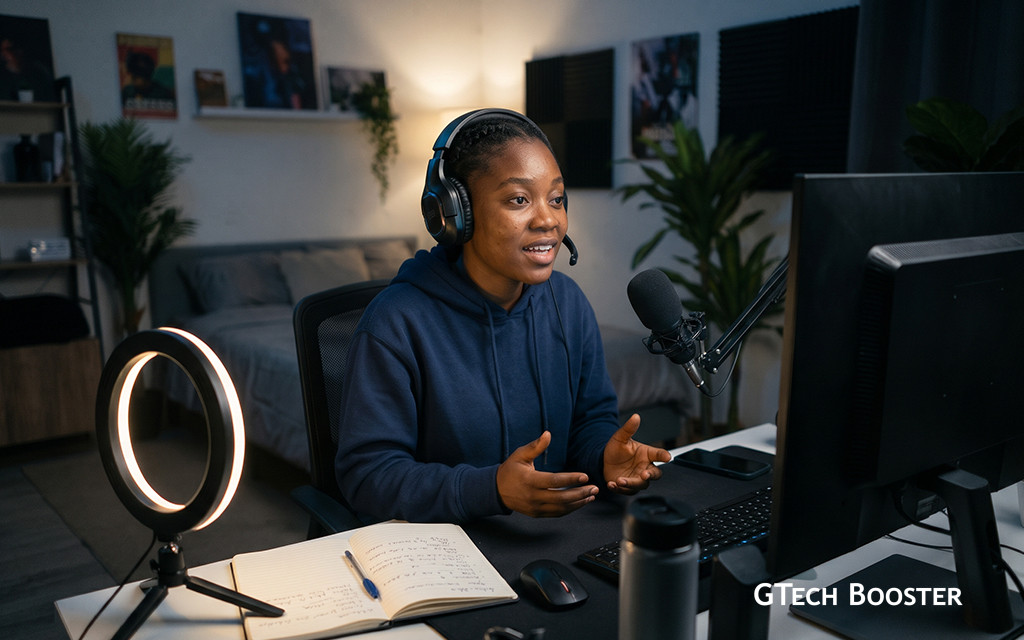
The most distinctive feature of the roleplay boom is its relationship with live streaming. Roleplay servers are watchable in a way that most competitive games are not, because they generate stories. A viewer can follow a character across weeks, learn the relationships and feuds, and see events from several streamers’ points of view, as different participants broadcast the same incident from their own perspectives. Well known streamers brought the scene to wide audiences. One account says that servers became popular with Twitch streamers such as xQc, who increased FiveM’s popularity through his millions of viewers, and a description of NoPixel, the marquee name in GTA roleplay, calls it a FiveM powered scene where a good storyline can pull tens of thousands of Twitch viewers. PC Gamer reported in 2023 that FiveM had peaked at nearly 270,000 concurrent players in February 2023, almost double the number of people playing unmodded GTA V.
Streaming changes the economics. Players are performers as well as participants, and communities can generate attention that no marketing budget could buy. It also creates tensions. Some roleplayers and server owners worry that performing for an audience distorts play, as when a character stages events for viewers, and communities develop rules about streaming, such as delays to prevent viewers from using stream information to find players, a practice known as stream sniping. The relationship between streamers, communities and viewers has become a significant part of the culture and the business.
The platform owner’s dilemma: from tolerance to ownership
For a company that owns an open world game, community roleplay creates an awkward combination of benefits and risks. The benefits are large. A thriving roleplay scene extends the life of an old game, keeps players buying and spending, and provides free publicity through streams. One commentator put it plainly: roleplay keeps GTA V and GTA Online’s cash economy relevant and earning years past their prime, and NoPixel topping Twitch’s charts is free marketing that money cannot buy. The risks are also real: loss of control over the brand and the player experience, intellectual property disputes, unlicensed commercial activity such as selling in game advantages for real money, content that does not match the company’s standards, and competition with the company’s own online mode.
Rockstar and Take-Two’s approach has moved through three phases. In the first, which lasted years, they treated modding with suspicion and occasionally with legal action. In the second, they negotiated. Take-Two reached an agreement in 2022 with the FiveM creators and updated its policy to allow the mod to continue provided it was non commercial, did not infringe intellectual property and did not violate other policy, according to one report. In the third phase, they took ownership. On 11 August 2023, Rockstar announced that Cfx.re, the team behind FiveM and RedM, was now officially part of Rockstar Games, saying in its post that it had recently expanded its policy on mods to include those made by the roleplay creative community, and that the daily work of the team on GTA V and Red Dead Redemption 2 would remain unchanged. The Cfx.re team asked fans not to question them about the next Grand Theft Auto, saying the partnership was focused on FiveM and RedM.
The ownership phase continued. A report says that Rockstar launched an official mod shop for GTA Online, with the Cfx Marketplace arriving three years after the 2023 acquisition, and that an unofficial multiplayer platform, alt:V, would begin a structured shutdown in 2026 at Take-Two’s request, following an update of the platform licence agreement. In September 2025, Rockstar wrote that it was excited to support the team at NoPixel as they created the future of GTA roleplay, with an official evolution called nopixel V. A September 2026 report states that Rockstar began supporting its launch through the Rockstar Games Launcher, with an invite only closed beta, and with Twitch Drops giving viewers up to 1.5 million dollars of GTA Online in game currency, while the existing NoPixel servers stayed online. One analyst’s reading, posted publicly, was that Rockstar owns FiveM, controls the distribution of nopixel V and can connect activity there back to GTA Online, which shows how an ecosystem that began as a community modification has become part of the publisher’s own platform.
This trajectory poses a question that matters beyond Rockstar. When a community builds something valuable on top of a company’s world, who owns the result, and what happens to the community’s independence when the company absorbs its infrastructure? Supporters of the new arrangement point to official support, legal certainty, better tools, a marketplace where creators can earn money, and protection from sudden shutdowns. Sceptics, including many in modding communities, see enclosure: a once open, tolerated space becoming a managed product, with the owner able to set terms, close rival platforms and decide which servers receive favour. Both views are legitimate, and the evidence so far shows elements of each.
November 2026: Grand Theft Auto VI arrives
Into this landscape came Grand Theft Auto VI. Multiple reports state that it launched on 19 November 2026 on PlayStation 5 and Xbox Series X and S, after a delay announced in November 2025 from an earlier date of 26 May 2026, and that its US launch price was 79.99 dollars. According to these reports, which come mostly from game news and server hosting sites, it launched as a single player experience, with no online mode, no announced PC version, no official roleplay servers and no announced mod support or community servers. As of 21 November 2026, Rockstar had not announced a GTA VI online mode, and the Cfx.re partnership remained focused on FiveM and RedM, which run on GTA V on PC. Some outlets have reported, from unnamed sources, a possible PC release in 2027, which Rockstar has not confirmed. Take-Two has said that GTA Online will continue to be supported after GTA VI’s launch.
The significance for roleplay is therefore subtle. The biggest open world game of the era is out, and yet the roleplay communities remain on the previous game, because the tools and the platform for community run servers exist only for GTA V on PC. This creates a strange situation: the older game’s roleplay scene is more official than ever, with a publisher owned platform, a marketplace and an officially backed flagship server, while the new game has no announced route for roleplay at all. Many server operators continue to build on GTA V, expecting a long wait, and commentators note that previous Grand Theft Auto games saw PC versions arrive a year or more after the console release. What Rockstar does next, whether it adds an online mode, designs roleplay support into GTA VI from the start, or leaves roleplay on the older game, will be one of the most closely watched decisions in the genre. At the time of writing, nobody outside the company knows, and any claim about it should be treated as speculation.
The state of online role-playing games in 2026
Meanwhile the traditional online role-playing genre is changing. Industry commentators describe the MMORPG market in 2026 as relatively weak compared with its heyday, with a handful of large games and some smaller titles that struggle to keep a healthy player base. One German outlet called 2025 possibly the worst MMORPG year of all time, citing the end of new development for several projects and the announcement that Amazon’s New World was switching to maintenance mode. At the same time, long running games continue to serve their audiences. World of Warcraft’s Midnight expansion, scheduled for March 2026 according to a preview, adds player housing, a feature that appeals to roleplayers. Final Fantasy XIV is described as one of the most respected games in the genre, The Elder Scrolls Online blends traditional MMO systems with the open world style of its parent series, and Albion Online serves a niche with a classless system and an economy driven almost entirely by players. Projects such as Ashes of Creation, which entered Steam early access on 11 December 2025, and Raph Koster’s Stars Reach, which was testing a player city system reminiscent of Star Wars Galaxies, aim to revive the sandbox tradition in which players shape the world.
The most interesting trend is the rise of what some critics call MMO lite. Where Winds Meet, a martial arts open world role-playing game from NetEase, launched globally on 14 November 2025 on PC and PlayStation 5, and more than 15 million players had played it in China before that, according to one report. It classifies itself as an open world RPG with an optional MMO mode, in which, as commentators note, multiplayer is strictly separated from the solo experience. It is described as having drawn more than 250,000 concurrent players at times. Honor of Kings: World, released on 10 April 2026, goes further by letting a small number of other players appear as ghostly figures in your own world with whom you can interact directly. Reviewers observe that developers increasingly avoid the MMO label, and that these games make the massively multiplayer element optional, focus on a strong single player experience, release across platforms including mobile and use free to play models. The argument for this approach is that it reaches a broader audience, costs less to launch and lets players choose how social to be. The argument against, voiced by genre fans, is that it dilutes the sense of a living world of other people.
Seen together, the two trends reveal a common appetite. Players want open worlds that contain other people and shared stories, without necessarily accepting the grind, the schedule and the social demands of a traditional MMORPG. Roleplay servers on top of open world games give them that, in a way that is close to the original promise of persistent online worlds, and the MMO lite games offer a different compromise. The market is still searching for the right balance.
What works and what breaks: design lessons
The meeting of open worlds and roleplay offers lessons for designers, whether they work for large studios or small teams.
First, systems matter more than scripts. Roleplay thrives where the world offers systems that create stakes: money that can be earned and lost, jobs with real duties, laws with real consequences, injuries that need treatment. Authored missions are less important, because players generate their own stories. A world that supports many roles, with interdependence between them, produces more stories than one with a few strong paths.
Second, social tools are as important as the visual world. Proximity voice, text channels, character profiles, phones and messaging inside the game, and ways to find and join groups make interaction possible. A beautiful world with poor social tools produces isolated players.
Third, governance is part of the design. Roleplay communities depend on rules and enforcement. Whitelisting, applications, moderators, reporting tools, appeals and clear sanctions are not afterthoughts, since without them the fiction collapses into chaos or harassment. Large communities develop elaborate internal governance, with staff, policies and sometimes disputes about fairness.
Fourth, persistence and consequence give meaning. If actions can be undone without cost, stories lose weight. Many servers adopt rules, such as a requirement to forget what happened after a character dies, that limit consequences, and these rules are a design choice with trade offs between drama and fairness.
Fifth, performance and infrastructure shape experience. Large numbers of players in dense areas, together with scripts, stress servers and networks. Latency, meaning the delay between a player’s action and its effect, is critical for activities such as driving and shooting, and it depends on the distance between players and servers.
Sixth, content creation is a labour economy. Roleplay worlds depend on scripts, vehicles, maps and clothing made by community creators. Marketplaces that let creators sell their work can sustain this ecosystem, but raise questions about revenue sharing, licensing, quality and the rights of creators when platforms change terms.
Risks and harms
The same features that make these worlds compelling create risks that deserve attention. Open voice chat can expose players, especially young ones, to abuse. Roleplay can shade into harassment when players use the fiction as cover. Communities can develop cultures of exclusion or elitism around applications and whitelists. Time commitments can be heavy, since the best stories reward long sessions, and players can neglect work and study. Monetisation can be intrusive: donation tiers, priority queues and cosmetic sales on servers raise questions about fairness and, in some jurisdictions, about gambling like mechanics. Intellectual property disputes can end servers overnight, and dependence on a publisher’s goodwill can leave communities vulnerable. Streaming adds pressure, as players who perform for audiences may feel obliged to generate drama. Parents and educators should note that many roleplay environments include violence and adult themes, particularly those based on crime games, and that the age ratings of the base games apply.
What this means for Africa
For Africa, the story has a different shape. The continent has a huge and fast growing audience of gamers, but their way of playing differs from the console and PC centred world in which GTA roleplay thrives. Industry estimates suggest the number of gamers in Africa reaches about 406 million in 2026, up from about 370 million in 2025 and 186 million in 2021, which is roughly 11 percent of the world’s 3.7 billion gamers, and that mobile is forecast to generate more than 80 percent of the continent’s games revenue in 2026. A 2025 survey of 6,085 respondents in Egypt, Kenya, Nigeria, South Africa, Senegal and Tanzania found that 91 percent play on mobile devices, that about 75 percent play for more than an hour daily and that 59 percent make purchases after seeing in game advertisements. A separate report estimated that Africa’s video game market generated about 1.8 billion dollars in revenue in 2024, with mobile accounting for nearly 90 percent. Nigeria was reported to lead the continent in player count with 46.5 million gamers, generating nearly 300 million dollars, while Egypt led in revenue at 368 million dollars, according to a 2025 report. Different sources use different methods, so treat the figures as indications.
These patterns have consequences for open world roleplay. A new console game costing nearly 80 dollars, on hardware that is expensive because of import duties, is out of reach for many. Analysts list high import tariffs on consoles and PC hardware, unreliable electricity and limited local funding among the constraints on the African gaming market, and the Atlantic Council notes that unstable electricity, high data costs and limited broadband access regularly disrupt both development and gameplay, with generators used by some studios. One market report cites the Alliance for Affordable Internet in saying that 1 gigabyte of data costs more than 5 percent of average monthly income in countries such as Nigeria, Ghana and Malawi, which makes data hungry online play expensive. Latency is another obstacle: most large roleplay servers are hosted in Europe or North America, so players in Accra or Lagos face delays that make driving and shooting frustrating, although analysts expect edge data centres in South Africa, Nigeria, Kenya and Egypt to shorten latency for cloud services over time.
So where does African roleplay happen? Evidence is thin, and I did not find measurements specific to roleplay communities in Ghana or elsewhere in Africa, but the pattern of play suggests the answer. Mobile and lower cost platforms dominate. Roblox roleplay games, Minecraft servers and phone based open world titles are accessible to players with modest devices. Text based roleplay on messaging apps and community platforms requires almost no bandwidth. Some players with access to PCs join international servers or run their own. The mobile operators themselves have taken notice: MTN introduced MTN Arena, an esports platform in Nigeria, Ghana and South Africa in 2023, and operators use gaming to drive data consumption, loyalty and mobile money transactions, and one market report mentions zero rated gaming data offers. The new MMO lite games that run on mobile and offer optional multiplayer are a better match for these conditions than traditional subscription MMORPGs.
There is a cultural point worth making. Collaborative, performed storytelling has deep roots in African traditions, from the tales of Ananse the spider to community theatre and oral history, in which a group builds a story together with audience participation. Online roleplay is a new medium for an old human practice. Creators in Africa who build worlds, characters and servers that reflect local languages, settings and humour could find both an audience and an economy. The report by SpielFabrique on the state of the African video game industry in 2026 maps studios, talent and esports across Nigeria, South Africa, Kenya, Egypt and Morocco, and it points to infrastructure, payment systems and cultural perception as shaping developers’ strategies. Monetisation remains hard: commentators say that advertising is the most common and viable model, that treating Africa as a single market is a mistake, and that some statistics are inflated by including betting and gambling. Payment systems that support mobile money and local currencies, such as the micro transactions that fintech companies are enabling in Kenya, Tanzania, Uganda and Nigeria, could help.
Practical guidance
For players, a few principles help. Read a server’s rules before joining and respect them, since the experience depends on shared norms. Protect personal information, never share real names, addresses or financial details in game, and be wary of requests for money outside the server. Use platforms’ safety tools, such as muting and reporting, and keep voice chat settings private if you are young. Budget your time and money, and be sceptical of any server that pressures you to spend. If data costs matter, check how much a session consumes, play on a stable connection and consider text based or lighter options. If you are streaming, delay your broadcast and take care not to reveal information that harms others.
For community builders and server owners, treat governance as the core product. Write clear rules, train moderators, create fair appeals, protect minors, and be transparent about money. Read the publisher’s terms carefully, because policies change and platforms can be closed. Keep your own backups of scripts and assets, and avoid depending on one platform. Consider building communities that welcome newcomers and that reflect local culture.
For developers and designers, build systems that generate stories, not just content that consumes them. Offer social tools, creator tools and safe defaults. If you are considering open sandbox features, plan for moderation from the start, and for the possibility that your community will build things you did not expect. If you serve African markets, design for mobile, low bandwidth, intermittent connectivity and local payments, and consider offline or low latency modes.
For parents and educators, ask what game a child is playing, what the age rating is, who they talk to, and whether voice chat is on. Roleplay can be a creative and social outlet, and also a way to practise storytelling and collaboration, but supervision and clear rules about time and spending matter.
What to watch next
Several developments will shape the next few years. The first is Rockstar’s plan for GTA VI beyond its single player launch: whether it will add an online mode, announce a PC version, and support roleplay officially. The second is the outcome of nopixel V and the Cfx Marketplace, which will show whether official backing strengthens or constrains the community. The third is how FiveM’s Enhanced version for GTA V, mentioned as in early access, develops. The fourth is whether MMO lite games such as Where Winds Meet and Honor of Kings: World prove durable, and whether they carry over to markets with mobile players. The fifth is the health of the traditional MMORPG, with expansions such as World of Warcraft’s Midnight and sandbox projects such as Stars Reach. The sixth is the growth of roleplay on platforms such as Roblox and Minecraft, which reach younger and more global audiences. The seventh is infrastructure in Africa: data prices, edge servers and device affordability. And the eighth is regulation of online communities and in game spending, which could change how servers operate.
Final thoughts
When open worlds meet online role-playing, the result is more than a feature or a genre. It is a new kind of social space in which a designed environment becomes a stage for improvisation by thousands of people, and in which an audience of millions can follow the story. The history shows a steady movement from separate worlds to a blended form: from Ultima Online and World of Warcraft to modded servers for sandbox games, to FiveM’s cities, to a publisher that bought the infrastructure of a scene it once tried to stop and now promotes it. The current moment is paradoxical. The most anticipated open world game in years has arrived without an online mode or any announced route for community roleplay, while the older game’s roleplay world has never been more official. At the same time, the traditional MMORPG is in a period of change, with MMO lite designs trying to offer shared worlds without the burdens of the old model.
The deeper lesson is about who shapes play. Designers build the world, but communities supply the stories, and platform owners decide the rules under which the two interact. A healthy arrangement needs creative freedom, fair treatment of the people who build and moderate communities, safeguards for players, and economics that reward those who add value. For Africa, the opportunity lies in reaching a vast mobile audience with experiences that suit its conditions and reflect its cultures, and in building local studios and communities that tell their own stories. The tools are changing fast, so players, builders and policymakers should keep checking the official announcements of the platforms they use, and treat the details in this article as a snapshot of November 2026, not a final word.
















Conversation
One last step to post your comment
Your comment is saved. Confirm it's you - no password needed.
Back to editing