The Story of the “AI Lawyer” – Wins, Setbacks, and What Actually Happened Around the World
The modern AI lawyer story arguably begins with Joshua Browder, founder of the consumer app DoNotPay, which had spent years helping people contest parking tickets and cancel subscriptions using automated form letters.
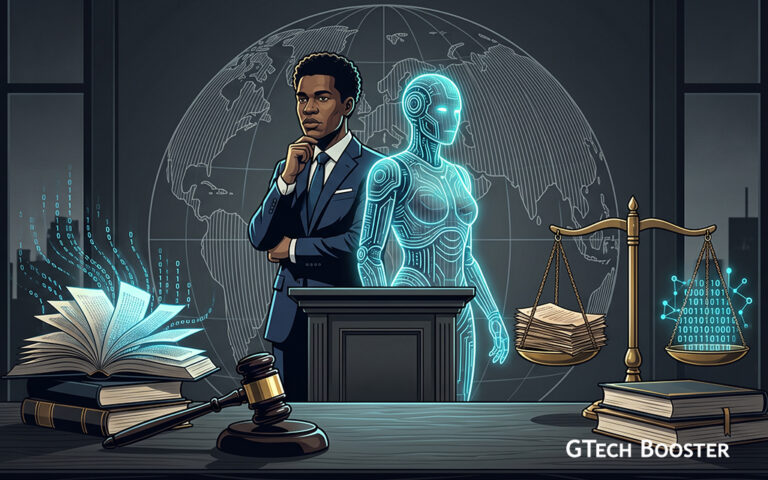
For years, the phrase “AI lawyer” sounded like science fiction, a chatbot standing up in court, cross-examining a witness, and winning the day for its client. That image made for great headlines, but the real story is messier, slower, and in some ways more interesting than the fantasy. It is a story with a genuine courtroom win in London, a very public failure in the United States, and a fast-moving reckoning underway in courts from Delhi to Washington. Here is how it actually unfolded.
The stunt that never happened: DoNotPay’s “robot lawyer”
The modern AI lawyer story arguably begins with Joshua Browder, founder of the consumer app DoNotPay, which had spent years helping people contest parking tickets and cancel subscriptions using automated form letters. In January 2023, Browder announced something far bigger: DoNotPay’s AI would represent a defendant fighting a traffic ticket in a real US courtroom. The plan involved smart glasses that would listen to the proceedings and whisper arguments into the defendant’s ear in real time, all powered by generative AI models.
It never happened. Within weeks, several state bar associations warned Browder that having an unlicensed AI effectively practice law in a courtroom could expose him to prosecution for the unauthorized practice of law, with Browder later saying he was told he could face up to six months in jail if he proceeded. He pulled the plug and refocused DoNotPay on its original consumer-rights tools.
The fallout continued for years afterward. DoNotPay was hit with a proposed class action alleging it had engaged in the unauthorized practice of law and delivered substandard results, including a case where the company’s tool reportedly caused a customer’s parking fine to increase rather than get contested successfully. A separate suit from a law firm, brought on behalf of “all law firms in the United States,” was dismissed by a federal court for lack of standing. DoNotPay eventually reached a settlement in the unauthorized-practice case, without admitting wrongdoing. The DoNotPay saga became the cautionary origin story: the first widely publicized “AI lawyer” was more marketing stunt than legal breakthrough, and it taught the industry a hard lesson about the gap between a chatbot answering legal questions and an AI system actually representing someone in court.
The real first win: Garfield AI in England
More than three years later, a different company delivered what legal commentators now describe as the first genuine courtroom win connected to a regulated AI law firm. Garfield AI, based in the United Kingdom, had already cleared a threshold DoNotPay never did: in 2025 it received formal authorization from the Solicitors Regulation Authority, England and Wales’s legal regulator, making it a properly regulated legal services provider rather than an unregulated consumer app. The SRA’s chief executive called the approval a landmark moment for legal services in the country.
Garfield’s model was narrow and pragmatic by design. It focused on a specific, high-volume problem, small businesses and freelancers struggling to recover unpaid invoices, and used AI to handle the document-heavy, procedural steps of small claims litigation: drafting pre-action letters, preparing filings, and organizing case materials.
The test case involved a freelance HR consultant pursuing a hospitality business for unpaid fees. After informal attempts to resolve the debt failed, she used Garfield’s platform to draft her pre-action letters and issue court proceedings. The dispute escalated further than expected: the defendant contested it, and the case ended up before Wandsworth County Court for a three-hour trial in May 2026, complete with witnesses, cross-examination, and barristers representing both sides. The court ruled in the claimant’s favor, awarding her seven thousand pounds and dismissing the defendant’s counterclaim. She had spent around four hundred pounds on Garfield’s service to get there.
It is important to be precise about what actually won the case. Garfield’s own leadership was careful to frame it this way: the AI handled the structured, document-heavy preparation, while the courtroom advocacy itself, the actual arguing of the case in front of a judge, remained a fundamentally human exercise carried out by a qualified barrister. This was not a machine addressing the bench. It was a hybrid model, AI-driven litigation support paired with human legal judgment where judgment mattered most, and by mid-2026 the company reported having helped resolve or recover more than half a million pounds across hundreds of claims through that model.
Why “around the world” mostly means research and drafting, not verdicts
Outside of Garfield’s narrow and carefully regulated niche, the honest global picture of AI in litigation looks less like AI winning cases and more like AI reshaping how lawyers prepare for them.
In India, home to one of the largest and most backlogged court systems in the world, with tens of millions of pending cases, AI adoption has moved quickly into legal research and drafting. Platforms such as Manupatra, SCC Online, and Indian Kanoon use machine learning to speed up precedent search and case summarization, and firms have begun treating AI fluency as a core skill rather than a novelty. But India’s courts have also become a leading example of the technology’s sharpest failure mode. Indian courts have documented multiple instances of lawyers filing briefs built on AI-fabricated case citations, including a Bombay High Court order imposing a financial penalty over fabricated case law and a Supreme Court ruling in 2026 that set aside a tribunal decision built on six fabricated precedents entirely, holding that even a single hallucinated citation can void a ruling. India’s Supreme Court has since moved to classify the filing of fabricated AI citations as professional misconduct and directed the Bar Council of India to draft formal disciplinary rules.
The United States tells a similar dual story. Generative AI has become genuinely useful for document review, e-discovery, and legal research, tasks that used to take teams of associates hours now taking AI tools seconds. At the same time, US courts have repeatedly sanctioned attorneys for filing briefs containing citations to cases that a chatbot invented outright. One federal judge sanctioned an attorney after every single citation in a submitted brief turned out to be erroneous, the direct result of relying on generative AI without independently verifying the output. Legal industry trackers have started referring to this pattern as an ongoing, multi-year wave rather than an isolated embarrassment.
The pattern beneath the headlines
Put together, the global story of the “AI lawyer” is not really about artificial intelligence replacing courtroom advocates. It is about where AI adds real value in litigation, and where it creates real danger when used carelessly.
The wins are concentrated where AI does what it is actually good at: organizing documents, drafting routine filings, searching precedent, and making legal help affordable for people who could not otherwise access it. Garfield AI’s model succeeded specifically because it paired that capability with human oversight at the moment that mattered most, live advocacy in front of a judge, rather than trying to remove humans from the loop entirely.
The failures cluster just as consistently around the opposite pattern: systems, or the lawyers using them, skipping the verification step and trusting an AI’s confident output at face value. DoNotPay’s stunt failed because regulators would not accept an unlicensed, unsupervised AI standing in for a defendant. The hallucinated-citation scandals in India, the US, and elsewhere failed because lawyers treated AI-generated research as finished work product instead of a first draft requiring the same scrutiny any junior associate’s memo would get.
Courts and regulators on multiple continents have converged on roughly the same response. England and Wales built a formal regulatory approval pathway before letting an AI firm operate, so accountability was established up front rather than after something went wrong. India’s Supreme Court and several High Courts have issued binding policies requiring lawyers to independently verify any AI-assisted citation before filing. US courts have imposed sanctions case by case, effectively building a body of precedent that says generative AI is a tool a lawyer remains fully responsible for, not a shortcut that displaces that responsibility.
The story of the AI lawyer, then, is not yet a story of machines beating human advocates in the courtroom. It is the story of a legal industry learning, sometimes through an embarrassing headline and sometimes through a genuine courtroom victory, exactly how much can be automated safely, and exactly where the line still has to be held by a human being who can be struck off, sanctioned, or held in contempt if it is not.
More Information ℹ


















Conversation
Login to comment.
Log In / Register