Why Ghana’s Payment Providers Feel Hostile, and Where the Ghanaian Developers Are
The short version is that much of the friction comes from the rules and economics of the Ghanaian payments market, not only from the behavior of any one company, and that Ghanaian developers are present in the market but face barriers that make them harder to see.
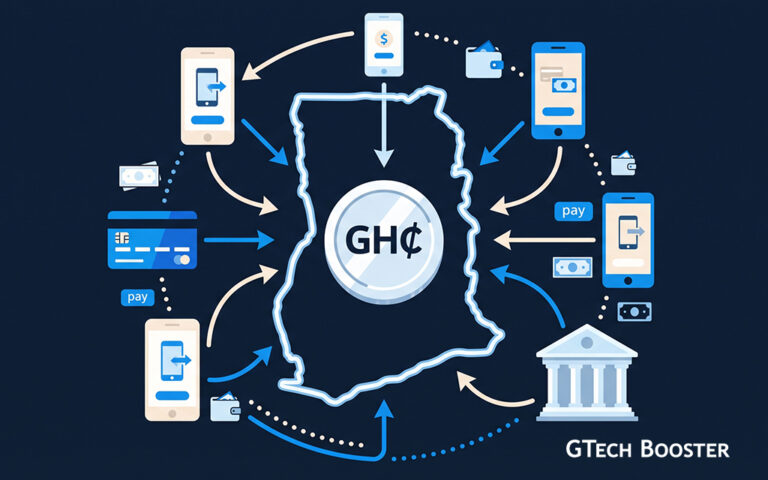
Anyone who has tried to collect online payments from Ghana will recognize the pattern. One provider settles only in cedis and will not let you collect dollars. Another has an on-boarding process that feels slow, opaque, or political, and fees that bite once international cards are involved. A local provider exists on your doorstep, yet getting support feels distant. A fourth charges fees that look high next to the others. Each choice seems to fail in a different way, and the natural conclusion is that something is wrong with all of them at once.
This article looks into that frustration seriously and explains the structure behind it. The short version is that much of the friction comes from the rules and economics of the Ghanaian payments market, not only from the behavior of any one company, and that Ghanaian developers are present in the market but face barriers that make them harder to see.
Separating What Can Be Checked From What Cannot
Collecting dollars in Ghana
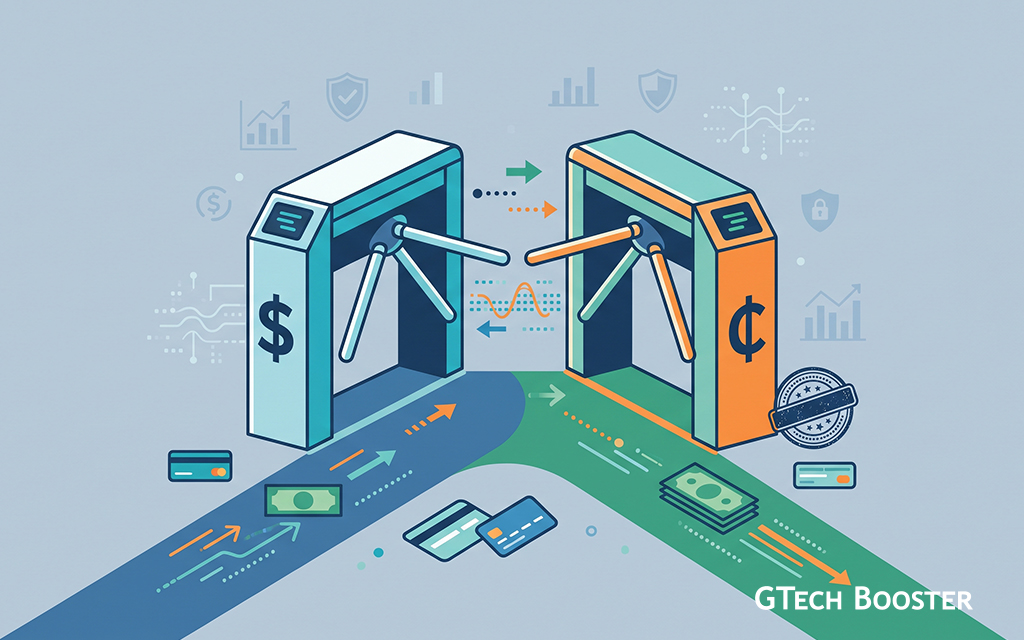
Here the answer is mostly structural. Under the Foreign Exchange Act, 2006 (Act 723), the Bank of Ghana treats the cedi as the only legal tender and has repeatedly warned that residents may not price, invoice, receive, or make payments in foreign currency for goods and services unless licensed or authorized. The Bank has named online sales among the covered examples. Foreign currency invoices are generally permitted only for non-residents, and the proceeds are expected to go into a Foreign Exchange Account at a licensed bank.
A payment gateway operating in Ghana sits under the same law. It makes sense that a gateway would settle Ghana merchants in cedis, and Paystack in Ghana as of this article settles to a Ghanaian bank account in cedis. The important point is that the limitation described reflects Ghanaian foreign exchange rules at least as much as a company decision.
Fees
Currently Paystack pegs at 1.95 percent for local and international transactions in Ghana, and Flutterwave’s international card fee is 4.8 percent, up from 3.8 percent in November 2024. Hubtel’s merchant fee is 1.95%, or 2.5%. The table below gives some appreciation.
| Provider | Merchant pays the fee | If customer pays the fee |
|---|---|---|
| Hubtel | 1.95% for MTN MoMo, Telecel Cash, and online Visa/Mastercard; 2.5% for AT Money | Hubtel lists a customer-paid option: generally 1%, with different flat fees for some payment amounts |
Currently, expressPay does about 1.95%. Payaza does 5.75% – 6.0% .
On-boarding and support
Ghanaian on-boarding onto Flutterwave currently; is like a play of politics with on-boarding behind an interest expression form. For the most part, the service is great until it is not and support is required to resolve it. Existing customers experience with their merchant support is a whole article and the the telephone for Ghana almost never gets answered – that of Nigeria gets answered. A chat query needs 25 – 50minutes for response which in most cases would request for additional clarity; on top of that, for session security you would get logged-out rampantly – then comes the email conversation which would arrive a day later and in most cases would give you about 30 to 2hours to respond and automatically ends the conversation on basis of no response without regard to the busy nature of a merchant whom additionally comes looking for support. One needs extra – extra patience with them to survive getting to the conclusion of their reason for a support.
expressPay users reviewers praise its customer service as quick and effective; others report callback delays-one said a requested callback took hours, sometimes most of the day. Reviews also mention unresolved payment problems, including a report of a failed transaction after a bank debit and a delayed refund. These are individual accounts, not a representative measure of support quality.
Hubtel Users report about Hubtel support in Ghana are mixed, with some complaints about slow follow-up and difficulty reaching help. In App Store reviews, some users describe unresolved money-transfer or refund issues and say they had trouble contacting customer service or waited for a promised callback. Other recent app reviews show Hubtel replying publicly and asking customers to email support, so responses do happen, though that doesn’t establish how quickly cases are resolved.
Paystack Users report on Paystack not concluding merchant KYC in a manner that keeps business smooth operation alongside the compliance check but Paystack would approve merchant and wait when merchant starts receiving payment then they would hold the payment(s) at the surprise of the merchant and make KYC demand and keep the funds for as long as even three months in the name of KYC.
Info
These occurrences do not wholly define the entirety of the service, though an essential part of the experience but gives a fair account of what is going on in the space and what new users should be aware of whiles on-boarding as; an avenue for improvement of the service experience for both the providers and the consumers.
How the Ghanaian Payments Market Is Built
To understand why every option feels constrained, it helps to see the shape of the market.
Mobile Money Is the Main Rail
Ghana recently is described as a telco led mobile money market, a description that has only been due since the birth of mobile money(MoMo) alongside the weakening of the banking sector in recent past placing the nation into debt service. MTN MoMo holds roughly 73 percent of the customer base, Telecel Cash about 23 percent, and AT Money about 3 percent, with a very small remainder shared by smaller wallets – large volumes still remain with the banks. Full year 2025 mobile money volume was reported at about GH¢4.54 trillion across roughly 26.7 million active accounts. Card use is far lower, with penetration around 25 percent. This 25 percent does not make it less as fees in the Card transactions are higher than the MoMo transactions.
This matters because a gateway in Ghana is largely a layer on top of mobile money networks that other companies own. Providers depend on the networks for access, pricing, and uptime, and networks hold bargaining power. A developer building a gateway does not own the rails the way a card scheme owner does.
The State Runs Parallel Infrastructure
GhIPSS, a wholly owned subsidiary of the Bank of Ghana, runs GhanaPay, GhIPSS Instant Pay, the GH-Link card switch, and gh-QR. It processed roughly one seventh of mobile money volume in December 2025 through Instant Pay however, as of this article it has less coverage beyond the national borders. Public infrastructure helps interoperability, but it also means that it need to make visible its usefulness in the space to which it exist than behaving like just another private business solution that need high justification even when it works.

Why It Is Hard for New Ghanaian Providers to Appear
The question asks where the Ghanaian developers are. The answer is that they exist, and the obstacles are mostly regulatory and economic.
Licensing Costs and Requirements
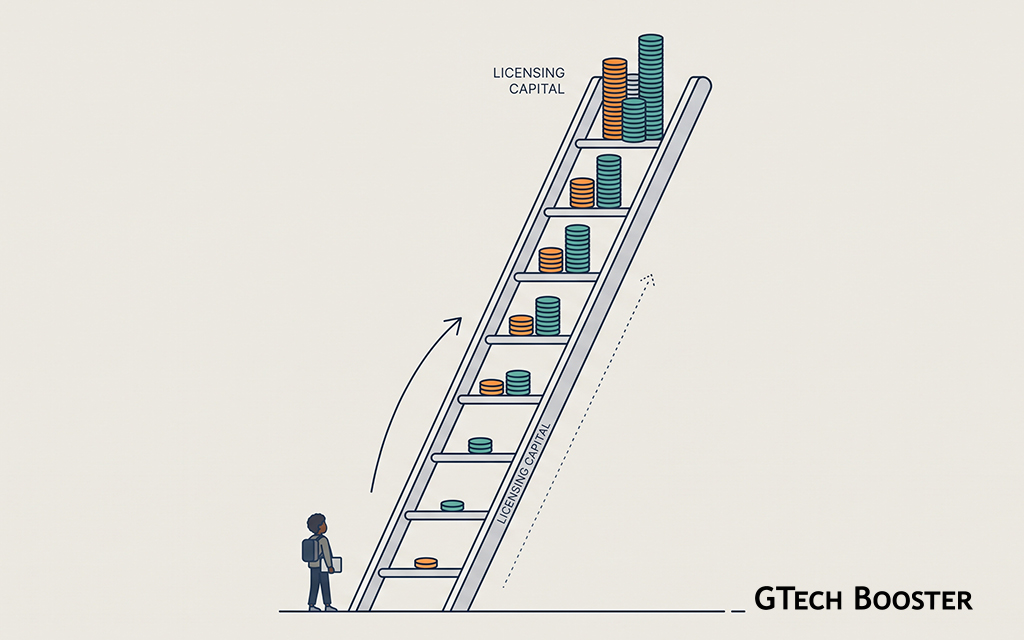
Under the Payment Systems and Services Act, 2019 (Act 987), payment providers fall into six license categories. Minimum capital ranges from none for the smallest categories up to GH¢20 million for an electronic money issuer, with GH¢2 million for the PSP (Enhanced) category and GH¢800,000 for PSP (Medium). Processing, license, and renewal fees add to this. Applicants must be incorporated in Ghana, have at least three directors with at least two Ghanaian residents, hold systems that meet security and data standards, and keep a physical presence in the country.
The category reserved for Ghanaians alone, PSP (Standard), has no minimum capital, but it is also the most limited in what it can do. A developer who wants to build a full gateway with card acquiring and large merchant volumes needs the higher categories and the capital that goes with them. That is a high bar for an individual or small team.
Operating Through Someone Else
Many providers work through licensed partners rather than holding the top tier licenses themselves. ExpressPay, Hubtel and Paystack for example, all are having no electronic money license, so they cannot issue mobile money or hold customer float, hence they works through licensed partners. That keeps their costs down, but it also means they depend on partners for access and cannot control their full cost structure, which can make competing on price or service harder.
Trust and Network Effects
Merchants choose providers they believe will not freeze funds, fail at peak times, or disappear. Global backed providers can point to scale and funding. A new local provider must prove reliability before it has the volume that would prove reliability. This is the same chicken and egg problem faced by payment startups everywhere, made sharper by the small size but heavy nature of Ghana’s card market and the dominance of a few networks.
Foreign Players Enter Through Local Licences
Five of the six licence categories are open to foreign ownership, with a minimum of 30 percent Ghanaian shareholding in most. International companies have entered Ghana by licensing a local entity or partnering with a local provider. They bring capital, experience across several countries, and engineering teams, which helps them offer smooth developer tools. It also means the best known options are often not Ghanaian, even when the licensed entity in Ghana is.
Where the Ghanaian Developers Actually Are
Ghanaian companies and developers are active across the market. Hubtel, expressPay, Zeepay, and others are Ghana based providers serving merchants, institutions, and consumers. Many Ghanaian engineers also work inside the global providers, building their products for Ghana and other markets. Beyond gateways, local developers build the integrations, plugins, and merchant tools that sit on top of these services.
What is scarcer is a Ghanaian owned, well funded, developer first gateway that competes directly across cards, mobile money, and cross border settlement. The limiting factors are patient capital, licensing, access to rails, and trust, not a shortage of talent.
What Developers and Merchants Can Do
Know the Rules Before Choosing
If you need dollars, understand the Foreign Exchange Act and the Foreign Exchange Account rules first. Collecting from non-residents and settling into a Foreign Exchange Account at a licensed bank, or working with a provider that supports cross border settlement for qualifying businesses, may be possible where domestic dollar pricing is not.
Compare Total Cost, Not Headline Rates
Ask each provider for the full fee structure, including international card fees, currency conversion margins, payout charges, and any settlement delays, and test with your real transaction mix.
Use Direct Mobile Money Integrations Where Sensible
Because mobile money dominates, integrating directly with a network’s merchant API can reduce some intermediary costs, at the price of more integration work.
Document Everything for On-boarding
Complete, consistent business documents, clear descriptions of what you sell, and early communication with the provider’s team reduce the chance that a risk review stalls your application.
Build and Advocate Locally
Developers who want a better local option can pursue the smaller license categories, partner with licensed providers, or build tools that sit on top of existing rails. Industry groups and the Bank of Ghana’s fintech engagement channels are routes for pushing for clearer rules, better on-boarding standards, and easier access to settlement options.
Bringing It All Together
The feeling that every payment provider in Ghana is hostile in some way reflects a market shaped by foreign exchange law, a few dominant mobile money networks, heavy licensing requirements, and strict compliance duties. Limits on dollar collection come largely from Ghana’s rules on foreign currency, not simply from one company. Fee differences are real but hard to compare because pricing is often unpublished or layered.
Ghanaian developers are present, but the barriers of accessible capital, licenses, access to rails, and trust make it hard for them to compete with larger international providers currently. Improving the situation will take clearer standards, more transparent pricing, and policy that makes it easier for homegrown providers to grow and reduce the high fees.
More Information ℹ
- Bank of Ghana notice on unauthorised foreign exchange transactions (2025)
- Ghana parliament pass the Virtual Asset Service Providers Bill
- GhIPSS: Need To Know










Conversation
Login to comment.
Log In / Register