Deepfake Videos – How to Tell What’s Real
A deepfake is a video, image, or audio clip that has been created or altered using artificial intelligence so that it shows a real person doing or saying something they never did, or shows an event that never took place.
Video used to be the evidence people trusted when nothing else would do. If you could see someone saying something, it was hard to argue they had not said it. Deepfakes have weakened that assumption. A deepfake is a video, image, or audio clip that has been created or altered using artificial intelligence so that it shows a real person doing or saying something they never did, or shows an event that never took place. This article explains how they work, why they are getting harder to spot, which warning signs are still worth checking, and, more importantly, what to do when the signs alone cannot settle the question.
What a Deepfake Actually Is
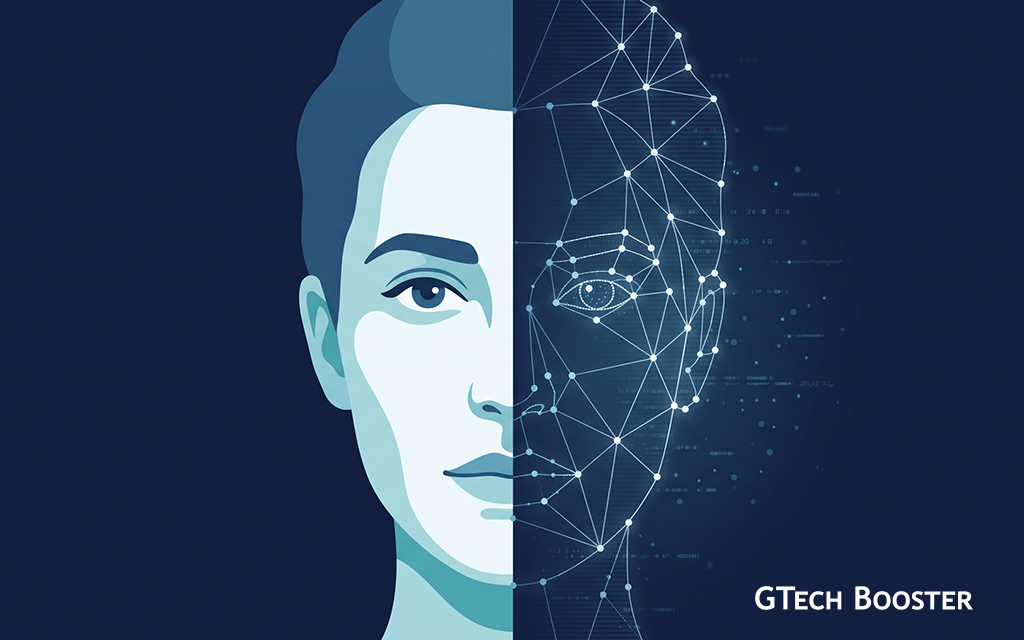
The word combines “deep learning,” the kind of artificial intelligence used to make them, with “fake.” Instead of an editor manually cutting and pasting footage, a model studies many images, video frames, or voice recordings of a person and learns how their face moves and how their voice sounds. It can then generate new material that looks and sounds like them.
There are several common forms, and knowing the difference helps you know what to look for. In a face swap, one person’s face is placed onto another person’s body in existing footage. In lip syncing or puppeteering, a real video is altered so the mouth and expressions match new words, often generated from a cloned voice. In fully synthetic video, no original footage exists at all, and a model produces the entire clip, including the scene, from a text description or a handful of reference images. Voice cloning is often paired with any of these, which is why a video can sound as convincing as it looks.
Why Deepfakes Matter
The harm is not only that people might believe a false clip. Deepfakes are used to impersonate executives and relatives to request urgent payments, to promote fake investments using the face of a trusted public figure, to spread political misinformation shortly before elections, and to create non consensual intimate imagery that damages individuals. There is a quieter effect too. Once people know fakes exist, genuine footage can be dismissed as fabricated, which helps anyone who wants to deny something real.
Why Spotting Them Is Getting Harder
It is tempting to believe that a careful viewer can always tell. The research does not support that confidence. A large systematic review of human performance, covering dozens of studies, found that people detect deepfakes only a little better than chance in many conditions, and people are often confident in judgments that turn out to be wrong.
Automated tools are not a complete answer either. A 2025 benchmark called Deepfake-Eval-2024, built from deepfakes that actually circulated online in 2024, found that open source detection models performed far worse on real world material than on the academic datasets they were trained on. Their average accuracy score dropped by roughly half, and many models performed close to random guessing. Commercial tools did better, with the best reaching about 78 percent accuracy on video, but none matched the roughly 90 percent the authors treat as a rough benchmark for expert human analysts.
The practical lesson is that no single method is reliable on its own. The sections below describe cues worth checking and checks worth doing, and they work best combined.
Visual Signs Worth Checking
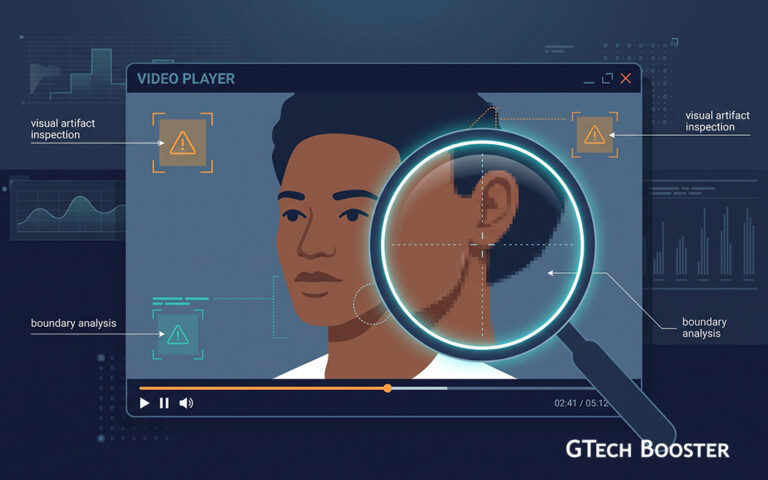
Visual cues are the first thing most people look for, and some remain useful, especially in lower quality fakes. Treat them as reasons to investigate, never as proof. Compression, poor lighting, and motion blur can create odd looking artifacts in completely genuine videos.
The Face and Head
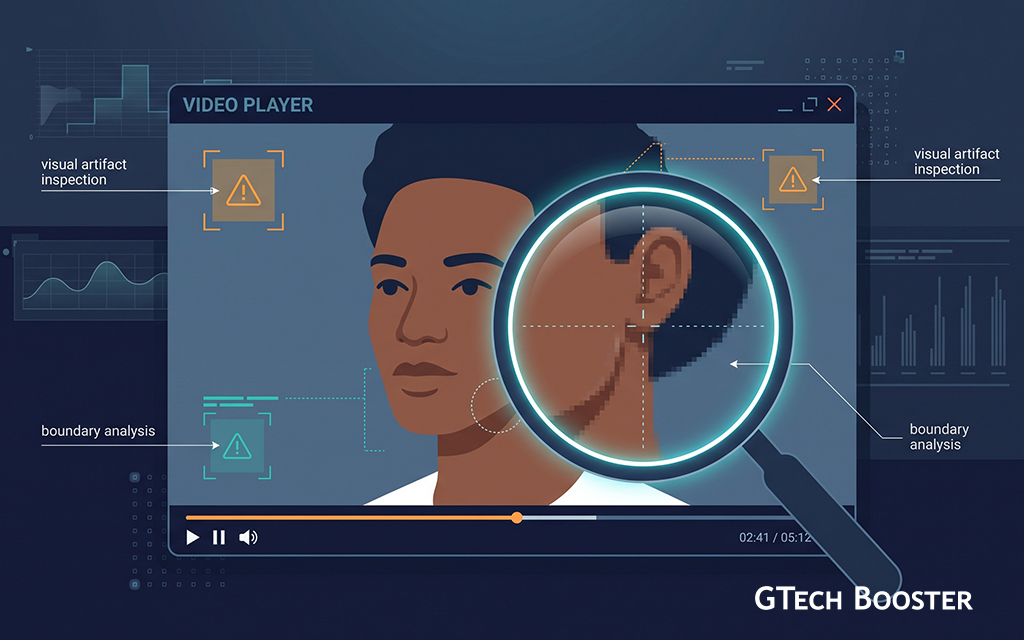
Look at the edges of the face where it meets hair, ears, neck, and glasses. In face swaps, the boundary can shimmer, blur, or shift slightly when the head turns. Skin can look unusually smooth, or its texture can change from frame to frame. Check whether the lighting on the face matches the lighting in the rest of the scene, including the direction of shadows and reflections in the eyes and in glasses.
The Mouth and Teeth
Watch whether lip movements match the sounds, especially sounds that require the lips to close, such as “b,” “p,” and “m.” Teeth are difficult to render consistently, so look for teeth that blur together, change in number or shape, or appear and disappear between frames.
Eyes, Blinking, and Expression
Eyes that stare too steadily, blinking that seems too frequent or too rare, or expressions that do not fit the emotion of the words can all be signs. Early deepfakes were known for unnatural blinking, but modern ones often handle this well, so absence of the sign proves nothing.
Hands, Text, and Background
Fingers, jewelry, and hand movements are harder for generators to keep consistent. Text on signs, clothing, or screens may warp or change between frames. Background objects can bend, flicker, or move strangely when the person moves in front of them.
Audio Signs Worth Checking
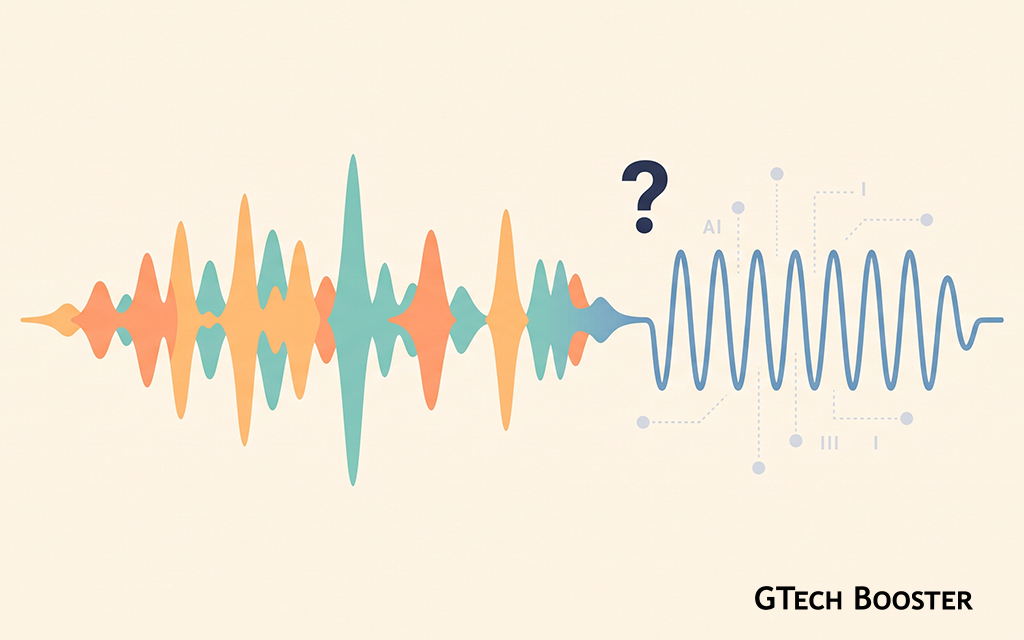
Listen with the same care you give the picture. Cloned voices can sound slightly too even, with speech that is oddly paced, emotionally flat, or missing natural breaths. A metallic or overly polished tone is another clue. Background noise that cuts in and out while the voice stays unnaturally clean can indicate that the voice was added separately from the footage. Because voice cloning has become easy and convincing, audio that sounds right should never be accepted as proof on its own.
Contextual Signs Often Matter More Than Visual Ones
As the visual quality of fakes improves, the situation around the video becomes a more reliable guide than the pixels.
Ask where the clip came from. A video with no clear origin, reposted by accounts with no history, or shared only as a screen recording, is weaker evidence than one that appears on the official channels of the person or organization shown. Ask whether reputable news outlets or official statements confirm the event. A genuinely major event, such as a public figure announcing something dramatic, will normally be reported by several independent sources within hours.
Ask what the video wants from you. Most harmful deepfakes are designed to trigger a quick reaction, such as an urgent request for money, a guaranteed investment return, a demand to keep something secret, or a push to share the clip immediately. Requests to pay by cryptocurrency, gift cards, or wire transfer are especially concerning because those payments are hard to reverse. Strong emotion and urgency are tools used to stop you from checking.
A Practical Verification Routine
When a video matters, because it could change your opinion, your money, or your reputation, work through a short routine rather than relying on a gut feeling.
First, pause. Do not click, pay, share, or hand over information while you are still uncertain. Second, find the original source by looking at the official accounts or website of the person or organization involved, and see whether the same footage appears there. Third, look for corroboration from more than one reliable outlet, and for longer or earlier versions of the same footage. Fourth, search for a still frame from the video using a reverse image search, which can reveal whether the footage is older, taken from another event, or already debunked.
Fifth, if the video is a request from someone you know, such as a relative or colleague, contact them through a number or app you already have, not through the contact details in the message. Sixth, in a live video call, ask a private question that only the real person could answer, or use a pre agreed family phrase. Seventh, if you want an extra check, run the clip through a dedicated detection tool, remembering that a result is evidence and not a verdict.

Provenance and Content Credentials
A promising approach is to focus less on proving that something is fake and more on proving where genuine media came from. An open standard called C2PA lets cameras, software, and platforms attach tamper evident information to a file, recording where it was created and how it was edited. Some platforms and tools display these “content credentials,” and you can check them where they are available.
This helps, but it has limits. Missing credentials do not prove a video is fake, because most content still carries none and credentials can be stripped when files are re uploaded or screen recorded. Present credentials add useful context but depend on the trustworthiness of whoever created them. Think of provenance as one more piece of evidence, not a final answer.
What to Do If You Think You Have Found a Deepfake
If you suspect a video is fake, avoid sharing it even to criticize it, because that spreads it further. Report it to the platform where you found it, and tell the people who may have received it. If it targets you or someone you know with fraud or intimate imagery, keep screenshots and links as evidence, use the platform’s reporting tools, and consider reporting it to the police or the relevant cybercrime authority in your country. Organizations should agree in advance how staff verify payment and access requests made by video or voice, so the process does not depend on anyone’s ability to judge a clip in the moment.
Building Good Habits
No one can promise to detect every deepfake by looking at it, so the most useful habit is to change how you respond to video. Treat surprising or emotionally charged clips as claims that need checking. Prefer sources with a record of accuracy. Be cautious about any request that combines a familiar face or voice with urgency and money. Talk with family members, especially older relatives, about how this technology works, because awareness is one of the strongest defenses.
Bringing It All Together
Deepfakes are made by artificial intelligence that learns a person’s face and voice and generates new footage that appears real. Human viewers and automated tools both struggle to detect them reliably, and the gap is likely to keep widening. Visual and audio clues such as edge flicker, mismatched lip movement, inconsistent teeth, flat speech, and odd background sounds are worth checking, but they are not proof either way.
The more dependable approach is to examine context and verify independently. Where did the clip come from, who confirms it, and what does it ask you to do? Pause before acting, check the original source, look for corroboration, contact people through trusted channels, and treat provenance information and detection tools as extra evidence rather than final answers. Seeing is no longer believing on its own, but careful checking still works.
More Information ℹ










Conversation
Login to comment.
Log In / Register