Which Codec Actually Wins in 2026? Not the One With the Best Compression
This article is about video codecs only, and it tries to answer a better question: winning at what?
Every few years, someone declares a winner in the video codec wars. A new standard arrives with a number attached, usually “fifty percent fewer bits,” and the trade press crowns it. Then the years pass, and the old codec keeps carrying most of the world’s video. In 2026 the pattern is playing out again, with more contenders than ever: H.264, HEVC, VP9, AV1, VVC, and now AV2. If you ask which one wins, you get a different answer depending on who you are, which is a clue that the question is built wrong. This article is about video codecs only, and it tries to answer a better question: winning at what?
What a Codec Is and Why the Fight Never Ends
A codec is the method used to shrink video so it can be stored and sent, and to expand it again for playback. Video is enormous in raw form, and a few seconds of uncompressed 4K footage would swamp most home connections. A good codec finds redundancy, such as the fact that most of a frame is the same as the frame before it, and throws away detail the eye is unlikely to miss.
The fight never ends because compression gains are a repeated bargain. Each generation delivers the same picture at a lower bitrate, and pays for it with more computing work to encode and more complicated chips to decode. That means the question is never only “how small is the file.” It is also “who can play it, who can afford to make it, and who will sue.”
Quote
A codec does not win by being the best at squeezing video. It wins by being playable, affordable, and safe to ship, in that order.
Five Scoreboards, Not One
Treating a codec choice as a single contest hides the real structure. In practice there are at least five scoreboards, and different codecs lead on different ones.
Reach
H.264 wins this one so decisively that it is hardly a contest. It plays on essentially every phone, browser, television, and camera made in the past decade and a half. One 2026 industry survey reported by Streaming Media Blog found H.264 in production at 84 percent of respondents, and called it effectively universal and plateaued. It is not growing, because there is no one left to reach.
Compression Efficiency
Here the newer codecs lead. A comparison guide puts HEVC at about 50 percent fewer bits than H.264 in lab tests, with 30 to 40 percent more realistic in production, and AV1 at about 30 percent better again than HEVC and VP9. VVC claims about 50 percent fewer bits than HEVC. AV2 claims about 30 percent fewer than AV1.
These are headline numbers, and the guide adds a useful warning. They are measured with slow, high quality reference encoders, and real production settings typically deliver two thirds to three quarters of the headline figure. Savings also vary with the footage itself.
Cost to Encode
Efficiency is bought with computing power. The same guide estimates HEVC at five to ten times the encoding cost of H.264, AV1 at five to thirty times with an efficient encoder and far more with the reference one, and VVC at seven to twenty times HEVC. Live encoding is hardest, and live AV1 still tends to need dedicated hardware or a large server farm. A saving in bandwidth is a loss if the encoding bill eats it.
Legal Safety
This is the quiet scoreboard that decides more outcomes than engineers like to admit. H.264 sits under a single licensing pool. HEVC and VVC involve multiple pools and some patent holders outside any pool. AV1 and AV2 are designed to be royalty free, which is their main selling point.
In the Streaming Media Blog survey, licensing was cited as a barrier by fewer than 1 percent of respondents for AV1, but by 44 percent for VVC. An analyst writing about the consolidation of HEVC and VVC licensing pools argues that consolidation helps device makers more than publishers, because the real fear for a publisher is a claim from a patent owner outside the pools that cannot be capped or predicted.
Momentum
On this scoreboard, AV1 is clearly ahead. Survey respondents reported AV1 in production at 17 percent, with another 40 percent planning to deploy it in 2026. HEVC stood at 65 percent in production with another 20 percent planning. VVC sat at 4 percent with 29 percent planning. Netflix has said AV1 reached about 30 percent of its streaming by December 2025.
Quote
The codec with the best lab result and the codec with the most momentum are often not the same codec.
The Contenders, One at a Time
Six codecs are worth knowing in 2026. Some are old and everywhere, some are new and barely deployed, and each has a different reason it is either gaining or stalling. Here they are in rough order of age.
H.264: The Floor of the Internet
H.264 is old, inefficient by modern standards, and unbeatable at being understood by everything. It is also cheap and fast to encode and ideal for live streaming and video calls. Almost every serious system keeps it as a fallback, because a stream that cannot play on an old television or a cheap phone is worth less than a larger file that can.
HEVC: Everywhere You Pay for Premium
HEVC, also called H.265, is the workhorse of premium video. It has been in nearly all devices since about 2018 and is the natural choice for 4K Blu-ray, Apple devices, and high end 4K streaming. Its weakness is not technical. It is the licensing picture, which the guide describes as three pools partly consolidated in 2025, plus holders outside them. Because of that, many publishers avoid HEVC where the only gain is efficiency, even though it works well.
VP9: The Quiet Open Option
VP9, Google’s royalty free codec, offers roughly HEVC level savings and powers much of YouTube’s higher resolution delivery. It is strong on Android and has been supported on Apple devices since iOS 14. It is rarely the headline now, but it is the reason the open codec idea was proven in practice.
AV1: The Streaming Industry’s Bet
AV1 is the codec most likely to be named winner in a conversation about streaming. It is royalty free in design, about 30 percent more efficient than HEVC and VP9 by one estimate, and now supported by hardware in recent flagship phones, Apple devices from the iPhone 15 Pro and M3 onward, and most televisions from 2022. A separate review estimates that around 80 percent of consumer streaming devices can decode it in hardware, with gaps in older and mid range devices.
AV1 still has real barriers. In the survey, the top barrier was hardware decode support at 54 percent of respondents, then toolchain limitations at 43 percent and encoding compute cost at 37 percent. Beyond the largest platforms such as YouTube, Meta, and Netflix, adoption is still limited. A commentator also points out that the industry does not really know AV1’s patent status, even though many publishers treat it as the safer option.
VVC: The Brilliant Codec Waiting for a Reason
VVC, also called H.266, is the technical heavyweight, claiming about half the bits of HEVC. It has found a home in Brazil’s DTV+ broadcasts and in some closed device fleets and is talked about for 8K. Outside those pockets, it faces what the commentator calls a chicken and egg problem, little hardware, little content, and a legal risk that few publishers want to take for a codec with no large market. The guide’s advice is blunt: do not choose it for future proofing in 2026.
AV2: The Winner of Next Decade, Maybe
AOMedia published the AV2 reference software 1.0.0 on 28 May 2026, with the specification announced in early June. Developer tests put it about 28.6 percent smaller than AV1 by one metric and about 32.6 percent by another, with savings above 40 percent for screen content such as presentations. It is intended to be royalty free like AV1.
It is also not a production option. One engineer notes that the reference encoder is slow and meant for reference, FFmpeg has no support yet, and no shipping hardware decoders exist. Based on AV1’s history, he expects AV2 to trail its specification by a couple of years before enough devices can play it efficiently.
The Real Winner Is the Ladder
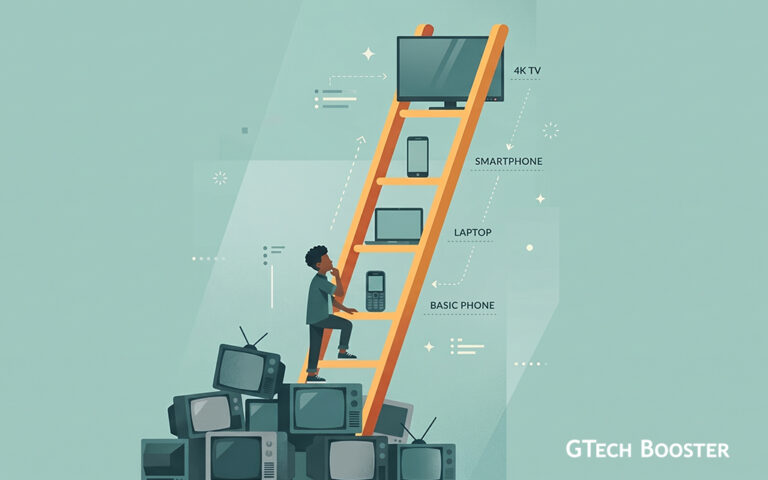
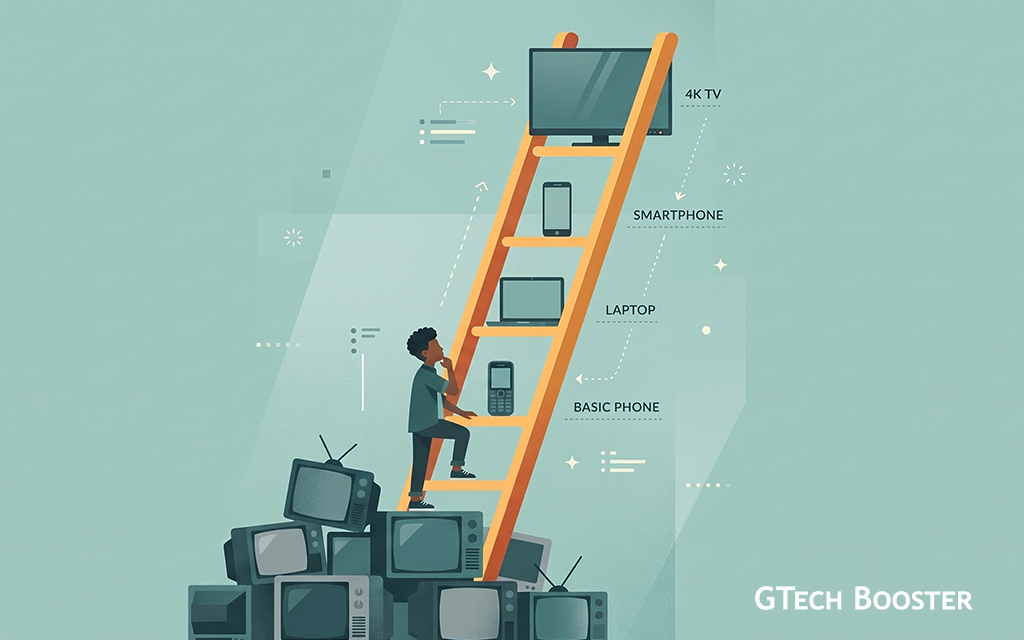
Every source I read arrives at the same practical conclusion. Do not pick a codec, build a ladder. Serve H.264 for reach, put HEVC or AV1 on the upper rungs, and let the player choose per device. One guide recommends AV1 for royalty free streaming to modern devices, HEVC for Apple and 4K television audiences, VP9 as an open web fallback, VVC only for broadcast and closed fleets, and AV2 as something to test and not to ship.
There is a subtlety in the AV1 advice. Browser support does not guarantee hardware decoding, and software decoding drains batteries. A sensible implementation serves AV1 only to devices that report efficient, power friendly playback, not just any support.
Quote
The winning strategy in 2026 is not to bet on a codec. It is to refuse to bet on one.
A Scorecard
The table below pulls the five scoreboards together. The ratings follow the sources cited at the end and are best read as direction and not as precise measurements.
| Codec | Reach | Efficiency | Encode cost | Legal clarity | Verdict for 2026 |
|---|---|---|---|---|---|
| H.264 | Universal | Baseline | Lowest | One pool | Keep as the fallback |
| HEVC | Near universal | About 30 to 40% better in production | Moderate to high | Several pools, outside claims | Strong for Apple and premium 4K |
| VP9 | Good on Android and web | Close to HEVC | Moderate | Royalty free | Reliable open fallback |
| AV1 | Growing fast | About 30% better than HEVC | High, falling | Royalty free by design | The momentum leader for streaming |
| VVC | Very limited | About 50% better than HEVC | Very high | Complicated | Niche: broadcast and closed fleets |
| AV2 | None yet | About 30% better than AV1 | Not production ready | Royalty free by design | Test now, ship later |
What This Means for You
If you run a streaming service, the answer is a ladder, with AV1 added on capable devices and H.264 always available. If you build video calling or live products, H.264 still dominates because it is fast, universal, and hardware accelerated, and AV1 is usually a negotiated upgrade. If you are a creator or small publisher, the practical advice is simpler: upload a high quality H.264 or HEVC file and let the platform do the conversion, since the large platforms already encode multiple versions and choose the best for each viewer. If you work in broadcasting or a closed device ecosystem, VVC may make sense where you control both ends.
Bringing It All Together
The question of which codec wins has no single answer because codecs compete on several fronts at once. H.264 wins on reach and will keep winning there for years. HEVC wins on premium devices and Apple, but loses ground to legal caution. AV1 wins on momentum and on being the royalty free choice for modern streaming, though it still battles hardware gaps and encoding costs. VVC wins on paper and loses in the market. AV2 wins the future conversation without yet shipping in a single viewer’s pocket.
The deeper lesson is that compression is only one part of a codec’s fate. Playback hardware, encoding economics, and legal risk decide who wins, and they move more slowly than the mathematics. The safest prediction for the rest of 2026 is that the ladder keeps growing, AV1 keeps climbing it, and H.264 stays at the bottom, quietly holding everything up.
More Information ℹ












Conversation
Login to comment.
Log In / Register