How Contactless Payments Actually Work
This article follows a contactless payment from the moment the terminal wakes up to the moment money moves, explains the technology and security behind each step, and clears up the most common misunderstandings.
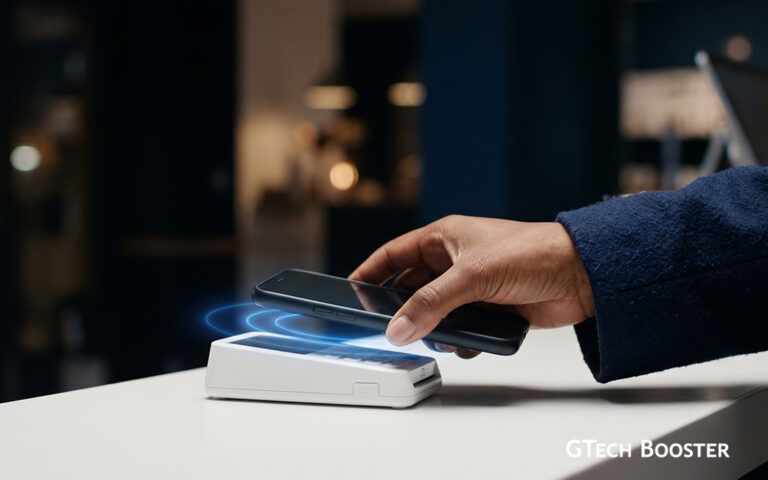
You hold a card or phone near a terminal, there is a beep, and the payment is done. It feels like magic, and that feeling leads to two common worries: that the card is broadcasting your details to anyone nearby, and that a tap is somehow less secure than inserting a card. Neither is quite true, but you can only see why once you know what happens inside that second. This article follows a contactless payment from the moment the terminal wakes up to the moment money moves, explains the technology and security behind each step, and clears up the most common misunderstandings.
The radio link that makes a tap possible
A contactless payment begins with a very short range radio connection between your card or phone and the payment terminal. Understanding this link explains both how it works and why it is hard to abuse.
Near field communication
The technology is called near field communication, or NFC. The terminal contains a small antenna that constantly emits a weak radio field at a frequency of 13.56 megahertz. When you bring a card or phone within a few centimetres, that field reaches a tiny antenna coil inside it. The field itself powers the card’s chip, which is why a contactless card needs no battery. This is the same principle that wireless phone chargers use, only at a far smaller scale.
Why the range is so short
The strength of this kind of field drops sharply with distance. In normal conditions a payment terminal can talk to a card only within about four centimetres, and often less. That is deliberate. The short range acts as a form of consent: for a payment to start, you must physically bring the card or phone to the reader. Someone standing a metre away in a queue is, in everyday conditions, out of reach.
Always listening, but not always talking
A card does not broadcast anything on its own. It stays silent until a terminal’s field wakes it up and sends a question. This is the opposite of a Bluetooth device, which announces itself continuously. A card in your wallet is like a locked door that opens only when the right key, a properly formed request from a terminal, is presented at close range.
What the chip inside the card does
The tap starts a short conversation between terminal and chip. Contactless cards use the same chip standard as cards inserted into a reader, known as EMV, named after Europay, Mastercard and Visa. The difference lies only in how the chip is reached, by radio instead of by metal contacts.
The conversation in plain steps
First the terminal tells the card the amount, the currency and the type of transaction. The card checks which applications it holds, such as a debit or credit application, and the terminal selects one. The chip then calculates a unique security code for that exact payment and sends it back along with some account data. The whole exchange takes a fraction of a second, which is why you are told to hold the card still only for a moment.
The cryptogram: a one time proof
The security code is called a cryptogram. The chip creates it by combining the transaction details, a counter that increases with every payment and a secret key stored deep inside the chip. The bank that issued your card holds a matching key. Because the cryptogram depends on the amount and the counter, it is valid for one transaction only. If a thief recorded it and tried to reuse it, the bank would see that the counter and details do not fit and would reject it.
Why the secret key never leaves the chip
The secret key is built to stay inside the chip. Terminals never see it, and the chip is designed to resist attempts to read it out by physical or electronic probing. What leaves the card is only the result of calculations using the key, never the key itself. This is a major reason why chip payments are far harder to counterfeit than the old magnetic stripe, which stored the same data every time and could be copied exactly.
From the terminal to your bank and back
The cryptogram is only the beginning of the journey. For the merchant to be paid, the transaction must travel through the payment system, and every link in that chain has a job.
The four parties involved
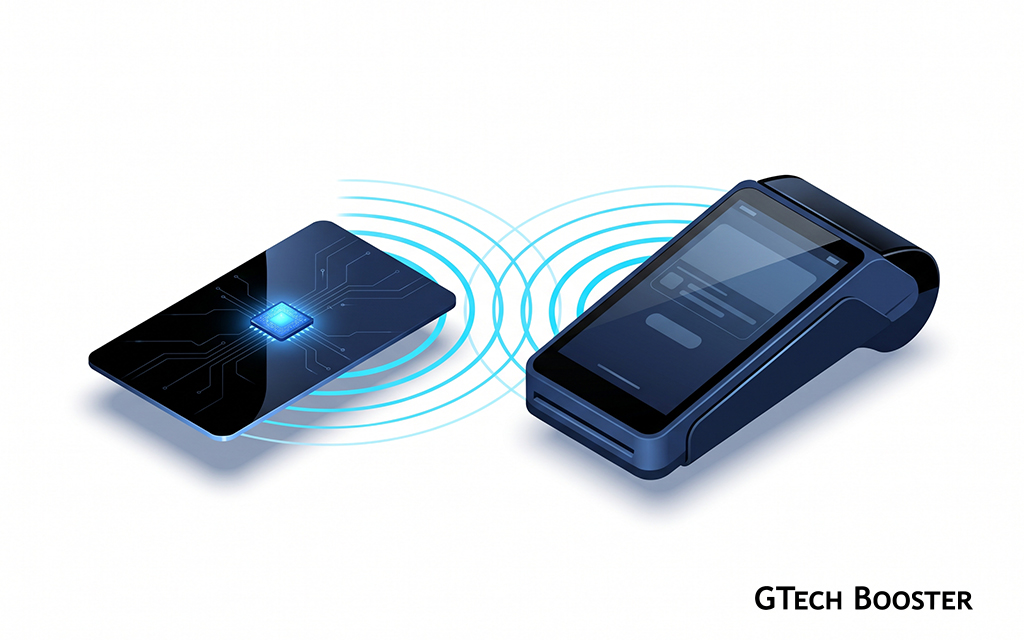
The merchant’s terminal sends the transaction to the acquirer, which is the bank or processor that serves the merchant. The acquirer forwards it across a card network such as Visa or Mastercard, or a national scheme. The network routes it to the issuer, the bank that gave you the card. The issuer decides whether to approve, and the answer travels back along the same route. Each party adds a layer of checking.
What the issuer checks
The issuer verifies the cryptogram using its own copy of the key, checks that the card is active and that you have enough funds or credit, and runs fraud checks. These checks look at patterns such as where you normally spend, how much and how often. A tap that is far from your usual behaviour can be declined even if the card is real, which is why your bank sometimes sends a message asking you to confirm a purchase.
Authorisation is not the same as settlement
The approval you see at the till only reserves the amount. The real movement of money, called settlement, happens later, usually within a day or two, when the acquirer and issuer exchange funds through the network. The merchant then receives the amount minus fees. This delay explains why a pending transaction on your banking app can differ slightly from the final one.
How phones and watches do it differently
Paying with a phone looks the same at the till, but a different and in some ways safer technology works underneath.
Tokens replace your card number
When you add a card to a mobile wallet, the real card number is not stored on the phone. The card network and issuer replace it with a token, which is a substitute number that works only with that device and that wallet. At the terminal, the phone sends the token and a cryptogram, not your actual number. If a merchant’s system were hacked, the token would be useless anywhere else, and your real number would not be exposed.
The protected area of the phone
The token and its keys are stored in a protected part of the phone, either a dedicated secure chip or a secure software environment that other apps cannot read. Payment cannot proceed without this protected area approving it, which keeps malware on the phone away from the keys.
Your face, fingerprint or code approves the payment
A physical card proves only that someone holds it. A phone can ask you to prove who you are, through a fingerprint, face scan or passcode, before it releases a payment. This is a real security gain, and it is why mobile payments have no spending cap in many countries, whereas plain card taps usually do.
Why there are limits on card taps
If a lost card can be tapped without a PIN, the system needs a safety net. That net is a set of limits designed to cap what a thief could do.
The no PIN ceiling
Each country sets a maximum value for a single tap without verification. Above it, the terminal asks for a PIN, which proves the holder knows a secret. The ceiling varies widely, so check the rules in your country and with your bank.
The cumulative counter
Cards also track how many taps or how much total value has been spent since the last time a PIN was used. When the counter crosses a threshold, the next payment demands a PIN, even if it is small. This stops a thief from making many small purchases in a row.
Online and offline decisions
Some low value taps are approved by the terminal or the card without contacting the bank for each one, while larger ones always go online. Banks choose these settings, and they balance convenience against risk.
Is contactless really safe
The answer is mostly yes, but it is worth separating real risks from imagined ones.
The myth of invisible theft
The idea that a criminal can brush past you and drain your account is exaggerated. The range is only a few centimetres, a terminal must send a valid request with a specific amount, and every payment needs the merchant’s registered terminal to route the money. Stealing at scale in this way is difficult and easily traced.
The real risks
The genuine risks are more ordinary. A lost or stolen card can be used for small taps until you freeze it. Relay attacks, where criminals try to extend the distance between a card and a terminal using special devices, are rare and technically complex, but they exist, and card networks work to counter them. Social engineering, where you are tricked into approving payments yourself, remains the biggest threat across all payment methods.
Simple ways to protect yourself
Turn on transaction alerts, report a lost card at once, keep your phone locked with a strong biometric or passcode, and use a mobile wallet where possible. If you want extra comfort, a card sleeve that blocks radio signals is an inexpensive option, though not essential for most people.
Where contactless is going
Contactless is expanding beyond shops into transport, ticketing and daily life.
Transport and ticketing
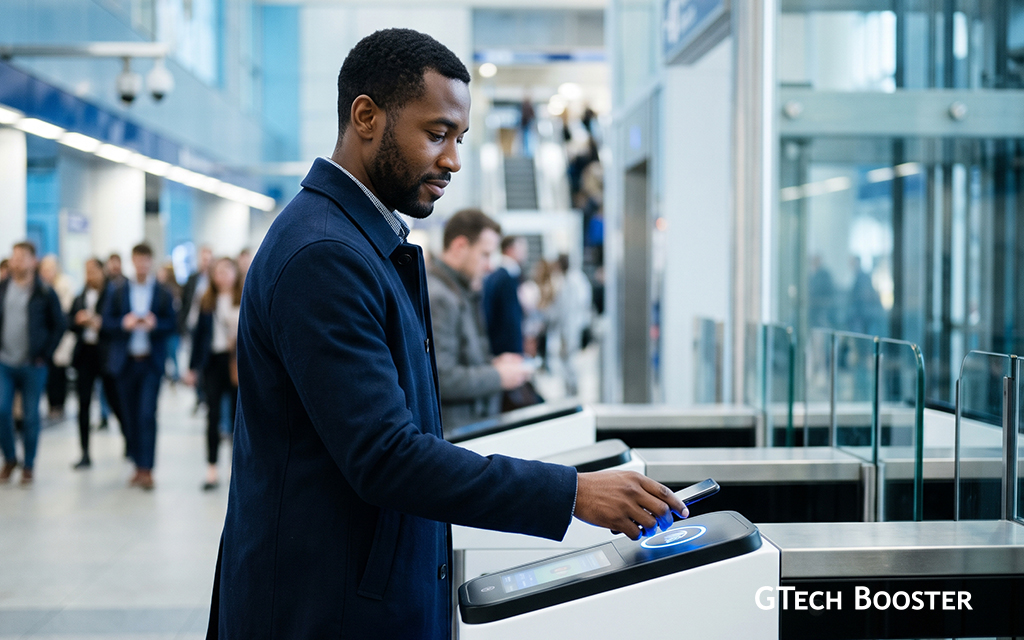
Many cities now allow a bank card or phone to be used directly at transit gates, with fares calculated automatically after the journey. This avoids buying separate tickets and is spreading across regions as networks upgrade their readers.
Tap on phone and the end of dedicated terminals
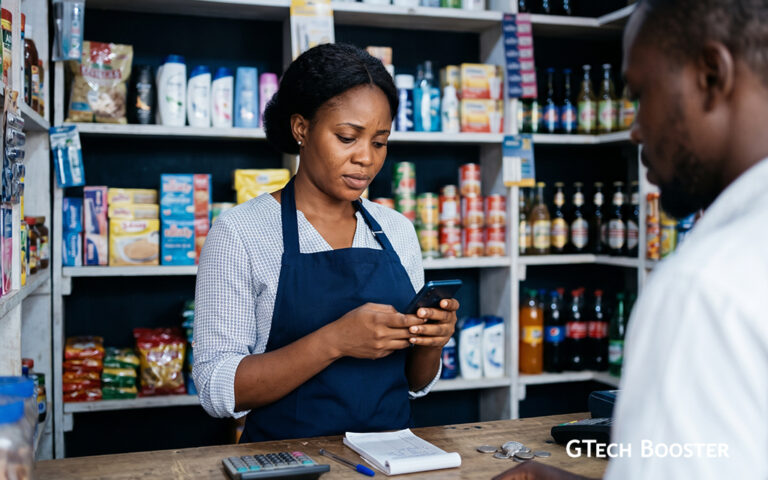
New software allows a merchant’s smartphone to accept taps without any extra hardware. This brings card acceptance to small traders, market sellers and independent service providers, and could widen financial access in places where full terminals are costly.
How it fits alongside mobile money and QR payments
In many African markets, mobile money and QR code payments carry most everyday transactions, while contactless card use is growing in malls, supermarkets, fuel stations and transport. These systems differ in how they work, since mobile money moves value between wallets on the operator’s platform, but they share the same direction: faster, simpler payments with security checks built in. Understanding each helps you pick the right tool for the situation.
Final thoughts
A contactless payment feels instant and effortless because a great deal of careful engineering is hidden inside it. A short range radio link wakes a battery free chip, the chip proves itself with a one time cryptogram, the payment travels through acquirer, network and issuer, and the bank decides in a moment. Phones add tokens and your own biometrics for further protection. The system is not perfect, but its design makes mass theft hard and gives you tools to limit the damage if something goes wrong. Knowing how it works lets you use it with confidence and spot real risks instead of imaginary ones.








Conversation
One last step to post your comment
Your comment is saved. Confirm it's you - no password needed.
Back to editing