Atomic Energy in Africa – A Genuine Opportunity Beyond Just Electricity
This article looks at where the continent actually stands, what nuclear technology is already doing for Africa well beyond power plants, and what stands in the way of realizing its fuller potential.
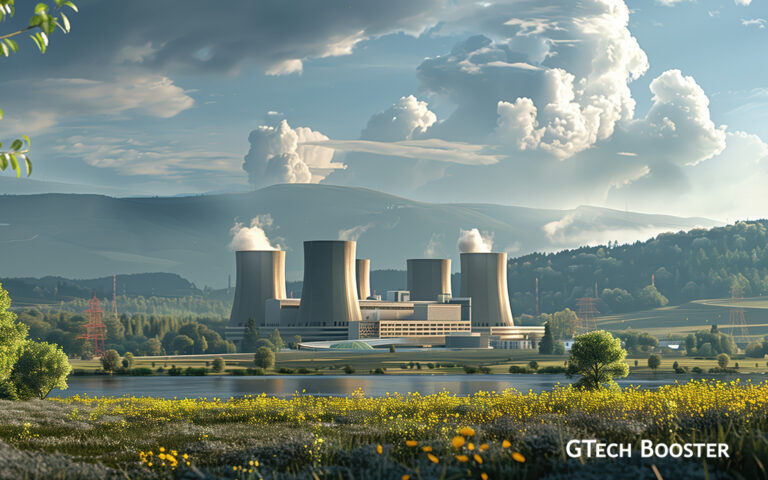
When most people hear “nuclear energy in Africa,” they picture a small number of ambitious power plant announcements and little else. That picture badly undersells what is actually happening across the continent right now. Atomic energy in Africa is not a single story about electricity generation, it is a genuinely broad set of applications spanning power, medicine, agriculture, water management, and industry, backed by a real and active continental legal and institutional framework, and moving with more momentum today than at any point in decades.
The Scale of the Problem Atomic Energy Is Being Asked to Help Solve
Africa’s energy access gap remains enormous. According to the International Energy Agency, roughly 600 million people across the continent currently lack access to electricity at all, and the demand side of the equation is only becoming more urgent as industrialization efforts accelerate and, more recently, as growing interest in data centers and artificial intelligence infrastructure adds an entirely new category of large, reliable baseload power demand that intermittent renewable sources alone struggle to satisfy on their own. This combination, a severe existing access gap plus fast-growing new categories of industrial demand, is precisely why nuclear power, capable of providing consistent, weather-independent baseload electricity at scale, has moved from a marginal talking point to an active policy priority across a growing number of African governments.
Where Nuclear Power Generation Actually Stands Today
South Africa: the continent’s only operating commercial nuclear power
South Africa remains, as of today, the only African country with an operating commercial nuclear power plant, the Koeberg facility, and it holds that distinction alone even as interest elsewhere accelerates. South Africa is also now looking beyond its existing large-scale reactors: its national nuclear utility, Necsa, launched an international expression of interest process in March 2026 specifically to identify commercial partners for a small modular reactor demonstration program, positioning the country to potentially lead the continent’s next generation of nuclear technology as well as its first.
Egypt: the continent’s most advanced newcomer project
Egypt is constructing the El Dabaa Nuclear Power Plant, a four-unit facility with a combined nameplate capacity of 4,800 megawatts, being built by Russia’s state nuclear company Rosatom at a cost of roughly 28 to 30 billion US dollars, with the bulk of that financing coming through a Russian sovereign-guaranteed loan. Construction began in July 2022, and the plant’s first unit is projected to come online around 2028, making El Dabaa the most advanced new nuclear project anywhere on the continent outside South Africa’s existing operational plant.
The next wave: Ghana, Kenya, Rwanda, and Nigeria
Beyond these two established leaders, the International Energy Agency identifies eight African countries with concrete plans to introduce new nuclear plants: Ethiopia, Ghana, Kenya, Niger, Nigeria, Rwanda, Tanzania, and Uganda, with several additional countries expressing serious interest. Among these, four countries are consistently treated as the standard case studies for nuclear planning progress on the continent:
- Ghana is advancing site preparation, vendor engagement, and workforce development, targeting approximately 1 gigawatt of nuclear capacity by 2038, and is currently in Phase 2 of the IAEA’s milestone programme covering the preparatory work required before actually contracting and constructing a plant. Ghana is also engaged in active contract and financing discussions with Chinese partners, working toward a government-backed power purchase agreement structure.
- Kenya has designated its state utility, KenGen, as the future operator of a planned 2,000 megawatt nuclear plant, and continues working with the IAEA toward a targeted commissioning date around 2034. Kenya’s Nuclear Power and Energy Agency has indicated it is still in the process of engaging with technology vendors and working to build public trust ahead of a planned technology selection.
- Rwanda underwent an IAEA Integrated Nuclear Infrastructure Review Phase 1 mission in March 2026, and has been positioning itself, alongside Ghana, as one of the two African countries taking the most aggressive concrete steps toward deploying small modular reactors specifically, according to the World Nuclear Association’s own director general.
- Nigeria is also in Phase 2 of the IAEA’s milestone programme alongside Ghana and Kenya, continuing preparatory work toward eventual plant contracting and construction.
The broader wave of interest
Beyond these four, the IAEA’s list of countries actively engaged in nuclear infrastructure development work extends further still, including Algeria, Burkina Faso, Ethiopia, Morocco, Namibia, Niger, Senegal, Sudan, Tanzania, Tunisia, Uganda, and Zambia, reflecting genuinely broad continental interest rather than a handful of isolated cases.
Small modular reactors as a genuine game changer for the continent
A meaningful part of what has shifted the calculus for many African countries is the emergence of small modular reactors, or SMRs, as a viable category of nuclear technology. Unlike traditional large-scale plants requiring enormous upfront capital and years of complex on-site construction, SMRs can be shop-fabricated and transported to a site as modules for on-site assembly, substantially reducing both the capital burden and the construction timeline. This matters enormously for African markets where mobilizing tens of billions of dollars for a single traditional plant, the scale of investment behind Egypt’s El Dabaa project, is simply not realistic for most national budgets. Ghana and Rwanda’s early leadership specifically in the SMR space reflects a genuinely different, more achievable pathway into nuclear power than the one South Africa and Egypt have taken.
The real financing and sovereignty tension
It would be incomplete to describe this momentum without acknowledging the serious strategic tension underneath much of it. Russia’s state nuclear company Rosatom currently holds nuclear cooperation agreements with at least 15 African states and dominates the global export market for new reactor construction, while China has also moved aggressively into the space, launching a dedicated nuclear technology forum at the 2024 Forum on China-Africa Cooperation summit and signing agreements with Kenya, Uganda, Nigeria, and Ghana. Much of the financing behind these arrangements comes through sovereign-guaranteed loans from the partner country itself, an arrangement that delivers genuinely valuable infrastructure but also creates long-term financial and strategic dependencies that commentators have specifically flagged as a meaningful concern for African energy sovereignty going forward. A notable shift arrived in June 2025, when the World Bank reversed its decades-long policy prohibiting financing for nuclear power projects, a change IAEA Director General Rafael Mariano Grossi described as the moment the wall separating Africa from the benefits of nuclear financing began to come down, potentially opening a meaningfully different, less geopolitically entangled financing path for African nuclear projects going forward.
Nuclear Technology Beyond Power: The Applications Most People Overlook
Electricity generation is genuinely important, but it is only one part of what nuclear science actually contributes to African development, and arguably not even the part with the most immediate, tangible benefit for ordinary people today.
Human health
Nuclear medicine is already a functioning, active part of healthcare systems across the continent, supporting diagnostic imaging technologies such as MRI and other radiologically dependent techniques, as well as radiotherapy for cancer treatment, an application with particularly urgent relevance given the significant unmet cancer care capacity across much of Africa. Regional cooperation specifically around maintaining scientific and medical instruments, alongside radiation protection and waste management practices needed to support this work safely, has been coordinated for decades through the African Regional Cooperative Agreement for Research, Development and Training related to Nuclear Science and Technology, known as AFRA, an intergovernmental mechanism with 21 member countries.
Agriculture and food security
Nuclear and radiation-based techniques support several agricultural applications directly relevant to African food security, including the use of radiation to improve crop varieties, techniques for accurately assessing soil and water use efficiency, and the sterile insect technique, a radiation-based method used to control agricultural pests and disease-carrying insects without relying on broad chemical pesticide use. These applications sit alongside animal health work, another explicitly named priority area under the continent’s nuclear cooperation framework.
Water resource management
Nuclear isotope techniques are also used across the continent to study and manage water resources, including tracing groundwater sources, assessing aquifer recharge rates, and understanding water movement patterns, applications with direct relevance to a continent facing significant water security challenges in many regions.
Industry and scientific research
Beyond these headline applications, nuclear science and technology also supports a range of industrial uses and broader scientific research activities across AFRA’s member states, contributing to national scientific capacity building that extends well beyond any single application area.
The Institutional and Legal Framework Underpinning All of This
None of these applications, power or otherwise, happen in an institutional vacuum. Africa has built out a genuinely serious continental governance structure specifically for nuclear science and technology.
The Treaty of Pelindaba
The African Nuclear-Weapon-Free Zone Treaty, commonly known as the Treaty of Pelindaba, is the continent’s foundational nuclear governance instrument. While its primary purpose is establishing Africa as a nuclear-weapon-free zone and committing recognized nuclear weapon states, China, France, Russia, the United Kingdom, and the United States, not to use or threaten nuclear weapons against any state party or territory within the zone, the Treaty explicitly encourages and supports the peaceful application of nuclear science and technology in support of sustainable development, particularly in health, agriculture, and energy, provided it occurs under strict non-proliferation safeguards.
AFCONE: the body actually coordinating peaceful nuclear cooperation
The Treaty of Pelindaba established the African Commission on Nuclear Energy, known as AFCONE, based in Pretoria, South Africa, specifically to ensure member states’ compliance with the Treaty’s obligations. AFCONE’s mandate extends well beyond compliance monitoring alone, encompassing reviewing the application of IAEA safeguards, encouraging regional and sub-regional cooperation, and promoting international cooperation with countries outside the zone specifically for the peaceful application of nuclear science and technology. AFCONE has explicitly identified human health, agriculture and animal health, water resources, industry, environment, energy planning, and nuclear power as its core fields of activity, and works closely with both AFRA and the IAEA to provide the technical support, regulatory framework development, and human resource training needed to actually deliver on these areas across its member states.
Reference: African Union Peace and Security Department, African Commission on Nuclear Energy (AFCONE), established under the African Nuclear-Weapon-Free Zone Treaty (Treaty of Pelindaba), Secretariat based in Pretoria, South Africa, available at peaceau.org and afcone.org.
AFCONE has not been without its own institutional struggles, however. The Commission has publicly acknowledged that limited financing has been a significant challenge affecting its ability to fully deliver on its mandate, illustrating that even well-designed continental governance institutions require sustained resourcing to translate legal frameworks into practical, on-the-ground technical support.
What Genuinely Stands in the Way
Given everything above, it is worth being honest about the real barriers still facing atomic energy’s broader usefulness across the continent.
Financing remains the single largest constraint.
The tens of billions of dollars required for traditional large-scale nuclear plants like Egypt’s El Dabaa project are simply out of reach for most African national budgets without external financing, and that financing has, until very recently, come almost exclusively through geopolitically entangled arrangements with Russia or China rather than more neutral multilateral sources. The World Bank’s 2025 reversal on nuclear financing is a genuinely significant development here, though its practical effects for African projects specifically remain to be seen.
Human capital and regulatory capacity take time to build.
Operating a nuclear power plant safely, or even fully leveraging nuclear medicine and agricultural applications at scale, requires deep technical expertise and robust independent regulatory institutions, both of which take years of sustained investment and training to build from a limited existing base, which is precisely why the IAEA’s milestone programme, AFCONE, and AFRA all place such heavy emphasis on human resource development and regulatory framework building alongside the technology itself.
Public trust and safety perception remain genuine hurdles.
Kenya’s own nuclear agency has explicitly described building public trust as a necessary precondition before finalizing its technology vendor selection, reflecting a broader reality that public acceptance of nuclear power cannot be assumed and requires deliberate, sustained engagement.
Wrapping Up
Atomic energy’s usefulness to Africa extends considerably further than the handful of headline-grabbing power plant announcements that typically dominate coverage of the topic. Alongside a genuinely accelerating wave of nuclear power development, led by South Africa’s established operations, Egypt’s advanced construction project, and an increasingly credible next wave in Ghana, Kenya, Rwanda, and Nigeria, nuclear science and technology is already delivering real, tangible value across the continent today in cancer treatment and medical imaging, crop improvement and pest control, water resource management, and industrial applications, all supported by a genuinely serious continental legal and institutional framework built around the Treaty of Pelindaba and coordinated through AFCONE and AFRA. The path forward is not free of serious obstacles, financing dependency, human capital gaps, and public trust chief among them, but the direction of travel across the continent is unmistakably toward greater, more diverse use of atomic energy, not less, and the growing emergence of small modular reactor technology in particular may finally make that path achievable for a far broader set of African countries than traditional large-scale nuclear power ever could.
More Information ℹ


















Conversation
Login to comment.
Log In / Register