Revised Mobile Money Wallet Transaction Limits in Ghana – What Changed for MTN MoMo, Telecel Cash and AT Money Users
Bank of Ghana's revised mobile money limits took effect on 24 November 2026: new monthly caps of GH¢150,000 for Medium KYC and GH¢300,000 for Enhanced KYC wallets, plus new merchant and agent limits. What it means for MTN MoMo, Telecel Cash and AT Money users.

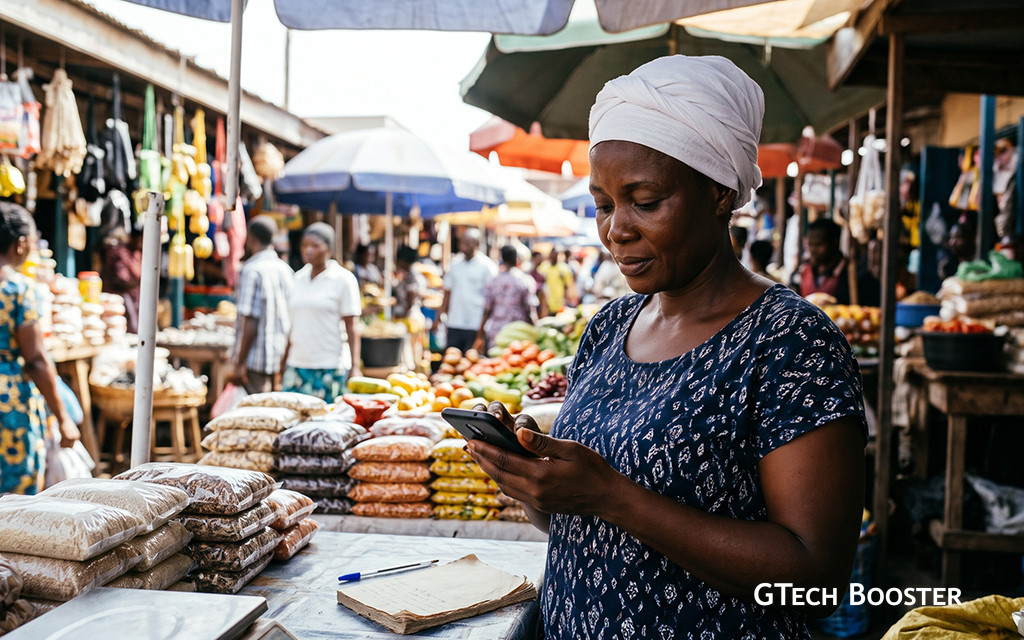
For most Ghanaians, mobile money is no longer a side service on a phone. It is the wallet in which salaries arrive, the till at which market women are paid, the channel through which school fees, rent, susu contributions, church offerings and family support move every day. So when a limit on that wallet changes, the effect reaches far beyond the technical staff of a telecom company.
On 24 November 2026, a new set of wallet and transaction limits took effect for mobile money customers, merchants and agents in Ghana. The headline change is that Medium and Enhanced KYC customers, who until then had no monthly transaction limit at all, now face one: GH¢150,000 a month for Medium KYC wallets and GH¢300,000 a month for Enhanced KYC wallets. Wallet balance ceilings and daily limits for customers did not change. Merchants and agents also received revised limits, and these are more complex. This article explains the change in detail. It describes what the limits are and how they interact, traces the history that led to them, sets out what has been published by MTN MoMo and what I could and could not find for Telecel Cash and AT Money, analyses why the Bank of Ghana acted and who is likely to feel the effect, looks closely at the new merchant and agent tables, and offers practical guidance for individuals, traders and organisations. It also warns about the scams that have already begun to follow the announcement. The story is only a few days old, and some facts, especially the details of Telecel Cash and AT Money implementation, are still emerging, so check your own provider’s official channels before acting on any figure here.
What changed, in plain terms
The facts are these. MobileMoney Fintech Limited, usually shortened to MMFL, the company that runs MTN’s MoMo service, issued a statement dated 25 November 2026 announcing revised wallet and transaction limits for mobile money customers, merchants and agents. According to the statement as reported by several Ghanaian outlets, the review was made in line with the Bank of Ghana’s agenda to enhance financial stability and applies to all Dedicated Electronic Money Issuers, known as DEMIs, in Ghana, which means it is industry wide and not specific to MTN. The new limits took effect on Tuesday, 24 November 2026.
For customers, three of the four numbers that matter did not move. The maximum amount a wallet can hold, called the wallet limit or balance ceiling, remains GH¢5,000 for Minimum KYC, GH¢40,000 for Medium KYC and GH¢75,000 for Enhanced KYC. The maximum a customer can transact in a day remains GH¢3,000, GH¢15,000 and GH¢25,000 respectively. The monthly limit for Minimum KYC remains GH¢10,000. What is new is the monthly limit for the other two tiers. Medium KYC customers, who previously had no monthly limit, now have GH¢150,000, and Enhanced KYC customers, who also had none, now have GH¢300,000. MTN’s page states that only these two monthly figures are new, that money already in wallets is not affected, and that merchants and agents will be notified directly about the limits that apply to their accounts.
How the three kinds of limit work together
Many customers confuse the three limits, and the confusion matters now that a third has been added to two of the tiers. MTN’s published explanation is clear. The wallet limit is the maximum balance your wallet can hold. The daily limit is the maximum value you can transact in a day. The monthly limit is the maximum value you can transact in a month. They operate independently, so a customer must stay inside all three.
The three limits behave differently when you reach them. If you reach the daily limit, MTN says, your transaction will not be successful for the rest of the day, and you can transact again once the limit resets after midnight. If you reach the monthly limit, your transaction will not be successful for the rest of the month, and you can transact again when the new month starts. If your balance is at the wallet limit, incoming money may be rejected or held depending on the operator’s rules, which is why people who receive large payments are advised to move funds to a bank account regularly. These are MTN’s descriptions of its own system, and Telecel Cash and AT Money may handle edge cases differently, so ask your provider.
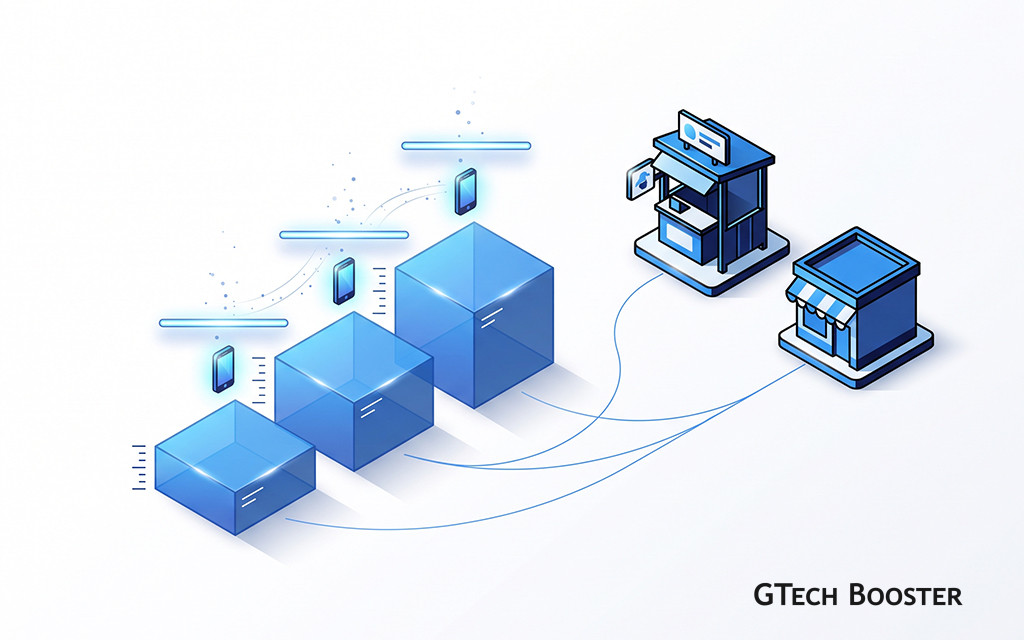
A little arithmetic helps to show where the new cap bites. A Medium KYC customer has a daily limit of GH¢15,000 and a monthly limit of GH¢150,000, so the monthly figure is ten times the daily figure. A customer who used the full daily limit every day could do so for only ten days in a month before hitting the cap. An Enhanced KYC customer has a daily limit of GH¢25,000 and a monthly limit of GH¢300,000, which is twelve times the daily figure, so full daily use could continue for twelve days. For Minimum KYC, the monthly limit of GH¢10,000 is only a little over three times the daily limit of GH¢3,000, so that tier has always been monthly constrained. Spread evenly across thirty days, GH¢150,000 is GH¢5,000 a day and GH¢300,000 is GH¢10,000 a day. Most individuals, even those who are very active, move far less than this, so for the typical user the cap will never be noticed. For a business that uses a personal wallet as a till, a payroll account or a supplier payment channel, it is a different matter.
One question remains that MTN’s published material does not settle: which transactions count toward the monthly limit. The page describes the monthly limit as the maximum value you can transact in a month but does not say whether the total includes only money you send and cash out, or also money you receive. Older versions of limit tables published by operators spoke of daily debit limits, which suggests that outgoing transactions count, but customers who handle large flows should ask their provider to confirm exactly what is counted, including whether payments to merchants, bill payments, transfers to bank accounts and transactions between your own wallets all count.
KYC tiers: what the names mean
KYC stands for know your customer, the identification checks that financial institutions are required to perform. Mobile money wallets are classified by how much identification the customer has provided, and the limits rise with the level. Minimum KYC is the entry level, typically reached when a SIM card is registered, and it carries the lowest limits. Medium KYC requires more information. MTN says that a customer moving from Minimum to Medium can do so by dialling *170#, selecting option 6, My wallet, then option 7, Upgrade profile type, entering next of kin details and source of funds, and confirming with a PIN. Enhanced KYC is the highest level, and moving from Medium to Enhanced, according to MTN, requires visiting an MTN office or completing an online form and providing proof of address, such as a utility bill, a tenancy agreement or a bank statement. Because the monthly cap is higher for Enhanced KYC, upgrading is now the main way for an individual to gain headroom. Telecel Cash and AT Money use similar tiers, though the procedures and the names of the steps differ, so use your own provider’s channels.
How we got here: a short history of the limits
The new monthly caps make more sense against the history of the limits, which have mostly moved upward. In March 2020, as part of the response to the COVID-19 pandemic, the Bank of Ghana approved temporary incentives, including higher wallet and daily limits, to encourage digital payments and reduce handling of cash. In December 2022, the Bank announced an upward review of daily transaction limits and maximum balances, and MTN implemented it in January 2023. At that time the daily limits for Minimum, Medium and Enhanced accounts rose from GH¢1,000, GH¢5,000 and GH¢10,000 to GH¢2,000, GH¢10,000 and GH¢15,000, and the aggregate monthly limits, according to the Bank’s release, remained unchanged, with Medium and Enhanced accounts having no limit and Minimum accounts having a limit of GH¢6,000.
In February 2024, the Bank announced another upward revision effective 1 March 2024. Daily limits rose to GH¢3,000, GH¢15,000 and GH¢25,000. Maximum balances rose to GH¢5,000, GH¢40,000 and GH¢75,000, from GH¢3,000, GH¢25,000 and GH¢50,000. The monthly limit for Minimum accounts rose from GH¢6,000 to GH¢10,000, while Medium and Enhanced accounts remained without a monthly limit. The Ghana Chamber of Telecommunications, which communicated the revision on behalf of the DEMIs, linked it to the surge in mobile money transactions shown in the Bank’s 2023 fintech sector report, and the Bank’s own data showed that mobile money transactions reached a record GH¢1.912 trillion in 2023. The November 2026 change is therefore the first time in this sequence that a ceiling has been added where none existed, and it leaves the daily and balance limits from 2024 intact. Readers of earlier explainers, including those that stated that Medium and Enhanced accounts had no monthly limit, should treat that statement as out of date from 24 November 2026.
MTN MoMo, Telecel Cash and AT Money: what is published
The three operators are the Dedicated Electronic Money Issuers that serve nearly all Ghanaian mobile money customers. MTN’s wallet service is run by MMFL, which was carved out of MTN Ghana recently, with the separation completed less than two months before May 2026. Telecel Cash is operated by Telecel Ghana’s mobile financial services arm, formerly Vodafone Cash, and AT Money by AT Ghana, formerly AirtelTigo.
The Telecel Ghana Revised Mobile Money Wallet Transaction Limits page provides communication to the new limits. Telecel customers can use the Telecel Cash USSD menu, commonly reached by dialling *110#, the Telecel Play app or customer care on 100, or 050 555 5600 from other networks, as noted in earlier articles in this series, and
For MTN MoMo as well, the position is well documented. The company published a page titled Revised MoMo Wallet and Transaction Limits, last modified on 25 November 2026, with tables for customers, merchants and agents, a frequently asked questions section and instructions for checking limits. Customers can check theirs by dialling *170# and following the prompts, through the MoMo app, on the MoMo website, or at any MoMo customer centre, and merchants and agents can dial *171# and use the My Wallet menu, which includes a Check Wallet Limit option.
AT Money customers should use the AT Money menu and AT Ghana’s customer service channels, since there is no update as of yet from them. Whichever operator you use, the safest approach is to ask for the limit applying to your own account in writing or by message, because tier names and procedures can differ between providers.
Why the Bank of Ghana acted: the stated reason and the context
The stated reason is financial stability. MMFL’s announcement describes the revision as being in line with the Bank of Ghana’s agenda to enhance financial stability, and its chief regulatory risk and compliance officer, Godwin Kwami Tamakloe, said the revised limits are a significant step in the right direction and that MoMo and other operators are implementing them.
The context points in a clear direction. Mobile money has become critical national infrastructure. Ghana had about 26.7 million active mobile money wallets and almost 491,000 active agents, according to a May 2026 analysis, and MTN’s platform alone serves more than 19.3 million active users, according to another report. On 5 November 2026, the Bank of Ghana issued Notice No. 41 designating MobileMoney Fintech Limited, alongside the Ghana Interbank Settlement system and GhIPSS, as a systemically important payment service provider under its new framework, which brings enhanced supervisory expectations because the failure of such a provider would threaten the wider payment system. That notice does not mention wallet limits, so I do not claim that it caused the monthly caps, but it shows that the central bank has been tightening its view of the sector. Earlier in 2026, on 26 May, the Bank directed MMFL to pause a proposed 0.75 percent fee on wallet to bank transfers after public anger, pending consultation, which shows an active regulator.
Fraud is another thread. Ghana Bankers Association data for the first quarter of 2026 put mobile money fraud at 31.5 percent of all recorded fraud cases nationally, according to a news report, and a commentator argued that growing balances sitting in mobile wallets, instead of bank deposits, could weaken the central bank’s ability to manage money supply, credit and inflation through its usual tools, and could pose risks to partner banks. Monthly caps give supervisors a clearer ceiling on how much value can pass through a single higher tier wallet, make unusual activity easier to detect, and push very large flows towards more heavily regulated channels such as bank accounts or merchant accounts with stronger identification. These are plausible policy reasons, but the Bank has not, as far as I could find, listed them in public in connection with this change.
Who is likely to feel the change
It is important to be realistic about who is affected. For most individuals, the answer is no one. A salaried worker who receives GH¢5,000 a month and spends most of it through MoMo will move perhaps GH¢10,000 or GH¢15,000 in total, far below the monthly caps. A student receiving allowances, a family sending remittances and a person paying bills will not come near them. Customers with Minimum KYC are unaffected because their limits did not change.
The group that will notice is heavy users on Medium and Enhanced tiers, especially people who use personal wallets for business. Examples include a trader who sells goods and collects customer payments in a personal wallet, then pays suppliers from the same wallet. A landlord who receives rent from many tenants and then moves the money to a bank. A transport operator who collects fares and pays drivers. A church, mosque, school parent association or susu group that collects contributions and distributes payouts through one wallet. A small importer who pays suppliers and freight forwarders. A freelancer who is paid by clients abroad and withdraws or spends it. In such cases, the same money can be counted several times, once when it comes in, if inflows count, and again when it goes out, so GH¢150,000 of monthly business flow can be reached with far less real income than the number suggests. Whether inflows count is, again, the key unknown to clarify.
The effect on the timing of payments also matters. Because the monthly limit resets at the start of the month, a business that reaches the cap in the third week will be unable to transact by wallet until the next month begins, which can be disruptive in the days before the month end when salaries, rent and supplier invoices are due. Planning payments across the month, and having an alternative channel such as a bank account, becomes important.
Merchants and agents: larger numbers, new ceilings
The revised limits for merchants and agents are in some ways the most significant part of the change, because these accounts handle the largest flows. MTN’s page sets out the merchant limits by tier. For Tier 1 merchants, the wallet limit rises from GH¢5,000 to GH¢80,000 and the monthly limit from GH¢10,000 to GH¢400,000. For Tier 2, the wallet limit rises from GH¢40,000 to GH¢1,200,000, and the monthly limit moves from no limit to GH¢15,000,000. For Tier 3, the wallet limit rises from GH¢75,000 to GH¢12,000,000, and the monthly limit moves from no limit to GH¢20,000,000. In short, merchants gain much larger balance ceilings, which is helpful for businesses that collect large sums, while the higher tiers, which previously had no monthly limit, now face monthly ceilings. MTN also says that Nano merchants will move to Tier 1, and that merchants without a Municipal Assembly certificate will later need to move to the Enhanced tier, which signals a push to formalise small businesses. Merchants are advised to settle funds to their bank regularly so that they stay within their wallet limit.
The agent limits are listed for four tiers. Agent Tier 1 has a wallet limit of GH¢200,000, a daily limit of GH¢100,000 and a monthly limit of GH¢700,000. Tier 2 has GH¢1,000,000, GH¢500,000 and GH¢3,000,000. Tier 3 has GH¢6,000,000, GH¢1,000,000 and GH¢15,000,000. Tier 4 has GH¢12,000,000, GH¢5,000,000 and GH¢25,000,000. MTN’s page presents these as the limits without showing the earlier ones, so a comparison needs care. When MTN revised agent limits in March 2024, a report said the wallet limits for Tiers 1 to 4 were GH¢1 million, GH¢10 million, GH¢30 million and no limit, daily limits were GH¢200,000 for Tier 1, GH¢1 million for Tier 2 and unlimited for Tiers 3 and 4, and monthly limits were GH¢700,000, GH¢10 million, GH¢30 million and unlimited. If those earlier figures and tier definitions still applied until November 2026, the new agent tables are lower in several tiers, especially for wallet limits and for the upper tiers’ daily and monthly ceilings, which would mean a tightening for the largest agents and not an expansion. Because tier definitions can change and the earlier numbers come from news reports of a particular year, agents should not rely on my comparison and should check their actual new limits through *171#, plan their float and rebalancing early, and speak to their field officer, as MTN advises.
For the wider public, agent limits matter because agents are the cash points of the system. A tighter ceiling on how much float an agent can hold, or how much cash value they can move, may reduce the cash an agent can offer on busy days, such as month end and festive periods, unless agents rebalance more often. The rural reach of agents is particularly important, since a policy analysis cited by a Ghanaian outlet noted that on average 76 percent of mobile money agents are within 30 minutes of consumers in rural areas, though I could not confirm that the commentary refers to this specific change.
Weighing the effects
A balanced assessment has to consider both the benefits that the Bank of Ghana and the operators point to and the costs that users and businesses may bear.
On the benefit side, caps are a standard prudential and anti financial crime tool. They limit the amount of value that can move through accounts with lighter identification, make it harder to use wallets for layering funds, create natural thresholds at which providers must request more documentation, reduce the potential loss from a compromised account and give supervisors a cleaner picture of high value activity. Because mobile money fraud represents a large share of recorded fraud, tighter ceilings on very large flows may help. The overall caps are high enough that the great majority of customers will notice nothing. And the merchant tables, by raising wallet ceilings greatly, acknowledge that businesses need room to operate.
On the cost side, any limit adds friction. Heavy users must monitor their totals, may need to upgrade their KYC level, move large payments to banks and plan around the month end. Small businesses that operate informally may be pushed to formalise sooner than they planned, which is a policy aim for some and a burden for others. Traders who lose the ability to transact for part of a month could revert to cash, which is harder to track and riskier to carry, working against the cash lite goal that the Bank has promoted since 2020. The impact depends heavily on details not yet public, such as what counts toward the limit, how quickly operators process upgrades and whether there are exceptions or emergency procedures. There is also a risk of confusion: a change announced just before the end of the month, effective the day before the announcement was dated, in a market where many customers rely on word of mouth, can lead to rumours and scams.
What to do now
A few practical steps will serve most people well. First, find out your own limits. Dial your provider’s USSD code, for Telecel and AT *110# and for MTN *170#, or use the app or a customer centre, and note your wallet, daily and monthly limits. Second, estimate your monthly flow. Add up what you send, pay and withdraw in a typical month, and, until your provider confirms otherwise, assume that money you receive may count too. If the total is comfortably below your cap, you can carry on as before. Third, if you are close, upgrade your KYC level. A Medium KYC customer who needs more room can seek the Enhanced tier, which doubles the monthly cap, by following the provider’s process and preparing proof of address, and a Minimum KYC customer who is near GH¢10,000 a month should consider moving to Medium.
Fourth, use the right channel for large payments. Bank transfers, interbank instant payment systems and mobile money interoperability to bank accounts are better suited to high value payments, and a business with significant turnover should consider a proper merchant account, which has larger limits, or a business bank account. Fifth, plan around the calendar. Because the monthly limit resets at the start of the month, avoid leaving large payments until the last days, and keep a buffer. Sixth, keep records. If you run a small business through a wallet, keep a simple ledger of receipts and payments so that you can explain your activity if your provider asks for source of funds documents. Seventh, ask your provider about emergencies, for example what you can do if a limit blocks an urgent payment.
There is one thing not to do. Do not try to evade a cap by splitting activity across several family members’ wallets or several SIM cards without their genuine involvement, or by breaking payments into artificial pieces. Such practices, often called structuring, can breach provider terms and anti money laundering rules, and can lead to account restrictions or worse. If your needs are legitimately higher than your tier allows, the correct response is to upgrade, move to a merchant or business account, or use banking channels.
Beware the scams that follow limit changes
Fraudsters follow every announcement. Telecel, AT and MTN’s statement and FAQ say clearly that MoMo will never ask for a customer’s PIN, one time password or any fee to review or upgrade transaction limits, and that a caller who offers to upgrade your limit is a scammer. These warnings are not boilerplate. A typical scam call says that your account will be blocked or reduced unless you act, asks you to confirm your PIN or a code sent by text, or asks for a small fee to raise your limit. The rules are simple: never share your PIN or OTP with anyone, including people who say they are staff; do not respond to unsolicited calls or messages about your limits; check your limits only through official channels, such as the USSD code you dial yourself, the app or a customer centre; and report suspicious calls to your provider or report fraud by text to 1515 or 419, but check the current reporting channels with your provider.
Common questions
Many readers are asking similar questions.
- Will my balance be affected?No, the providers says wallet balances are not affected.
- Do I have to do anything?Not unless you are a heavy user, a merchant or an agent, in which case you should check your limits.
- Does this affect my ability to borrow?MTN says its loan limit conditions remain the same and that continued use of the account to transact helps customers qualify (Don’t take loans for the availability of it, stay wise).
- Is this only for one provider?No, the review applies to all DEMIs, so MTN MoMo, Telecel Cash and AT Money customers should expect the same caps and should confirm with their provider.
- Is the monthly limit a calendar month? You can transact again once the new month starts, which indicates a calendar month.
- Can I get a higher limit? Yes, by upgrading your KYC level, or by moving to a merchant or business account where appropriate.
- Where do I complain if there is a problem?Start with your provider, and if the issue is not resolved, escalate to the Bank of Ghana through its published consumer channels.
What to watch next
Several developments will clarify the picture. The first is a statement from the Bank of Ghana, which could set out the rationale, the definition of what counts toward the monthly limits and any exceptions. The second is published guidance from AT Money, including their own tables, procedures and dates. The third is the experience of merchants, agents and heavy users over the first full month, especially at month end, when the cap will first bite for many. The fourth is whether the Bank adjusts the limits after consultation, as it did when it suspended the proposed wallet to bank fee in May. The fifth is the effect of the new supervision regime for systemically important providers, which could bring further requirements on liquidity, resilience and customer protection. And the sixth is whether the changes shift behaviour towards bank channels and formal merchant accounts, or push some users back to cash.
Final thoughts
The revised mobile money limits are a narrow change with broad implications. In its simplest form, one new rule was added on 24 November 2026: Medium KYC wallets may transact up to GH¢150,000 a month and Enhanced KYC wallets up to GH¢300,000, where before there was no monthly limit. Wallet balances and daily limits for customers stay as they were, and MTN says that money already in wallets is safe. For the large majority of users, nothing changes in practice. For businesses and organisations that run high volumes through personal wallets, the cap introduces a ceiling that must be planned for, and the new merchant and agent tables reshape how larger accounts operate, with higher balance ceilings for merchants and, on the evidence of earlier reports, possibly tighter limits for some agent tiers.
The wider lesson is that mobile money in Ghana has matured from an experiment in inclusion into a core part of the financial system, and that regulation is following that scale. Limits, supervision and fee oversight are all part of the same story. Users are best served by understanding their own tier, knowing how limits interact, upgrading where they need room, using banks and merchant accounts for large flows, avoiding evasion, and staying alert to scams. Because details are still emerging, especially for AT Money, check your provider’s official channels and the Bank of Ghana’s announcements for the exact figures and rules that apply to you before relying on any number in this article.













Conversation
One last step to post your comment
Your comment is saved. Confirm it's you - no password needed.
Back to editing