The African Union and the Instruments for Technological Development
These instruments span digital infrastructure, artificial intelligence, cybersecurity and data protection, science and innovation policy, and digital trade, and together they form the closest thing the continent has to a coordinated technology policy architecture.
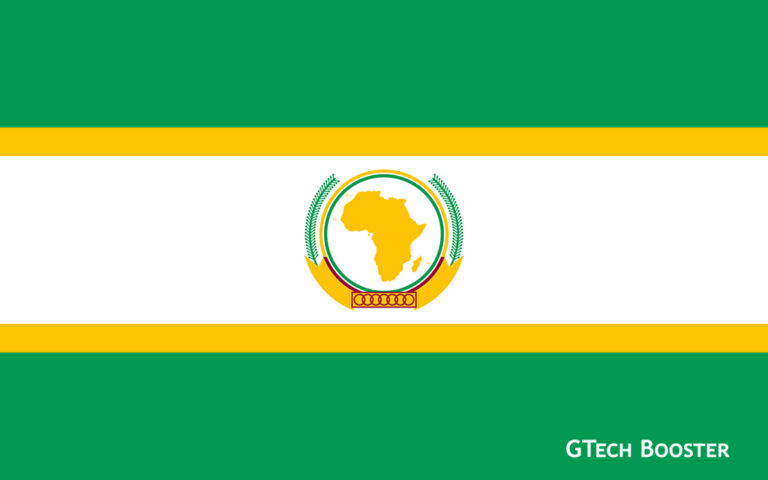
The African Union has, over the past decade in particular, built out a genuinely substantial body of continental strategies, frameworks, conventions, and treaties aimed at driving technological development across its 55 member states. These instruments span digital infrastructure, artificial intelligence, cybersecurity and data protection, science and innovation policy, and digital trade, and together they form the closest thing the continent has to a coordinated technology policy architecture. This article walks through the major AU instruments currently in place, what each one actually does, and how they fit together, with direct references to the actual AU documents underpinning each one.
Agenda 2063: The Foundational Framework Everything Else Sits Under
Before looking at any individual technology instrument, it helps to understand the document that all of them formally sit beneath. Agenda 2063 is the African Union’s fifty-year strategic framework and master plan for transforming the continent, adopted by African Heads of State and Government, and it functions as the overarching vision that essentially every subsequent AU technology strategy explicitly positions itself as helping to deliver. Every major instrument discussed below, from the Digital Transformation Strategy to the Continental AI Strategy, explicitly frames itself as a contribution toward Agenda 2063’s goals, making it the constitutional backbone of the AU’s entire technology policy landscape rather than a technology instrument in its own right.
Agenda 2063
Popular Version
The Digital Transformation Strategy for Africa (2020-2030)
The single most central instrument in the AU’s technology architecture is the Digital Transformation Strategy for Africa, commonly abbreviated DTS, endorsed at the 36th Ordinary Session of the AU Executive Council in February 2020. The strategy describes itself as the master plan intended to guide a common, coordinated digitalization agenda across the continent for the following ten years, with the explicit goal of building an integrated and inclusive digital society and economy that improves the quality of life of Africa’s citizens, strengthens existing economic sectors, and ensures continental ownership, positioning Africa as a producer rather than merely a consumer within the global digital economy.
The Digital Transformation Strategy for Africa (2020-2030)
An Integrated, Prosperous and Peaceful Africa.
The strategy is built around foundational pillars, critical sectors intended to drive digital transformation, and cross-cutting themes supporting the broader digital ecosystem, and it explicitly builds on and coordinates with a range of pre-existing initiatives and frameworks, including the Policy and Regulatory Initiative for Digital Africa, the Programme for Infrastructure Development in Africa, and the African Continental Free Trade Area. It was developed collaboratively by the AU Commission alongside the UN Economic Commission for Africa, the Smart Africa Alliance, AUDA-NEPAD, Africa’s Regional Economic Communities, the African Development Bank, the Africa Telecommunications Union, the International Telecommunication Union, and the World Bank, reflecting a genuinely broad multi-institutional development process rather than a document produced by the AU Commission alone.
Reference: African Union, The Digital Transformation Strategy for Africa (2020-2030), endorsed by the AU Executive Council, February 2020, available at au.int/en/documents/20200518/digital-transformation-strategy-africa-2020-2030.
Two significant instruments were subsequently endorsed under the DTS umbrella at the AU Summit in February 2022:
- The AU Interoperability Framework for Digital ID, which sets out a vision for enabling African citizens to securely access public and private services regardless of their physical location, using a common approach to digital identity.
- The AU Data Policy Framework, which provides a mechanism for African countries to maximize data usage and cross-border data flows in support of data-driven value creation and innovation, aiming to strengthen and harmonize data governance approaches across the continent and create a shared African data space.
Reference: African Union, AU Data Policy Framework, endorsed by the AU Executive Council, February 2022.
The Malabo Convention: The Continent’s Binding Cybersecurity and Data Protection Treaty
Where the DTS is a strategic guiding framework, the African Union Convention on Cyber Security and Personal Data Protection, universally known as the Malabo Convention, is a binding legal treaty, and it is currently the only binding continent-wide treaty on data protection in existence anywhere outside Europe. It was adopted on 27 June 2014 in Malabo, Equatorial Guinea, but under its own Article 36, it required ratification by at least fifteen AU member states before it could legally enter into force, a threshold that took nearly a decade to reach. Mauritania’s ratification on 9 May 2023 became the fifteenth, and the Convention formally entered into force thirty days later, on 8 June 2023.
The Convention establishes a comprehensive legal framework across three broad thematic areas: electronic commerce and the legal recognition of electronic transactions, personal data protection, and cybersecurity and cybercrime. Article 8(1) frames its core purpose as strengthening fundamental rights and public freedoms, particularly the protection of personal data, while punishing violations of privacy without undermining the principle of the free flow of information. It requires every ratifying member state to establish an independent national data protection authority, and it sets out core data protection principles including lawful and transparent processing, data accuracy, and confidentiality.
Ratification has remained slow and uneven even after entry into force, with several major economies, including South Africa, not yet having adopted it, often because they already maintain national data protection laws considered more comprehensive or better aligned with international standards such as the EU’s General Data Protection Regulation. Nonetheless, its entry into force remains a genuine milestone, giving Africa a continental legal reference point for cybersecurity and data governance that did not previously exist in binding form.
Reference: African Union, African Union Convention on Cyber Security and Personal Data Protection (Malabo Convention), adopted 27 June 2014, entered into force 8 June 2023, available at au.int under AU Treaties.
The Science, Technology and Innovation Strategy for Africa (STISA-2024)
Predating the DTS by several years, the Science, Technology and Innovation Strategy for Africa, known as STISA-2024, was adopted by African Heads of State and Government in June 2014, developed under a High Level Panel of African and diaspora scientists co-chaired by Professor Calestous Juma of Harvard Kennedy School and Professor Ismail Serageldin, Director of the Bibliotheca Alexandrina. It was conceived as the first of a series of incremental ten-year strategies intended to embed science, technology, and innovation at the center of Africa’s development agenda under Agenda 2063.
STISA-2024 is structured around six priority areas: eradication of hunger and achievement of food security, prevention and control of diseases, communication in both physical and intellectual mobility terms, protection of Africa’s space, building societal cohesion, and wealth creation. Supporting these priorities are four mutually reinforcing implementation pillars: building or upgrading research infrastructure, enhancing technical and professional competencies, promoting entrepreneurship and innovation, and providing an enabling policy and regulatory environment for science, technology, and innovation development. Implementation is designed to operate simultaneously at national level, where member states are expected to fold the strategy into their own national development plans, at regional level through the Regional Economic Communities, and at continental level through the AU Commission and AUDA-NEPAD.
The Malabo Convention
African Union, Science, Technology and Innovation Strategy for Africa 2024
Reference: African Union, Science, Technology and Innovation Strategy for Africa 2024 (STISA-2024), adopted by AU Heads of State and Government, June 2014, available at au.int/en/documents/20200625/science-technology-and-innovation-strategy-africa-2024.
The Continental Artificial Intelligence Strategy
The AU’s most recent major technology instrument is its Continental Artificial Intelligence Strategy, and it represents the first comprehensive AI governance framework adopted at a continental level anywhere in Africa. Its development followed a two-stage process: an AI Continental Framework was first approved by the AU Specialized Technical Committee on Communication and ICT in November 2023 and endorsed by the AU Executive Council in February 2024, before African ICT and Communications Ministers unanimously endorsed the fuller Continental AI Strategy itself, alongside a companion African Digital Compact, during a Specialized Technical Committee session in June 2024. The AU Executive Council formally adopted the Continental AI Strategy during its 45th Ordinary Session, held on 18 to 19 July 2024 in Accra, Ghana.
The strategy sets out a vision grounded in responsible and ethical AI driving inclusive, sustainable growth and cultural renaissance across the continent, built around five key focus areas of continental action, including leveraging AI’s benefits for socio-economic development, building governance frameworks, developing local AI talent and infrastructure, and mitigating AI-related risks. It explicitly promotes an Africa-centric, development-focused approach, encouraging member states to adopt unified national approaches to AI in order to strengthen the continent’s position and cooperation on the global stage. Implementation follows a phased plan running from 2025 through 2030, with an initial phase from 2025 to 2026 focused on building governance frameworks, national AI strategies, resource mobilization, and capacity building, followed by a second phase from 2028 implementing core projects following a 2027 review.
The Continental Artificial Intelligence Strategy
It explicitly promotes an Africa-centric, development-focused approach, encouraging member states to adopt unified national approaches to AI in order to strengthen the continent’s position and cooperation on the global stage.
Reference: African Union, Continental Artificial Intelligence Strategy, endorsed by the AU Executive Council, 45th Ordinary Session, Accra, Ghana, 18-19 July 2024, available at au.int/en/documents/20240809/continental-artificial-intelligence-strategy.
Building further on this foundation, in April 2025 in Kigali, Rwanda, 49 African countries signed the Africa Declaration on Artificial Intelligence, a political roadmap outlining seven core commitment areas including talent development, creation of open datasets, deployment of sovereign computing infrastructure, establishment of a continental AI market, creation of an AI fund, adoption of innovative governance policies, and strengthened institutional cooperation, reflecting continued political momentum behind the Continental AI Strategy beyond its initial 2024 adoption.
The Programme for Infrastructure Development in Africa (PIDA)
Technology strategy is only as effective as the physical infrastructure that underpins it, and PIDA is the AU’s primary continental instrument addressing that layer directly. Adopted by African Heads of State and Government at the 18th Ordinary Session of the AU Summit in 2012, PIDA is a joint initiative of the AU Commission, AUDA-NEPAD, the African Development Bank, and the UN Economic Commission for Africa, covering four sectors: transport, energy, trans-boundary water resources, and information and communication technology. Its Priority Action Plan originally comprised 51 cross-border infrastructure programmes, and a further consolidated list of 69 PIDA projects, covering transport, energy, water, and digital connectivity, was adopted by the African Union in 2021, carrying an estimated combined cost of roughly 160.8 billion US dollars.
Within the ICT sector specifically, PIDA underpins the broadband terrestrial infrastructure and digital connectivity investments that the DTS, the Continental AI Strategy, and STISA-2024 all implicitly rely on to be achievable in practice, since none of the AU’s more software- and policy-oriented technology strategies can succeed without the underlying physical connectivity infrastructure PIDA is meant to deliver.
The Programme for Infrastructure Development in Africa (PIDA)
AU’s primary continental instrument addressing that layer directly.
Reference: African Union, Programme for Infrastructure Development in Africa (PIDA), adopted by the AU Assembly, 18th Ordinary Session, 2012; PIDA Priority Action Plan 2 adopted 2021, documentation available at au-pida.org.
The AfCFTA Protocol on Digital Trade
The African Continental Free Trade Area, or AfCFTA, entered into force in May 2019 as the world’s largest free trade area by number of participating countries, and its Protocol on Digital Trade, officially adopted at the 37th AU Heads of State Summit in February 2024, is the first dedicated digital trade agreement covering the entire African continent. The Protocol’s general objective is to support the AfCFTA’s broader aims by establishing harmonized rules, common principles, and shared standards enabling digital trade for sustainable, inclusive socio-economic development.
Among its stated objectives, the Protocol commits state parties to promoting and facilitating intra-African digital trade by eliminating barriers between them, establishing predictable and transparent harmonized rules for digital trade, creating a secure and trustworthy digital trade ecosystem for businesses and consumers, promoting open standards to enable interoperability across systems and frameworks, and encouraging trusted, safe, and ethical adoption of digital trade practices. Notably, researchers examining the Protocol have observed a degree of tension between it and the AU Data Policy Framework discussed earlier: while the Digital Trade Protocol aligns closely with World Trade Organization rules on cross-border data flows, it does not fully reflect the Data Policy Framework’s emphasis on protecting African interests within the global data economy, a divergence with real implications given how foundational data access is to AI development specifically.
The AfCFTA Protocol on Digital Trade
Protocol to the agreement establishing the African continental free trade area on Digital trade
Reference: African Union, Protocol to the Agreement Establishing the African Continental Free Trade Area on Digital Trade, adopted at the 37th AU Assembly of Heads of State and Government, February 2024, available at au.int/en/treaties/protocol-agreement-establishing-african-continental-free-trade-area-digital-trade.
How These Instruments Fit Together
Taken together, these instruments form a layered architecture rather than a single unified document, and understanding how they relate to one another is genuinely important for grasping the AU’s overall approach.
Agenda 2063 sits at the top as the shared strategic vision every other instrument explicitly serves. STISA-2024, the oldest of the technology-specific instruments discussed here, provides the foundational science and innovation policy layer. PIDA provides the physical infrastructure layer that connectivity-dependent strategies rely on to be achievable at all. The Digital Transformation Strategy functions as the central coordinating master plan for the digital economy specifically, with the Data Policy Framework and Digital ID Interoperability Framework operating as more targeted instruments nested beneath it. The Malabo Convention supplies the binding legal layer for cybersecurity and data protection that the more aspirational strategic documents lack on their own. The AfCFTA Digital Trade Protocol extends the continent’s broader trade integration project explicitly into the digital domain. And the Continental AI Strategy represents the newest and most technology-specific layer, addressing a capability that essentially did not exist as a distinct policy category when most of the earlier instruments were originally drafted.
Genuine Limitations Worth Acknowledging
None of this architecture should be read as evidence that Africa’s technology governance challenges are already solved on paper. The Malabo Convention’s nearly decade-long path to entry into force, and its continued low ratification rate even afterward, illustrates a recurring pattern across several of these instruments: ambitious continental agreement followed by slow, uneven domestication at the national level. Internet penetration across the continent remains well below the global average, and electrification rates vary enormously by sub-region, meaning the infrastructure PIDA is meant to deliver remains a genuine, ongoing gap rather than a solved precondition for the digital and AI strategies layered on top of it. And as the tension between the AfCFTA Digital Trade Protocol and the AU Data Policy Framework illustrates, even instruments developed within the same institutional ecosystem do not always align perfectly with one another in practice.
Wrapping Up
The African Union has, over roughly the past decade, assembled a genuinely comprehensive set of continental instruments addressing technological development, spanning binding treaties like the Malabo Convention, master strategic plans like the Digital Transformation Strategy and STISA-2024, infrastructure programmes like PIDA, trade instruments like the AfCFTA Digital Trade Protocol, and the newly adopted Continental Artificial Intelligence Strategy. Each instrument targets a distinct layer of the technology development challenge, legal foundations, physical infrastructure, digital economy coordination, science and innovation policy, and now AI governance specifically, and together they represent a genuinely serious, if still unevenly implemented, attempt to give the continent a coordinated voice and strategic direction in the global technology landscape rather than leaving each of its 55 member states to navigate that landscape entirely on their own.
More Information ℹ


















Conversation
Login to comment.
Log In / Register