Guest Posting in 2026 – Still Worth It?
Understanding whether guest posting remains worthwhile in 2026 requires looking past the simple question of whether it still works at all, and instead examining how the practice, and the reasons behind it, have genuinely changed over the years.

Guest posting refers to the practice of writing an article for someone else’s website or blog, rather than your own, typically with the goal of reaching a new audience, building credibility within an industry, and often, though not always, earning a link back to your own website in the process. It has been a fixture of online marketing and search engine optimization for well over a decade, and few tactics have been debated, revised, and occasionally declared dead as many times as this one has.
Understanding whether guest posting remains worthwhile in 2026 requires looking past the simple question of whether it still works at all, and instead examining how the practice, and the reasons behind it, have genuinely changed over the years.
How Guest Posting Was Originally Used
To understand where guest posting stands today, it helps to briefly understand where it came from. In earlier years of search engine optimization, guest posting became popular largely as a way to acquire backlinks, meaning links from other websites pointing back to your own. Search engines like Google have long used the number and quality of links pointing to a website as one of many signals used to judge how trustworthy or authoritative that website might be, and a link from another site was, in a fairly direct sense, treated as a vote of confidence.
This created an obvious incentive. If backlinks improved search rankings, and guest posts could include a link back to the author’s own site, guest posting became an efficient way to accumulate links at scale. Over time, this led to a wave of guest posting that had very little to do with genuinely informing or helping readers, and a great deal to do with simply placing links wherever possible, often on low quality websites created specifically to host large volumes of guest content.
How Search Engines Responded
Search engines, and Google in particular, have become significantly more sophisticated over the years at identifying exactly this kind of pattern. Rather than treating every backlink as equally valuable, modern search algorithms are far better equipped to recognize links that appear to exist purely for manipulation, meaning links placed with little regard for genuine relevance, editorial quality, or reader value, and to reduce or eliminate the influence those links carry on search rankings.
Importantly, this does not mean search engines penalize guest posting as a practice itself. Google has been fairly consistent in distinguishing between guest content that provides genuine editorial value to a publication’s actual readers and guest content that exists purely as a vehicle for a link, created with little concern for whether anyone would actually want to read it. The practice itself was never truly the problem. The problem was, and remains, low effort content produced purely to manipulate rankings rather than to inform anyone.
What Guest Posting Looks Like in 2026
Given this evolution, guest posting in 2026 functions quite differently from how it operated a decade ago, and understanding this shift is essential to judging whether it remains a worthwhile use of time and effort.
A Shift From Link Volume to Genuine Value
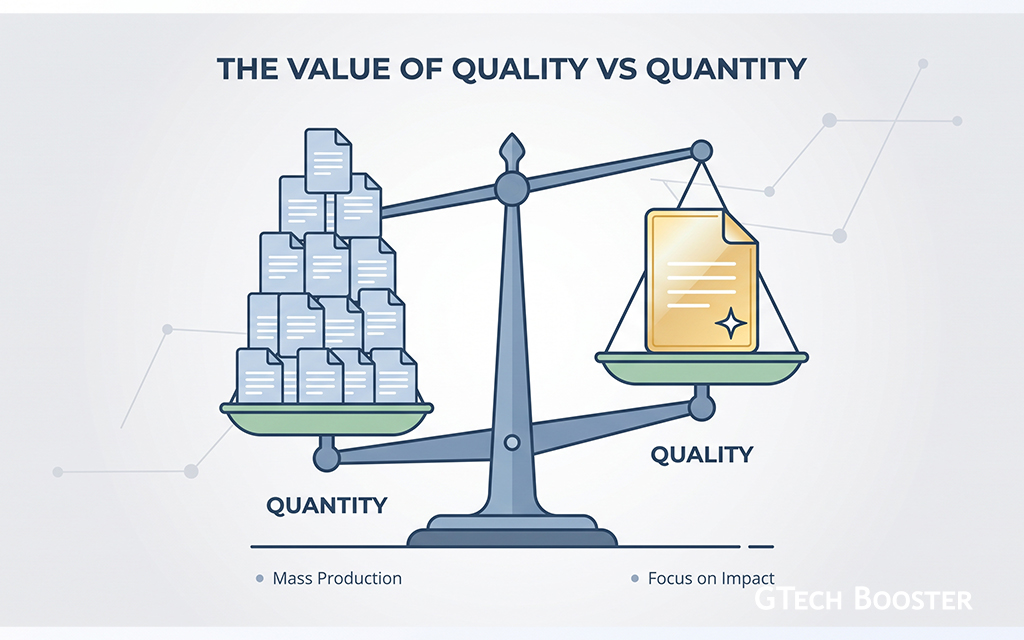
Where guest posting was once approached as a numbers game, placing as many articles as possible across as many websites as possible, the practice today generally rewards a much more selective, quality focused approach. A small number of well researched, genuinely useful articles placed on respected, relevant websites within a specific industry tends to deliver far more meaningful benefit than a large volume of generic articles scattered across many low quality sites, a pattern several current industry analyses describe consistently.
Relevance Matters More Than Ever
A guest post placed on a website with little genuine connection to the topic at hand carries far less value than it once might have, both in terms of how search engines interpret the resulting link and in terms of whether the audience reading it has any real interest in the subject matter. Publishing content on a site that shares genuine topical overlap with your own area of expertise has become one of the clearer markers separating an effective guest posting effort from a wasted one.
Editorial Standards Have Risen
Reputable publications accepting guest content today generally maintain much higher editorial expectations than in earlier years, often requiring original insight, demonstrated expertise from the author, and content that has not been recycled or lightly reworded from something published elsewhere. Publications that accept low effort, generic submissions with minimal scrutiny are increasingly viewed, by search engines and readers alike, as lower quality outlets, meaning a guest post placed there is unlikely to carry much meaningful weight.
Links Are No Longer the Only Goal
Perhaps the most significant shift is one of underlying purpose. Where guest posting was once pursued almost exclusively to accumulate backlinks, it is now more accurately understood as a channel for building brand visibility, reaching a specific professional audience, and establishing topical authority within an industry, with any resulting link treated as a welcome benefit rather than the entire point of the exercise. Many respected publications today apply what is known as a nofollow attribute to outbound links within guest content, meaning the link does not directly pass the same ranking signal it once might have, yet a well placed guest post on a respected site can still meaningfully benefit a business through visibility, referral traffic, and credibility, even without that direct ranking boost.
What Still Works Well
Several specific practices continue to make guest posting a genuinely worthwhile strategy for businesses and individuals willing to approach it thoughtfully.
Building Real Relationships With Editors
Rather than sending generic, mass produced pitches to dozens of publications at once, taking time to research a specific publication, understand its audience, and build a genuine professional relationship with its editors tends to produce far better placements and a much higher likelihood of future opportunities with that same publication.
Writing for the Reader First
Content written primarily to solve a genuine problem or answer a real question for a publication’s actual audience continues to perform well, both in terms of how readers respond to it and in terms of how favorably search engines and editors alike tend to view it, compared to content written primarily as a vehicle for a link.
Choosing Quality Over Quantity
A small number of well placed, thoughtfully written guest posts on genuinely respected, relevant sites continues to outperform a much larger number of placements on low quality or marginally relevant websites, both for search visibility and for the more human goal of building genuine professional reputation within an industry.
Using Natural, Varied Language for Any Links
When a guest post does include a link back to the author’s own site, using natural, varied phrasing rather than repeatedly forcing the exact same keyword phrase into the link text continues to be viewed far more favorably than the more mechanical, keyword stuffed linking patterns common in earlier years of guest posting.
What No Longer Works, or Never Really Did
Just as clearly, certain guest posting practices that may once have offered a shortcut to results are now far more likely to waste time or, in some cases, actively harm a website’s reputation.
Mass Outreach and Low Quality Placements
Sending large volumes of generic pitches to any website willing to accept a guest post, regardless of relevance or editorial standard, remains a largely ineffective and occasionally counterproductive approach, since search engines are increasingly capable of recognizing and discounting exactly this kind of pattern.
Recycled or Duplicated Content
Submitting the same or a lightly reworded article to multiple publications tends to be recognized both by editors reviewing submissions and by search engines evaluating content originality, and it generally undermines whatever credibility the guest posting effort was meant to build in the first place.
Ignoring a Publication’s Own Guidelines
Every reputable publication accepting guest content has its own expectations around tone, format, length, and subject matter, and pitching content that ignores these expectations rarely results in a successful placement, regardless of how well written the piece might be in isolation.
Treating It as a One Time Task
Guest posting tends to work best as a sustained, ongoing effort rather than a single short campaign, since building genuine relationships with publications and establishing a recognizable presence within an industry naturally takes place over a longer period of consistent, quality contributions.
Is It Still Worth It?
Taken together, the evidence suggests that guest posting remains a genuinely worthwhile activity in 2026, but only when approached with the priorities that now actually drive results, relevance, editorial quality, and genuine value to the reader, rather than the older priorities of sheer volume and link accumulation. For a business or individual willing to invest the time in identifying genuinely relevant publications, building real relationships with their editors, and producing content that would be worth reading even if it carried no link at all, guest posting continues to offer meaningful benefits in visibility, credibility, and audience reach.
For anyone hoping to treat it as a fast, low effort shortcut to improved search rankings, however, the honest answer is that this version of guest posting has largely stopped working, and search engines have become considerably better at recognizing and discounting exactly that kind of effort.
Bringing It All Together
Guest posting has not disappeared as a useful strategy, but it has fundamentally changed in what it rewards. The version of guest posting built around mass link acquisition and low quality, high volume placements has become largely ineffective, while a more selective, relationship driven, and genuinely reader focused approach continues to offer real value in 2026. The key distinction lies not in whether guest posting is used at all, but in whether it is approached as a genuine contribution to a relevant audience or as a shortcut around it, since search engines, editors, and readers alike have all grown considerably better at telling the difference.
More Information ℹ
















Conversation
Login to comment.
Log In / Register