Common SEO Mistakes that Quietly Kill your Traffic
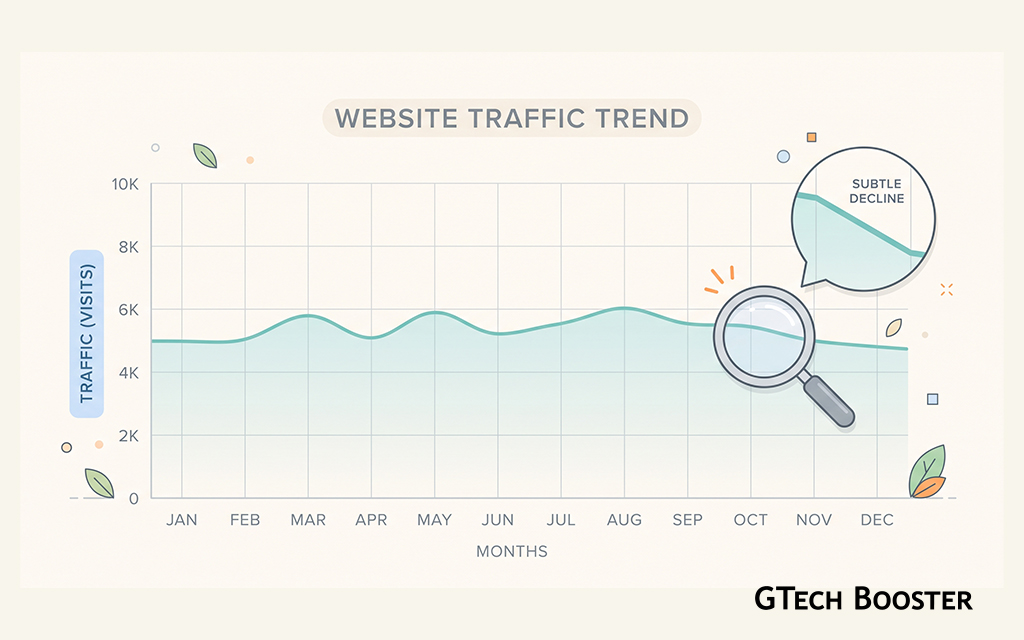
The frustrating reality for many website owners is that traffic decline caused by SEO mistakes rarely happens suddenly or dramatically.

Search engine optimization, commonly shortened to SEO, refers to the practice of shaping a website so that search engines like Google can understand it, trust it, and rank it favorably when people search for related topics. When SEO works well, a website gradually attracts a steady stream of visitors arriving directly from search results, often without any ongoing advertising spend at all.
The frustrating reality for many website owners is that traffic decline caused by SEO mistakes rarely happens suddenly or dramatically. Instead, it tends to unfold gradually, a slow erosion in visibility that is easy to miss until months have passed and the numbers have quietly dropped far lower than anyone noticed happening in real time. Understanding the specific mistakes most commonly responsible for this slow decline makes it far easier to catch and correct them before they cause lasting damage.
Technical Mistakes That Undermine Everything Else
Before even considering content or keywords, a website needs to be technically sound enough for search engines to properly access, understand, and index it. Technical problems are particularly dangerous precisely because they can undermine otherwise excellent content without any obvious warning sign to the person managing the site.
Slow Page Loading Speed
Search engines factor page loading speed into their ranking decisions, partly because a slow loading page creates a frustrating experience for visitors, many of whom will leave before the page even finishes loading. Large, uncompressed images, excessive background scripts, and poorly optimized website code are common culprits behind slow loading times, and because a website often feels perfectly normal to the person who built it and is used to it, this problem frequently goes unnoticed until it has already been costing meaningful traffic for some time.
Poor Mobile Experience
The majority of web traffic today arrives from mobile devices, and search engines now largely evaluate and rank websites based primarily on how well they perform on a mobile device rather than a desktop computer. A website that looks polished on a desktop screen but becomes difficult to navigate, read, or interact with on a smaller mobile screen risks losing both visitors and search visibility, even if the underlying content itself is genuinely valuable.
Broken Links and Missing Pages
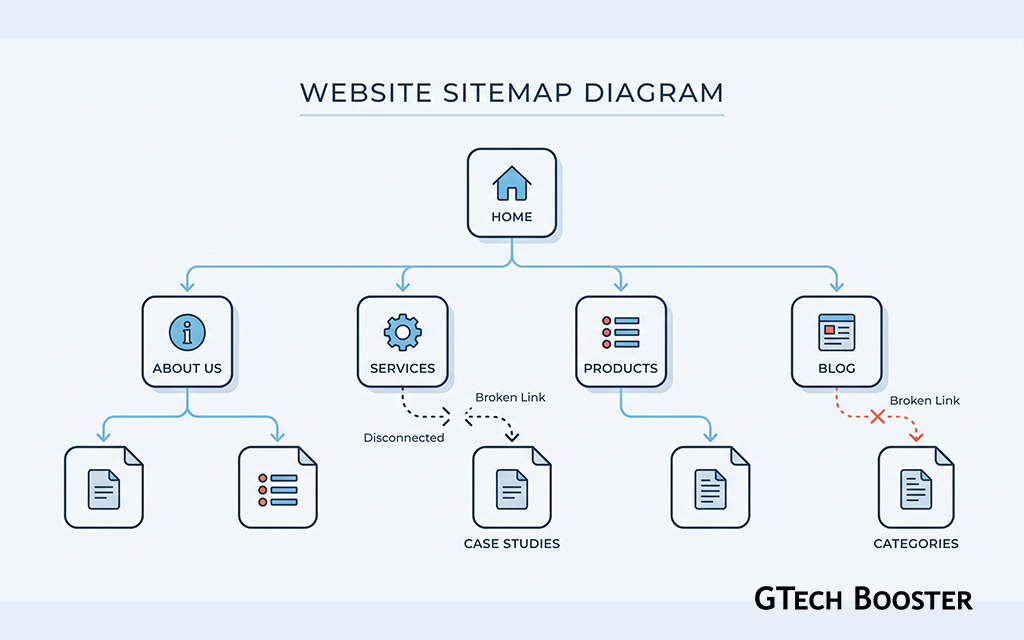
Over time, websites naturally accumulate broken internal links, pointing to pages that have since been moved, renamed, or deleted entirely. Each broken link represents a small dead end, both for a visitor trying to navigate the site and for search engines attempting to understand how a website’s pages connect to one another. Left unaddressed for long enough, a growing number of broken links can meaningfully undermine both user experience and a search engine’s overall impression of how well maintained a website is.
Duplicate Content Across Pages
When a website contains multiple pages with very similar or nearly identical content, whether due to product variations, printer friendly versions of pages, or simple oversight, search engines can struggle to determine which version deserves to rank, sometimes resulting in none of the duplicate pages ranking particularly well. This issue often develops gradually as a website grows, making it another mistake that tends to accumulate quietly rather than announce itself clearly.
Content Mistakes That Limit Visibility
Even a technically sound website can quietly lose traffic if the content itself fails to genuinely serve the people searching for it.
Writing for Search Engines Instead of People
An outdated but still surprisingly common mistake involves writing content primarily around repeating a specific keyword phrase as many times as possible, rather than genuinely and naturally answering the questions a reader actually has. Modern search engines have become considerably more sophisticated at evaluating whether content genuinely satisfies a reader’s underlying need, and content that feels mechanical, repetitive, or clearly written for an algorithm rather than a person tends to underperform, regardless of how carefully specific keywords were inserted into it.
Thin or Superficial Content
Pages that only skim the surface of a topic, offering a brief paragraph or two without genuinely exploring the subject in useful depth, often struggle to rank well against more thorough competing content elsewhere on the web. This does not necessarily mean every page needs to be exceptionally long, but it does mean a page needs to meaningfully and completely address what someone searching for that topic actually wants to know.
Ignoring Search Intent
Search intent refers to the actual underlying reason someone is typing a particular search query, whether they are looking to learn something, compare options, make a purchase, or find a specific website. A page that technically covers the right topic but does not match what a searcher is actually trying to accomplish, for example, a lengthy educational article appearing for a search where most people are actually trying to buy something immediately, often struggles to perform well, even if the content itself is well written.
Letting Content Go Stale
Particularly for topics that change over time, such as pricing, statistics, regulations, or technology, a page that once ranked well can gradually lose visibility if it is never updated and eventually falls behind competing pages that reflect more current, accurate information. This kind of decline can be especially easy to miss, since the page itself has not been touched or broken in any obvious way, it has simply been quietly overtaken.
Structural and Strategic Mistakes
Beyond individual pages, certain mistakes affect how a website functions and performs as a whole.
Weak Internal Linking
Internal links, meaning links from one page on a website to another page on that same website, help both visitors and search engines understand how different pages relate to one another and which pages are considered most important. A website with little to no thoughtful internal linking between related pages often makes it harder for search engines to fully understand its structure, and can leave valuable pages effectively isolated and harder to discover.
Targeting Overly Broad or Overly Competitive Keywords
Attempting to rank for extremely broad, highly competitive search terms, particularly for a newer or smaller website, often results in little to no meaningful visibility, since well established, authoritative websites tend to dominate those particular search results. Focusing instead on more specific, targeted search terms that closely match what a particular business or website genuinely offers tends to produce far more realistic and sustainable results.
Neglecting Existing Content in Favor of Constantly Publishing New Pages
Many website owners focus almost entirely on producing new content while rarely revisiting or improving pages already published. Over time, this can leave a growing number of underperforming older pages that could have continued generating meaningful traffic with some updates or improvements, rather than being left to quietly decline while all available attention goes toward newer content instead.
Ignoring What Analytics Data Is Actually Showing
Many of the mistakes described throughout this article leave visible traces within a website’s own analytics data, gradual declines in specific pages, rising bounce rates, or falling rankings for particular search terms. A website owner who does not regularly review this data, or who only checks it occasionally without really examining the underlying trends, often misses early warning signs that would otherwise make these problems far easier to catch and correct before they compound into a larger, harder to reverse decline.
Why These Mistakes Are Easy to Miss
A common thread runs through nearly every mistake described here. None of them tend to cause an immediate, dramatic drop that would obviously demand attention. Instead, each one chips away gradually at a website’s visibility, a slightly slower page here, a slightly thinner article there, a handful of broken links accumulating quietly in the background. Individually, each mistake might only cost a small amount of traffic. Collectively, and left unaddressed over an extended period, they can add up to a substantial and difficult to fully explain decline, one that often only becomes obvious well after significant damage has already occurred.
This is precisely why a regular habit of reviewing site performance, checking for technical issues, and revisiting older content tends to matter so much more than any single, one time SEO effort. Search visibility is rarely lost all at once. It is far more often lost slowly, one small, quietly accumulating mistake at a time.
Bringing It All Together
The mistakes most responsible for quietly declining website traffic are rarely dramatic or obvious. Slow loading pages, a poor mobile experience, broken links, and duplicate content undermine a website from a technical standpoint, often without any clear warning sign. Content written for algorithms rather than people, thin coverage of a topic, a mismatch with what searchers actually want, and information left to grow outdated all limit how well even a well intentioned website can perform. Weak internal linking, unrealistic keyword targeting, and a habit of neglecting existing content in favor of constantly publishing new pages round out a pattern of mistakes that tend to compound gradually rather than announce themselves clearly.
Recognizing these patterns, and building a habit of regularly reviewing both technical performance and existing content rather than only focusing on new pages, offers the most reliable way to catch this kind of quiet decline early, before it grows into a far larger and more difficult problem to reverse.
More Information ℹ

















Conversation
Login to comment.
Log In / Register