EV vs Petrol – The Real Cost of Ownership Over Five Years
The real cost of owning a vehicle is better understood as the total of everything spent on it across its useful life, not just the amount paid at the point of sale.
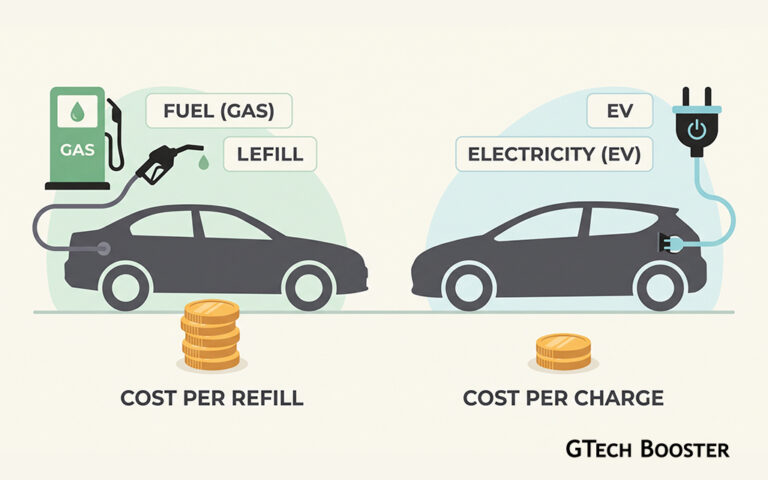
When comparing an electric vehicle to a petrol powered car, most people naturally start by looking at the purchase price, and in most markets today, that comparison still tends to favor petrol vehicles, which are generally cheaper to buy upfront. This single comparison, however, only captures one moment in a car’s life, the day it is purchased, and it says very little about what that vehicle will actually cost its owner to keep running over the years that follow.
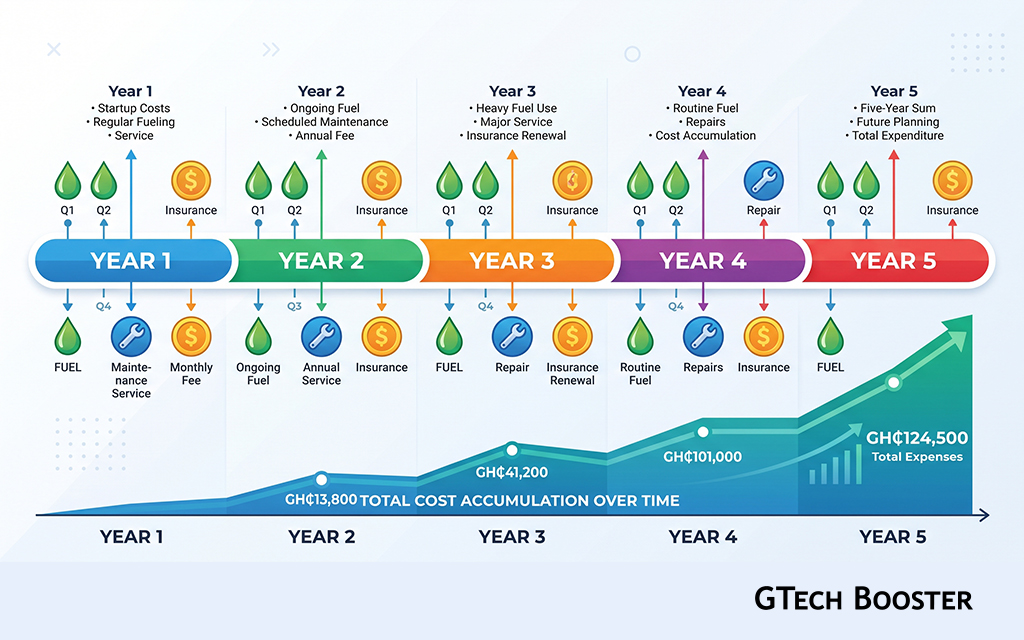
The real cost of owning a vehicle is better understood as the total of everything spent on it across its useful life, not just the amount paid at the point of sale. This includes fuel or electricity, servicing and repairs, insurance, and the way the vehicle’s value declines over time. Looking at ownership this way, particularly across a meaningful stretch of time such as five years, often produces a very different picture than the purchase price alone would suggest, and understanding each of these cost categories individually makes it possible to judge which type of vehicle genuinely makes more financial sense for a particular situation.
Purchase Price and Upfront Cost
Why Electric Vehicles Typically Cost More to Buy
Electric vehicles generally carry a higher upfront purchase price than a comparable petrol vehicle of similar size and class. This is largely due to the cost of the battery pack itself, which remains one of the most expensive individual components in an electric vehicle, along with the specialized electric motor and supporting electronics. Even as battery costs have gradually declined over recent years, they still represent a substantial portion of an electric vehicle’s total manufacturing cost, and this is typically reflected in a higher price for buyers.
Government Incentives and Import Considerations
In some markets, government incentives such as reduced import duties, tax credits, or purchase rebates are used to help narrow this upfront price gap, recognizing the broader environmental benefits associated with electric vehicle adoption. Where such incentives exist, they can meaningfully reduce the initial cost difference between an electric and petrol vehicle, though the availability and size of these incentives varies considerably from one country or region to another, and in many markets they remain limited or entirely absent.
Fuel and Charging Costs Over Time
The Cost of Powering a Petrol Vehicle
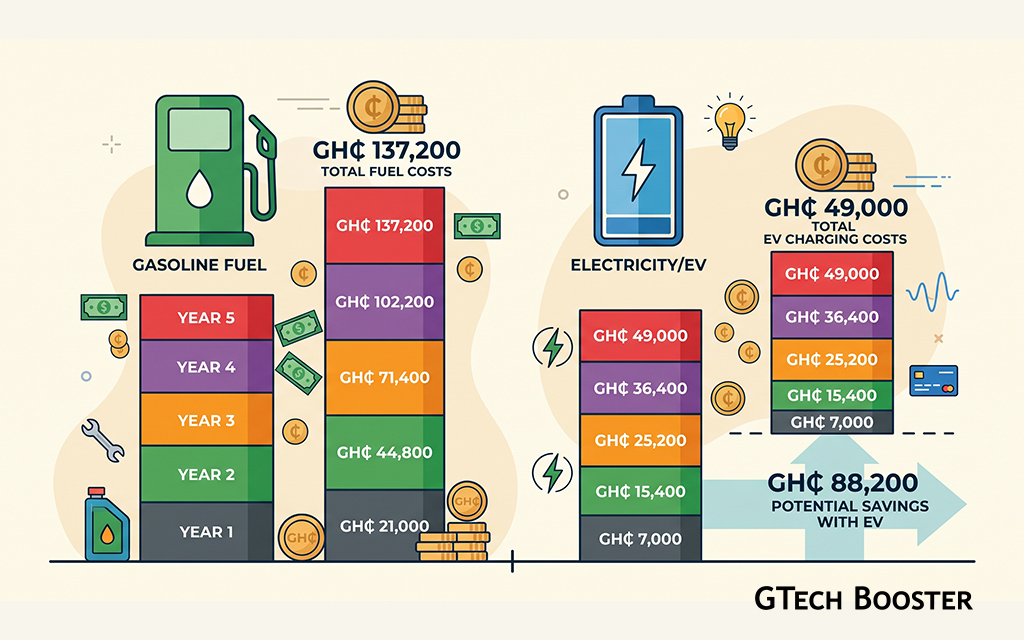
A petrol vehicle’s ongoing fuel cost depends on how far it is driven, how efficiently it uses fuel, and the prevailing price of petrol, which can fluctuate significantly over time due to global oil markets and local taxation. Because petrol prices are rarely stable for long, a five year cost estimate for a petrol vehicle carries some built in uncertainty, though historical patterns generally show fuel remaining one of the largest ongoing expenses associated with owning a conventional vehicle.
The Cost of Charging an Electric Vehicle
Charging an electric vehicle draws on electricity rather than fuel, and on a cost per distance traveled basis, electricity has generally proven cheaper than petrol in most markets, often substantially so. This is partly because electric motors convert a much higher percentage of their stored energy into actual motion compared to a combustion engine, which loses a significant portion of its energy as heat. The exact savings depend heavily on local electricity prices and where charging takes place, since charging at home overnight is typically far cheaper than relying on public fast charging stations, which often carry a premium price for the convenience and speed they offer.
Adding Up the Difference Across Five Years
For a vehicle driven a meaningful distance each year, the accumulated difference between fuel and electricity costs over five years can become substantial, frequently representing one of the largest single factors tipping the overall cost comparison in favor of the electric vehicle, particularly for owners who drive frequently and have consistent access to reasonably priced home charging.
Maintenance and Repair Costs
Why Electric Vehicles Tend to Cost Less to Maintain
Electric vehicles have considerably simpler mechanical systems than petrol vehicles. There is no engine oil to change, no exhaust system to maintain, no spark plugs, and generally far fewer moving parts overall, since a single electric motor replaces the many interconnected components found in a combustion engine. This typically translates into fewer routine maintenance visits and lower costs at each one, since there are simply fewer parts that require regular servicing or are prone to gradual wear.
Where Petrol Vehicles Accumulate Higher Costs
Petrol vehicles require regular oil changes, periodic replacement of components like spark plugs, filters, and belts, and are generally more susceptible to a wider range of mechanical issues arising from their more complex engine systems. Over a five year period, these routine and occasionally unexpected maintenance needs tend to accumulate into a noticeably higher total maintenance cost compared to an electric vehicle covering a similar distance.
An Important Exception: Battery Health
While electric vehicles avoid many traditional maintenance costs, their battery represents a long term consideration of its own. Most electric vehicle batteries are designed and warrantied to retain a substantial portion of their capacity for many years or a significant number of kilometers, and a full battery replacement, while uncommon within a typical five year ownership period, would represent a significant expense if it were ever required outside of warranty coverage. For most owners within a five year window, this remains a background consideration rather than an active cost, but it is worth understanding as part of the complete ownership picture.
Insurance Costs
Insurance costs for electric vehicles have historically tended to run somewhat higher than for comparable petrol vehicles, partly reflecting the higher purchase price and replacement cost of the vehicle itself, along with the specialized parts and expertise sometimes required for repairs following an accident. As electric vehicles have become more common and repair networks have expanded and matured, this gap has generally started to narrow in many markets, though it can still vary considerably depending on the specific vehicle model, the insurer, and the region.
Depreciation: How Value Declines Over Time
A Historically Mixed Picture
Depreciation, meaning how much a vehicle’s resale value declines over time, has been one of the more unpredictable factors in comparing electric and petrol vehicles. Because electric vehicle technology has continued to improve rapidly, with newer models frequently offering meaningfully better range or features than those from just a few years earlier, some older electric vehicles have depreciated faster than their petrol counterparts, since buyers in the used market often prefer the improved range and updated technology found in newer electric models.
A Trend That Continues to Evolve
At the same time, as electric vehicles become more mainstream and battery technology matures at a slower pace than in earlier years, depreciation patterns for electric vehicles have generally started to stabilize and, in some markets, begin to more closely resemble those of established petrol vehicles. This remains an area where broader market trends, model specific reputation, and regional demand all play a meaningful role, making it one of the harder cost factors to predict with full confidence over any given five year period.
Putting the Five Year Picture Together
A General Pattern, Not a Universal Rule
When all of these factors, purchase price, fuel or electricity costs, maintenance, insurance, and depreciation, are combined across a five year ownership period, a general pattern tends to emerge in many markets. The higher upfront cost of an electric vehicle is gradually offset by lower running and maintenance costs over time, and for owners who drive substantial distances each year and have reliable access to affordable charging, the total five year cost of ownership can end up comparable to, or in some cases lower than, that of an equivalent petrol vehicle, even though the electric vehicle cost more to purchase in the first place.
Why Individual Circumstances Matter So Much
This pattern is far from universal, however, and the actual outcome for any individual owner depends heavily on their specific circumstances. Someone who drives relatively short distances each year will see a smaller cumulative fuel or electricity saving, making it harder for an electric vehicle to fully offset its higher purchase price within five years. Someone without convenient or affordable access to home charging, relying instead primarily on more expensive public charging infrastructure, will likewise see a smaller version of the typical electricity cost advantage. Local fuel prices, electricity rates, available incentives, and the specific vehicles being compared all meaningfully shift where the true break even point actually falls.
A Framework for Making Your Own Comparison
Rather than relying on a single general answer, prospective buyers are generally better served by working through the major cost categories for their own specific situation. Estimating annual distance driven, comparing local fuel prices against local electricity rates for the specific charging pattern likely to be used, researching typical maintenance costs for the specific vehicles being considered, obtaining real insurance quotes rather than relying on general assumptions, and researching resale trends for the particular models under consideration together provide a far more accurate personal five year cost estimate than any single generalized comparison can offer.
Bringing It All Together
Comparing an electric vehicle to a petrol vehicle purely on purchase price captures only the very beginning of a much longer financial story. Across a five year ownership period, the higher upfront cost typically associated with an electric vehicle is frequently narrowed, and sometimes fully offset, by meaningfully lower fuel or charging costs and reduced maintenance requirements, while depreciation and insurance costs remain more variable factors that depend heavily on the specific vehicle and local market conditions.
Understanding each of these individual cost components, rather than focusing on price alone, allows a prospective buyer to move beyond a simple assumption about which type of vehicle costs less, and instead build a realistic, personalized estimate based on how they actually intend to use and keep the vehicle over the years ahead.
More Information ℹ













Conversation
Login to comment.
Log In / Register