Electric Buses and Taxis – Could Trotros Go Electric?
This shift matters particularly for public transport, since buses and taxis are driven far more intensively than private cars, often covering long distances every single day while picking up and dropping off large numbers of passengers.
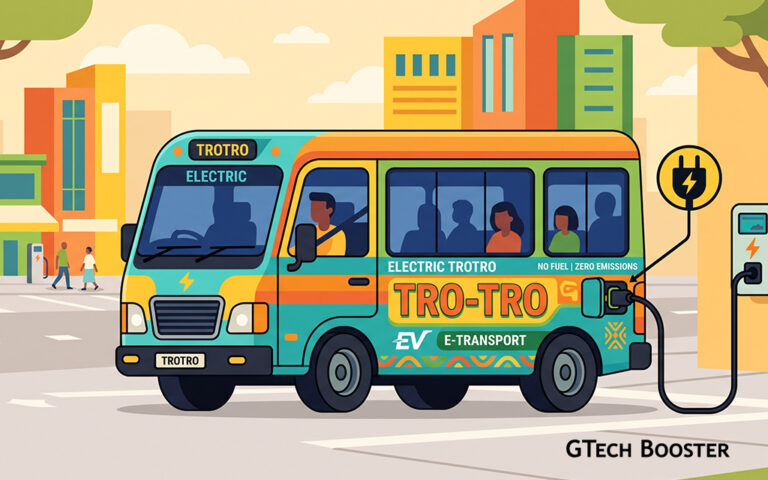
Around the world, cities are gradually replacing fuel burning buses and taxis with electric alternatives, driven by a combination of environmental concern, rising fuel costs, and improving battery technology. Electric vehicles run on rechargeable batteries instead of petrol or diesel, and because they have no tailpipe, they produce no direct exhaust emissions at the point of use, unlike conventional vehicles which release carbon dioxide and other pollutants every time their engine runs.
This shift matters particularly for public transport, since buses and taxis are driven far more intensively than private cars, often covering long distances every single day while picking up and dropping off large numbers of passengers. A single conventional trotro or taxi operating for years on end contributes far more exhaust pollution over its lifetime than a private car that mostly sits parked. This is exactly why electric buses and taxis have become such an important part of conversations about cleaner cities.
In Ghana, this conversation has started to move from an abstract idea into an active, if still early, policy discussion, raising the natural question of whether trotros, the privately owned minibuses that form the backbone of everyday transport for millions of Ghanaians, could realistically make the same shift.
How Electric Buses and Taxis Actually Work
Before examining whether trotros could go electric, it helps to understand what actually changes underneath an electric bus or taxi compared to the vehicles currently on Ghana’s roads.
Batteries Instead of Fuel Tanks
An electric vehicle stores energy in a large rechargeable battery pack rather than a tank of petrol or diesel. This battery powers an electric motor that turns the wheels, replacing the internal combustion engine found in conventional vehicles. Because electric motors have far fewer moving parts than combustion engines, electric vehicles generally require less mechanical maintenance over time, with no oil changes, no exhaust system, and fewer components prone to wear.
Charging Instead of Fueling
Where a conventional trotro driver pulls into a fuel station to fill up with petrol or diesel, an electric vehicle owner instead plugs into a charging point to recharge the battery. Charging speed depends heavily on the type of charger used. A standard, slower charger can take several hours to fully charge a large vehicle battery, while a fast charger, similar to those used for the pilot electric buses already introduced in Accra, is designed to recharge a battery in a much shorter window, sometimes around thirty minutes, provided the charging equipment is functioning at its intended capacity.
Range and Daily Distance
Electric buses and taxis are generally rated for a certain driving range on a full charge, often in the range of a few hundred kilometers depending on the vehicle and battery size. For a vehicle covering many short trips throughout a single day, as most trotros and taxis do, this means charging needs to happen reliably, either overnight, during breaks in service, or at dedicated charging points along common routes.
What Ghana Has Already Attempted
Ghana’s engagement with electric public transport has already moved beyond discussion into actual, if limited, deployment, offering useful early lessons for what a wider transition might involve.
The Accra Electric Bus Pilot
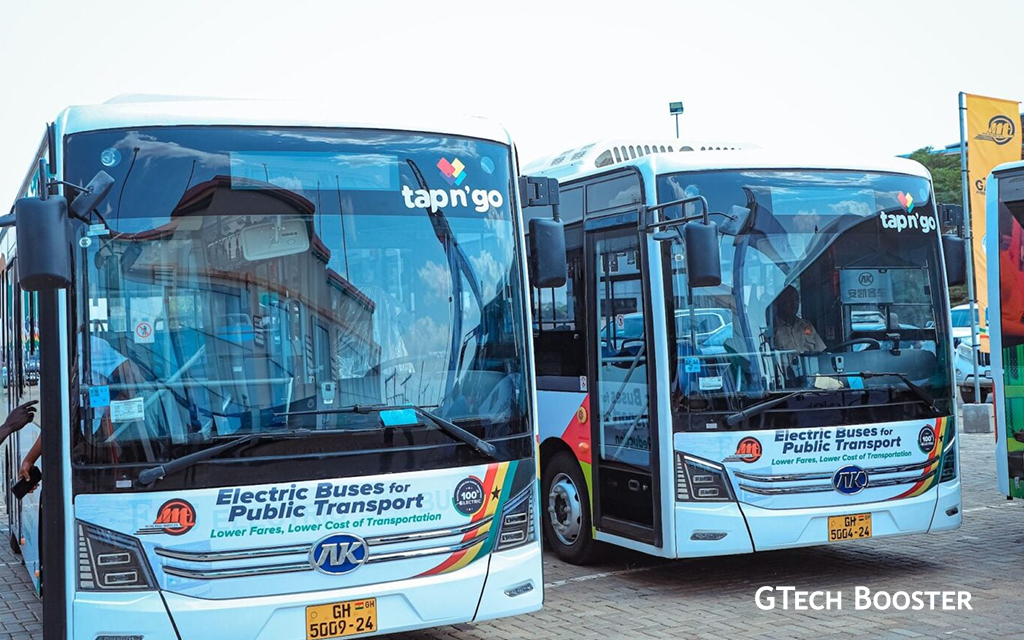
The government previously committed to introducing a fleet of one hundred electric buses for Accra. In practice, the rollout fell well short of that target, with only a small number of buses actually arriving and an even smaller number operational at any given time. This gap between the announced target and what was actually delivered highlights one of the central challenges facing large scale electric transport rollouts, since importing, funding, and maintaining electric vehicles at scale requires significant coordination and financing that can be difficult to execute quickly.
Charging Infrastructure Difficulties
The single government charging station supporting this early bus fleet, combining solar and grid power, has reportedly struggled to deliver its intended charging speed, with buses designed to charge at a higher power level instead receiving less power than needed, substantially lengthening charging times. Weather conditions have also affected the reliability of this charging equipment at times. This illustrates a broader point relevant to any future expansion, since an electric vehicle is only as useful as the charging infrastructure supporting it, and underperforming or unreliable chargers can undermine the practical benefits of switching to electric vehicles in the first place.

A Longer Term Policy Direction
Ghanaian officials have signaled that a broader shift toward electric vehicles for commercial transport, including trotros, taxis, and private cars, is being considered as a long term policy direction rather than an immediate requirement. Officials have described this as a gradual process likely to unfold over a period of years, with a national target aiming for a meaningful share of electric vehicles on the road by the mid twenty thirties, alongside a longer term goal of phasing out fossil fuel vehicles entirely at some point after that. A bus rapid transit pilot using electric buses on a defined corridor has also served as an early demonstration project, intended to test how electric public transport performs under real local conditions before any wider rollout is considered.
Could Trotros Realistically Go Electric?
Trotros occupy a distinct position within Ghana’s transport system compared to a formal, government run bus fleet, and this distinction matters significantly when considering whether they could transition to electric power.
Ownership and Financing
Unlike a centrally coordinated city bus fleet, trotros are typically owned and operated by individual drivers or small operators, often financed through personal savings, informal loans, or cooperative arrangements within transport unions. Electric minibuses generally cost considerably more upfront than an equivalent diesel or petrol vehicle, and financing options with favorable terms are not always readily available to small, informal operators. Without access to affordable financing, government support, or subsidized purchase schemes, individual trotro owners are unlikely to be able to absorb this higher upfront cost on their own, even if the vehicle would prove cheaper to run over time.
Running Costs Once Acquired
Once acquired, however, electric vehicles do tend to offer meaningfully lower running costs compared to fuel powered alternatives. Based on early experience with Ghana’s pilot electric buses, a full charge has cost substantially less than the equivalent amount of diesel needed to cover a similar distance, while electric motors generally require less frequent and less expensive maintenance than combustion engines. For an individual trotro driver operating on thin daily margins, this kind of ongoing cost saving could be significant, provided the initial cost of acquiring the vehicle can be overcome.
Charging Access for Independent Drivers
A city run bus fleet can be designed around a small number of centrally located depots where every vehicle returns to charge overnight. Trotros, by contrast, are dispersed across countless individual routes, stations, and overnight parking locations throughout a city, making centralized charging a far less practical solution. Research into similar minibus taxi systems elsewhere on the continent has found that access to convenient charging locations, rather than charging speed alone, tends to matter most for keeping vehicles in service, with home or neighborhood level charging generally working better than requiring every vehicle to return to one central depot. For trotros, this suggests that any workable transition would likely depend on a distributed network of charging points near stations, terminals, and residential areas where drivers already tend to park overnight, rather than a single centralized facility.
Electricity Supply and Timing
Introducing a large number of electric vehicles into any city also places new demand on the local electricity grid, since every vehicle charging draws power at the moment it plugs in. If large numbers of vehicles all attempt to charge around the same time, typically early morning or evening when drivers are starting or ending their working day, this can create a significant, concentrated surge in electricity demand. Studies examining similar transitions for minibus taxis elsewhere in Africa have highlighted this as a genuine concern, noting that without some form of coordinated or staggered charging, a large scale switch to electric minibuses could place considerable strain on an electricity grid not originally designed for that level of concentrated demand.
The Environmental Picture Is Not Always Simple
It is worth noting that the environmental benefit of an electric vehicle depends heavily on how the electricity used to charge it is generated. In electricity systems that rely heavily on coal or other fossil fuels to generate power, the emissions associated with charging a vehicle can, in some cases, actually rival or even exceed those from an efficient conventional vehicle, even though the vehicle itself produces no tailpipe emissions. Ghana’s electricity supply draws on a mix of sources, including natural gas and hydropower, which generally produces lower emissions than a coal heavy grid, but the exact environmental benefit of any large scale electric trotro transition would still depend meaningfully on how that additional electricity demand is generated.
What Would Need to Fall Into Place
Taken together, a realistic path toward electrified trotros would likely depend on several elements working in tandem rather than any single change on its own. Affordable financing options, whether through government backed schemes, reduced import duties, or cooperative purchasing arrangements, would need to bring the upfront cost of an electric minibus within reach of ordinary trotro owners. A genuinely distributed charging network, placed near stations and common parking areas rather than concentrated in a single depot, would need to make charging a practical part of a driver’s daily routine rather than an added burden. Ghana’s electricity grid and generation capacity would need enough resilience and planning to absorb a meaningful increase in demand without strain. And drivers themselves, many of whom depend entirely on their vehicle for daily income, would likely need some combination of demonstrated reliability, government support, or guaranteed income arrangements before widely embracing a technology still relatively unfamiliar within the trotro system.
Bringing It All Together
Electric buses and taxis represent a genuine and increasingly proven alternative to fuel powered public transport, offering lower running costs, reduced local pollution, and less mechanical upkeep once the vehicles are in service. Ghana’s own early experience, through its Accra bus pilot, has shown both the promise of this shift and the practical difficulties involved in delivering it at scale, particularly around charging infrastructure and financing.
Trotros present a distinct and in some ways more complex challenge than a centrally managed bus fleet, given their dispersed ownership, informal financing, and reliance on flexible, driver determined charging locations rather than a single depot. Still, nothing about this challenge appears fundamentally impossible. With the right combination of financing support, a genuinely distributed charging network, and careful attention to how added electricity demand is managed, a gradual shift toward electric trotros remains a realistic long term possibility rather than a purely theoretical one, even if, as officials themselves have suggested, that shift is likely to unfold over years rather than overnight.
More Information ℹ


















Conversation
Login to comment.
Log In / Register