Mobile Money Scams – The Tricks Fraudsters use and How to Spot Them
Often, all that is required is convincing a person, through deception, pressure, or impersonation, to voluntarily hand over information or authorize a transaction themselves.
Mobile money has transformed how millions of people send, receive, and store money, particularly in regions where traditional banking has historically been less accessible. Because a mobile money account is tied directly to a phone number and can be accessed through a simple menu on almost any phone, it has removed many of the barriers that once made formal financial services difficult to reach.
That same convenience, however, has made mobile money an attractive target for fraudsters. A scammer does not need to break into a bank or forge documents to attempt fraud through mobile money. Often, all that is required is convincing a person, through deception, pressure, or impersonation, to voluntarily hand over information or authorize a transaction themselves. Understanding how these scams typically work is one of the most effective ways to avoid becoming a victim, since most mobile money fraud relies far more on psychological manipulation than on any technical weakness in the system itself.
Common Categories of Mobile Money Scams
While fraudsters constantly adjust their specific wording and approach, most mobile money scams fall into a small number of recognizable patterns. Understanding these underlying patterns is more useful than memorizing any single example, since scammers frequently rework the same basic trick into new disguises.
Impersonation of Mobile Network or Mobile Money Staff
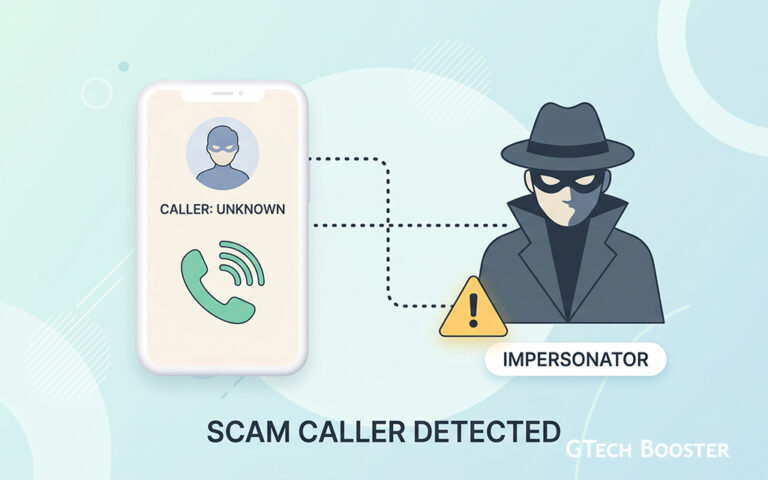
One of the most common approaches involves a fraudster contacting a person while pretending to represent the mobile network operator or the mobile money service itself. The caller may claim there is a problem with the victim’s account, an issue with a recent transaction, or an update that requires urgent action. The underlying goal is almost always the same, to create a sense of urgency or authority that pressures the victim into sharing sensitive information or approving an action they would not normally agree to if given time to think it through.
A genuine mobile money provider will never need a customer to read out a personal identification number or a one time confirmation code over the phone, since these codes exist specifically to verify that only the account holder is authorizing a transaction. Any request for this kind of information, regardless of how official the caller sounds, is a strong signal of fraud rather than a legitimate support request.
Fake Prize, Promotion, or Refund Notifications
Another widely used approach involves informing a victim that they have won a prize, qualified for a special promotion, or are owed a refund, often through a text message or phone call that appears to reference a mobile money service or network provider by name. To claim this supposed reward, the victim is typically asked to either pay a small upfront fee, described as a processing or verification charge, or to share account details that supposedly confirm their identity.
Legitimate promotions and refunds do not generally require a recipient to pay money first in order to receive money, and unexpected prize notifications, particularly for contests a person does not recall entering, warrant significant suspicion before any action is taken.
Wrong Number or Mistaken Transfer Tricks
This approach relies on creating a fabricated sense of obligation. A fraudster sends a small amount of money to a victim’s mobile money account, then quickly follows up, sometimes personally and sometimes through an accomplice, claiming the transfer was made by mistake and asking for it to be sent back, occasionally to a different number than the one that originally sent it. In some versions, the victim receives a notification claiming money has been sent, without any money actually arriving, and is then pressured to send funds back before realizing no deposit was ever received.
Because this scam plays on a sense of fairness and honesty rather than fear, it can be particularly effective against people who feel they are simply doing the right thing by returning what appears to be someone else’s mistaken payment.
Romantic or Relationship Based Manipulation
Some scams develop over a much longer period, beginning with what appears to be a genuine personal relationship, often formed through social media or messaging apps, before gradually introducing requests for financial help. These requests are often framed around a believable personal emergency, a travel difficulty, or a business opportunity, and they tend to escalate slowly, starting with smaller amounts before moving toward larger ones once trust has been established.
Because these situations unfold gradually and are wrapped in a genuine seeming relationship, they can be significantly harder to recognize as fraud in the moment, and they often rely on isolating the victim from friends or family who might otherwise raise doubts about the requests being made.
Fake Job, Investment, or Loan Offers
Fraudsters also frequently use the promise of easy income, whether through a job opportunity, an investment scheme, or a quick loan, to convince victims to send money upfront, often described as a registration fee, a processing charge, or an initial deposit required before funds can supposedly be released. Once this upfront payment is made, the promised job, investment return, or loan never materializes, and further contact with the fraudster typically becomes difficult or impossible.
Malicious Links and Fake Applications
Some scams operate through text messages or social media posts containing a link to a website or app that closely imitates a legitimate mobile money service. These fake pages are designed specifically to capture login details, personal identification numbers, or other sensitive information when a victim attempts to log in or verify their account through the fraudulent page, information the fraudster can then use to access the real account.
Agent Related Fraud
Because many mobile money transactions in various regions still take place in person through registered agents, some fraud also occurs at this level. This can include an agent manipulating a transaction amount, claiming a transfer failed when it actually succeeded, or exploiting a customer’s unfamiliarity with the menu system to redirect funds improperly. This form of fraud relies less on remote deception and more on a victim’s trust in a person they are dealing with face to face.
Warning Signs That Point to a Scam
Across these different approaches, several recurring warning signs tend to appear consistently, and learning to recognize them provides a strong general defense even against scam variations not explicitly described here.
Urgency and Pressure
Fraudsters consistently try to prevent a victim from having enough time to think clearly or verify a claim independently. Any message or call that insists on an immediate response, warns of an account being blocked or closed within minutes, or discourages hanging up to confirm information elsewhere should be treated with heightened caution, since legitimate institutions rarely operate with this kind of manufactured urgency.
Requests for Sensitive Codes or Personal Identification Numbers
A personal identification number, a one time password, or any other verification code exists specifically to confirm that only the legitimate account holder is authorizing a transaction. No legitimate mobile money provider, bank, or network operator needs a customer to read this information aloud or type it into a message, and any request for it, regardless of context, should be treated as an immediate red flag.
Requests to Pay Before Receiving
Whether framed as a processing fee for a prize, a deposit for a loan, or a registration charge for a job, any situation requiring a payment before a promised benefit is delivered deserves significant scrutiny, particularly when the person or organization making the request is not independently verifiable through official channels.
Unfamiliar or Slightly Altered Contact Details
Fraudulent messages and calls often originate from numbers or short codes that do not match a company’s official contact information, or from messages containing subtle spelling errors, unusual formatting, or links that closely resemble but do not exactly match a legitimate website address. Taking a moment to carefully examine these details, rather than acting on assumption, can reveal inconsistencies that point toward fraud.
Inconsistent or Evasive Explanations
When questioned or asked to clarify details, a fraudster’s story often shifts, contains contradictions, or becomes vague in ways a legitimate representative or genuine acquaintance generally would not. Trusting this instinct, when something in a conversation feels inconsistent or does not add up, is often a reliable signal worth acting on.
How to Protect Yourself
Beyond recognizing warning signs in the moment, a few consistent habits substantially reduce the risk of falling victim to mobile money fraud.
Never Share Personal Identification Numbers or Verification Codes
This single habit addresses the majority of mobile money scams at their core, since nearly all of them ultimately depend on convincing a victim to either share this information directly or to unknowingly approve a transaction through a code they were manipulated into revealing. Treating these codes with the same seriousness as a bank vault key, something never shared with anyone under any circumstances, closes off the most common path fraudsters rely on.
Verify Independently Before Acting
Rather than responding directly to a suspicious call or message, contacting the relevant company or organization through an officially published customer service number or channel provides a reliable way to confirm whether a claim is genuine. This simple step of verifying independently, rather than trusting the contact information provided within the suspicious message itself, is one of the most effective defenses available.
Slow Down When Pressured
Since urgency is such a consistently used manipulation tactic, deliberately pausing before acting on any message or call demanding an immediate response gives a person the space needed to recognize inconsistencies or seek a second opinion from a trusted friend or family member before making any decision.
Be Skeptical of Unexpected Financial Opportunities
Unexpected prizes, unsolicited investment opportunities, and job offers requiring upfront payment all warrant particular skepticism, especially when they arrive without any prior relationship or application on the recipient’s part. Genuine opportunities generally do not require significant unsolicited financial contact of this kind.
Report Suspicious Activity
Reporting suspicious messages, calls, or transactions to the mobile money provider and relevant authorities not only helps protect the individual involved but also assists providers in identifying and shutting down active fraud patterns before they reach additional victims.
Bringing It All Together
Mobile money scams rely far less on technical hacking than on convincing ordinary people, through urgency, impersonation, false promises, or manufactured trust, to hand over sensitive information or money voluntarily. Recognizing the recurring patterns behind these scams, whether framed as a fake prize, a mistaken transfer, an urgent account problem, or a promising opportunity, equips a person to spot fraud even when it appears in a form they have not previously encountered.
The strongest and most consistent defense remains remarkably simple. Personal identification numbers and verification codes are never shared with anyone, urgency is treated as a warning sign rather than a reason to act quickly, and any unexpected or unusual request involving money is independently verified before any action is taken. Applying these habits consistently turns mobile money from a potential vulnerability into what it was always intended to be, a genuinely convenient and secure way to manage money.
If you believe you may be experiencing mobile money fraud or have already been targeted, contacting your mobile money provider’s official customer service line directly, and reporting the incident to local authorities, is the appropriate next step.
More Information ℹ


















Conversation
Login to comment.
Log In / Register