The precise formula behind gaming greatest boss fights
Behind the spectacular music and jaw-dropping visual effects lies a highly precise, mathematical formula designed to manipulate player psychology, stress levels, and muscle memory.
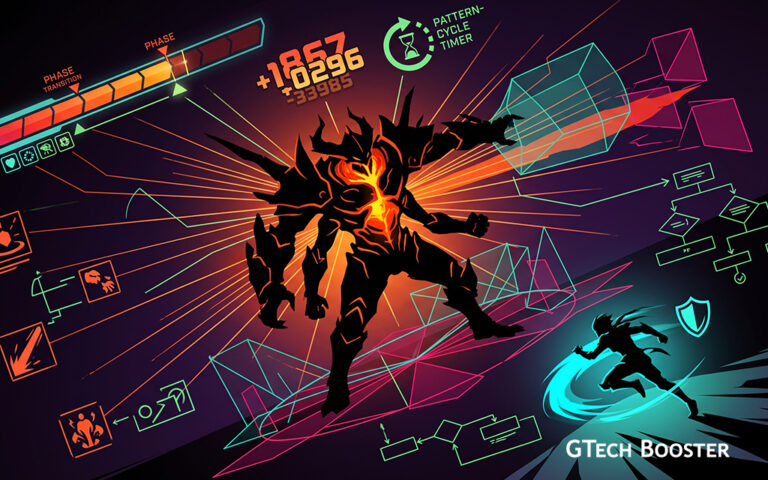
We all remember the ones that broke us and then made us feel like gods. Whether it’s the dance of blades with Malenia in Elden Ring, the tragic, rain-slicked duel with The Boss in Metal Gear Solid 3, or the colossal climb up Chronos in God of War, a truly great boss fight is never an accident.
Behind the spectacular music and jaw-dropping visual effects lies a highly precise, mathematical formula designed to manipulate player psychology, stress levels, and muscle memory.
1. The mechanical final exam
At its absolute core, a legendary boss fight is not a test of reflexes,it is a final exam.
Throughout a level or a game, developers quietly feed you minor quizzes. A basic enemy teaches you how to parry; a mid-level hazard teaches you to jump-dash. A great boss takes all of these isolated mechanics, blends them together, and demands that you execute them simultaneously under extreme pressure.
The rule of cohesion
If a boss introduces a completely new mechanic that you have never seen before and have no time to practice, the fight fails. The best bosses test how deeply you understand the tools you already have.
2. The three-act mechanical structure
Just like a classic movie, the pacing of an elite boss battle relies on a strict narrative structure. However, instead of using dialogue, developers use boss phases to tell the story.
Act I: The handshake
Phase 1 (100% to 75% HP)The boss introduces its basic attack patterns. The pacing is deliberate, giving the player room to breathe, observe visual tells, and synchronize their reaction timing. It establishes the baseline rhythm of the fight
Act II: The Complication
Phase 2 (75% to 30% HP)The rhythm changes. The boss adds mix-ups,delayed strikes, environmental hazards, or secondary status effects. This phase tests your adaptability. The safety net is gone, and mistakes cost twice as much.
ActIII: The crescendo
phase 3 (30% to 0% HP) This is where the orchestra swells, the arena is caught in flames, and the boss enters their final, desperate state. Mechanically, the developer introduces the pressure cooker.
In this phase, the boss doesn’t necessarily get complex new attack strings; instead, the windows of safety shrink to near-zero. The boss becomes hyper-aggressive, constantly closing the distance to prevent you from backing away to heal.
Developers also unleash the illusion of chaos(screen shakes, debris, and blinding light trails) make the arena look like pure madness. In reality, the underlying hitboxes remain exactly the same. The game is testing your ability to ignore the panic, quiet the adrenaline, and rely entirely on the mechanical foundation you built in Acts I and II.
Finally, many legendary fights end with a victory lap at 0% HP. Rather than a sudden cutscene, the game demands one final, interactive, cinematically framed blow. This transfers the agency of the final triumph entirely back into your hands.
3. The illusion of near misses
Behind the scenes, developers use hidden code to manipulate your nervous system, keeping you balanced on a razor’s edge between despair and triumph.
If you have ever beaten a brutal boss with only a sliver of health left, screaming in triumph as your heart hammered in your chest, you likely experienced the last stand algorithm.
Many modern action games dynamically scale damage when the player’s health drops below a certain threshold. When your health level is low (less than 10% HP), an invisible adrenaline buff triggers behind the scenes. Your dynamic damage resistance increases, turning what should have been a fatal blow into a clutch, 1-HP escape. By making you highly survivable under extreme pressure, the game artificially manufactures the psychological high of a skin-of-the-teeth victory.
4. The fairness contract: Flawless feedback loops
A fight can be brutally difficult, but the moment it feels cheap, the magic is gone. To maintain your willingness to keep trying, developers adhere to a strict, unspoken contract of fairness built on three mechanical pillars:
I. The Unmistakable Telegraph
Every major or devastating attack must have a distinct visual or auditory tell a unique wind-up animation, a weapon glint, or a specific roar. This completely eliminates the feeling of random deaths; when you get hit, you immediately recognize the signal you missed.
II. Hermetic Hitboxes
The collision boxes of the boss’s attacks must perfectly match the visual boundaries of their weapon or body. If a giant sword misses your character’s shoulder by an inch, you should take zero damage. Accurate hitboxes ensure that the game respects your precise dodges and parries.
III. Telegraphed Recoveries
Every massive boss combo must end with a clear, brief pause in their movement. This provides a highly readable turn for you to safely counter-attack or heal, preventing you from getting trapped in endless, frustrating defensive loops
The Ultimate Payoff
When these structural, mechanical, and mathematical gears click into place, a boss fight transcends being just another obstacle in a video game. It becomes a transformative experience.By taking you through the despair of Act II, pushing you past your perceived limits in Act III, and utilizing hidden mathematics to amplify your tension, the developers guide you through a profound heroic arc. You enter the arena feeling weak, frustrated, and outmatched. You leave it feeling like a god.
More Information ℹ


















Conversation
Login to comment.
Log In / Register