HTML, CSS, and JavaScript – The Real Foundation Before Frameworks
They are the actual foundation, and skipping past them to learn a framework first is a bit like learning to drive an automatic transmission without ever understanding what the engine is doing underneath. It works, until it doesn't.
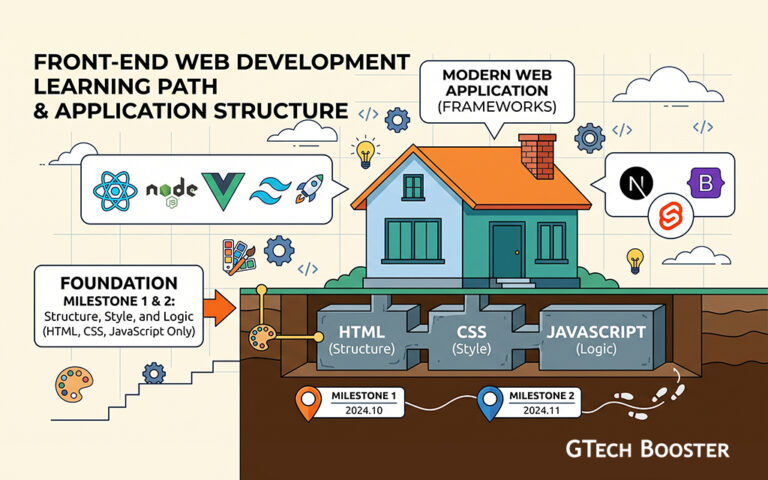
Every few years, a new framework arrives promising to make web development faster, cleaner, or more scalable. React, Vue, Angular, Svelte, and whatever comes next all deserve their place in a modern developer’s toolkit, but they all sit on top of the same three technologies that have quietly powered the web since its earliest days. HTML, CSS, and JavaScript are not stepping stones to be rushed through on the way to “real” development. They are the actual foundation, and skipping past them to learn a framework first is a bit like learning to drive an automatic transmission without ever understanding what the engine is doing underneath. It works, until it doesn’t.
Why Fundamentals Still Matter in a Framework Driven World
It’s tempting to look at job postings full of React and Vue requirements and conclude that raw HTML, CSS, and JavaScript are legacy skills, relevant mostly for historical context. The opposite is true. Every framework compiles down to these three technologies eventually. A React component ultimately renders HTML elements. A styled component or CSS-in-JS library ultimately produces CSS rules the browser has to interpret. Every event handler, state update, and API call in a modern framework is built on top of JavaScript’s core mechanics. When something breaks in a framework and the abstraction leaks, and it always eventually does, the developer who understands what’s happening underneath can actually diagnose the problem, while the developer who only knows the framework’s API is stuck guessing.
There’s also a more practical argument. Frameworks change. The specific tool that dominates job listings today will very likely not be the dominant tool in ten years, the way jQuery, Backbone, and Knockout once dominated before React and Vue took over. HTML, CSS, and JavaScript, by contrast, are the actual web platform, standardized and maintained by browser vendors and the W3C, and they are not going anywhere. A developer who deeply understands the fundamentals can pick up a new framework in weeks, since most frameworks are really just different ways of organizing and abstracting the same underlying concepts. A developer who only knows one framework is far more fragile to that framework losing relevance.
HTML: The Structure Beneath Everything
HTML, or HyperText Markup Language, defines the actual content and structure of a webpage. It’s often dismissed as “not real programming” because it has no logic or computation of its own, but that dismissal misses how much good HTML actually requires understanding.
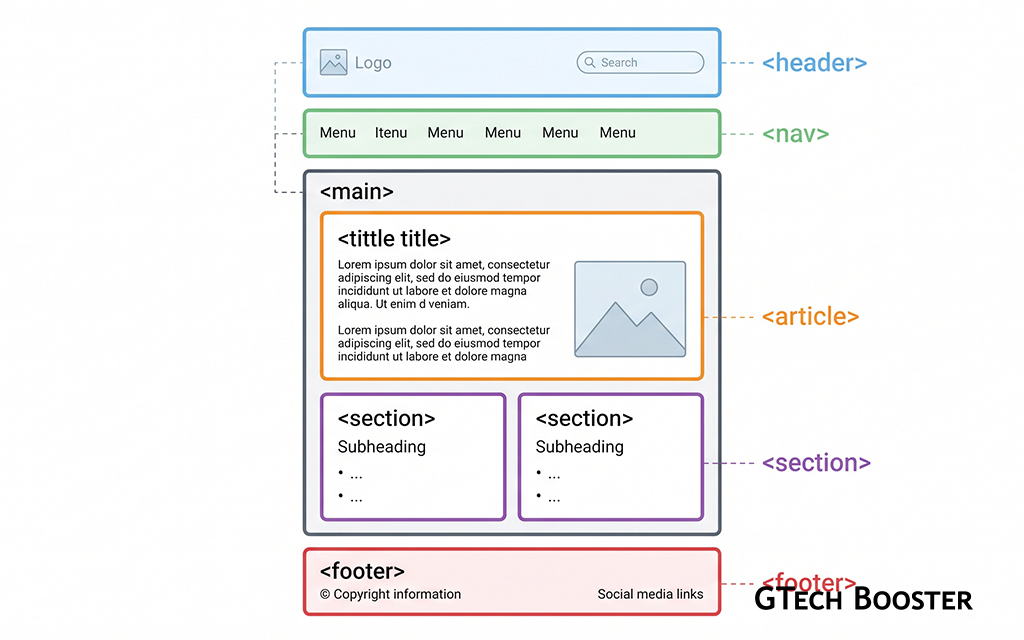
Semantic HTML matters more than it looks
Modern HTML includes semantic elements like header, nav, main, article, section, and footer, each communicating meaning about the content it wraps, not just visual structure. Using a generic div for everything technically renders the same way in a browser as using the correct semantic tag, but it has real consequences. Screen readers used by visually impaired users rely on semantic structure to help people navigate a page efficiently. Search engines use semantic HTML to better understand and rank content. And developers reading the code later, including a future version of the same person who wrote it, benefit enormously from markup that describes what something is, not just how it looks.
Accessibility starts in the markup
Accessibility, often shortened to a11y, is frequently treated as an afterthought layered on top of a finished design, but the truth is that most accessibility problems start with poor HTML choices. Using a button element instead of a styled div with a click handler means keyboard users can tab to it and activate it with Enter or Space automatically, with zero extra code. Providing meaningful alt text on images, proper form labels, and a logical heading hierarchy costs almost nothing at the HTML level but makes an enormous difference for users relying on assistive technology. A framework cannot retroactively fix accessibility problems baked into fundamentally poor markup structure.

Forms are more complex than they appear
HTML forms include a surprising amount of built in functionality that many developers reach for JavaScript to reimplement unnecessarily. Native form validation attributes like required, pattern, min, and max handle a meaningful portion of common validation needs without a single line of JavaScript. Understanding what the platform already provides before reaching for a library or custom solution is a hallmark of a developer who actually knows HTML, rather than one who has only ever built forms inside a framework’s abstraction layer.
CSS: Far Deeper Than Making Things Look Pretty
CSS, or Cascading Style Sheets, controls the visual presentation of a page, but treating it as simply “the styling language” undersells how much genuine logic and system design goes into writing it well.
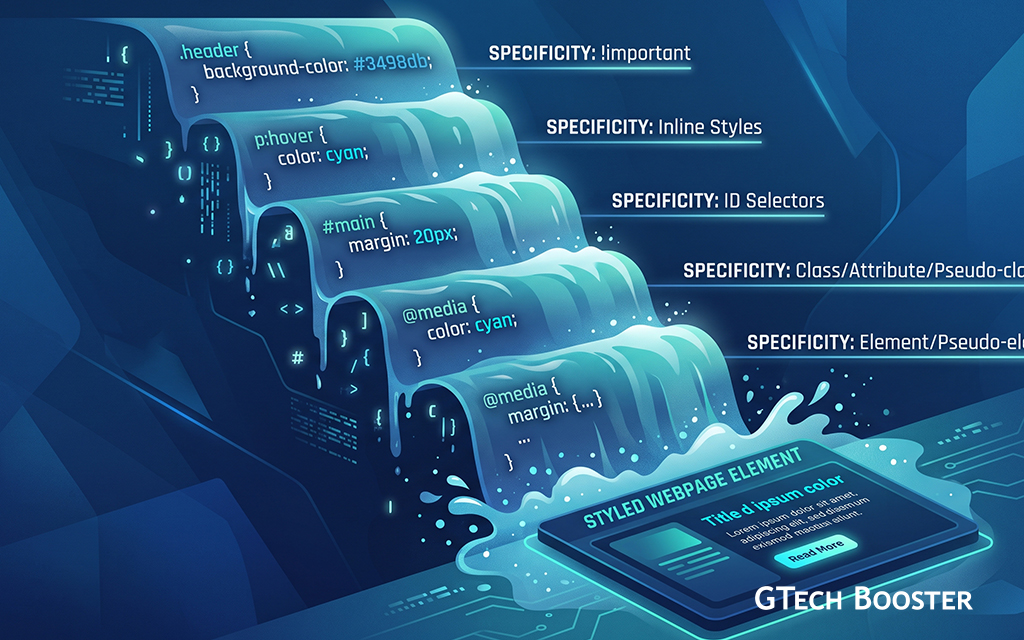
The cascade and specificity are not optional knowledge
The “cascading” part of Cascading Style Sheets refers to the specific, rule governed way browsers decide which style wins when multiple rules could apply to the same element. Specificity, inheritance, and the order rules are declared all interact to determine the final rendered result. Developers who don’t understand this system often end up fighting CSS, piling on !important declarations and increasingly specific selectors to force the result they want, rather than working with the cascade intentionally. This frustration is frequently what pushes developers toward CSS-in-JS solutions or utility class frameworks, without ever addressing the underlying gap in understanding that caused the frustration in the first place.
Layout systems changed everything
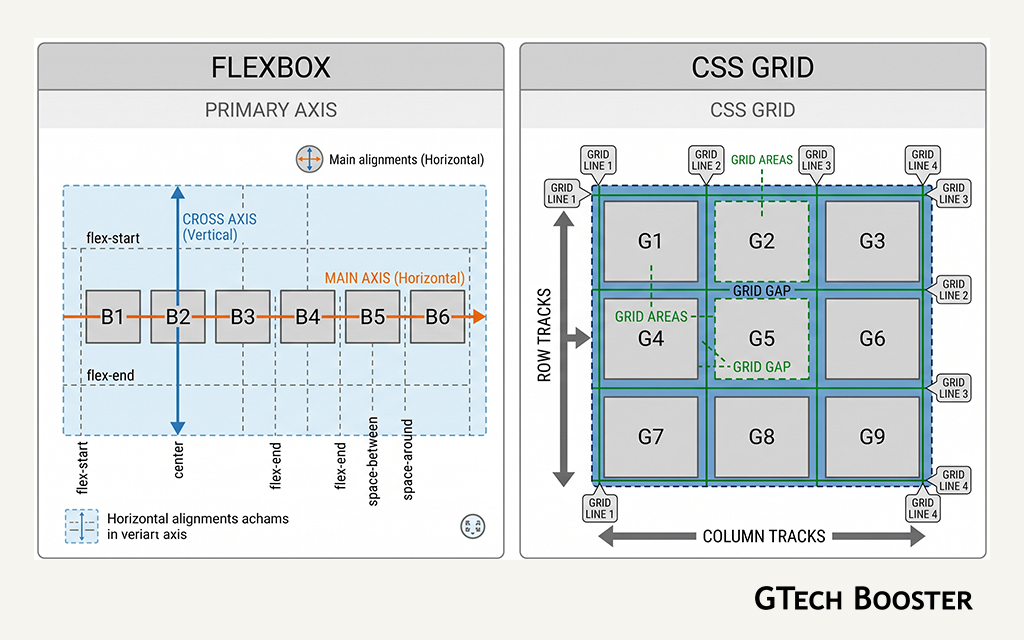
Modern CSS includes Flexbox and CSS Grid, two layout systems that solved problems web developers spent literally decades working around using floats, table based layouts, and other genuine hacks. Flexbox excels at distributing space along a single axis, ideal for navigation bars, button groups, and card rows. Grid excels at two dimensional layouts, handling both rows and columns simultaneously in a way that was previously nearly impossible without significant workarounds. A developer who understands these two systems deeply can build almost any layout a designer hands them without reaching immediately for a layout library or framework component.
Responsive design is a mindset, not a set of breakpoints
Good responsive CSS isn’t just adding a few media queries at common device widths. It involves understanding relative units like rem, em, %, and viewport units, using min(), max(), and clamp() for fluid sizing that adapts smoothly rather than jumping at fixed breakpoints, and designing layouts that gracefully handle the enormous range of screen sizes in actual use, from small phones to ultrawide monitors, rather than testing against a handful of common device presets and assuming that’s sufficient coverage.
JavaScript: The Language Underneath Every Framework
JavaScript is where the biggest gap tends to show up between developers who learned a framework first and those who learned the language first. React, Vue, and Angular all have their own component models and idioms, but every one of them is ultimately writing and executing plain JavaScript underneath.
The DOM is the actual interface
The Document Object Model, or DOM, is the browser’s live representation of the HTML on a page, and it’s what JavaScript actually manipulates to create interactivity. Frameworks provide abstractions like React’s virtual DOM specifically to make DOM manipulation more efficient and declarative, but a developer who has never directly used methods like querySelector, addEventListener, or createElement often struggles to understand what a framework is actually doing on their behalf, or why certain patterns exist at all. Understanding the DOM directly demystifies what frameworks are optimizing.
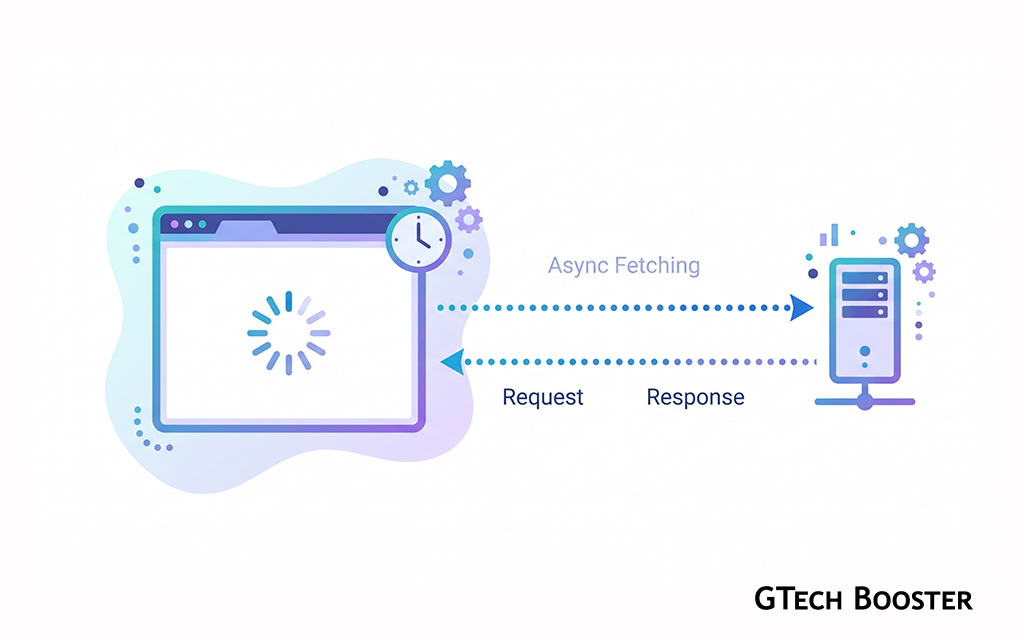
Asynchronous JavaScript trips up even experienced developers
JavaScript’s handling of asynchronous operations, callbacks, Promises, and the newer async/await syntax, is one of the most consistently misunderstood areas of the language, and it doesn’t disappear just because a project uses a framework. Fetching data from an API, handling a user’s click while a network request is still pending, and managing race conditions between multiple asynchronous operations are challenges that exist regardless of which framework sits on top of the JavaScript. A shaky understanding of asynchronous behavior tends to produce bugs that are notoriously difficult to track down precisely because they depend on timing rather than a straightforward logical error.
Closures, scope, and “this” are the language’s real teeth
JavaScript has a handful of genuinely tricky conceptual areas, closures, variable scope, hoisting, and the notoriously confusing behavior of the this keyword depending on how a function is called. These concepts show up constantly in framework code, often disguised inside hooks, lifecycle methods, or event handlers, without ever being explicitly taught by the framework’s own documentation, which reasonably assumes the developer already understands the underlying language. Developers who skip straight to a framework often develop a functional but shallow mental model of these concepts, one that works until an edge case exposes the gap.
What Actually Goes Wrong When Fundamentals Are Skipped
The consequences of weak fundamentals rarely show up immediately. A developer can build reasonably functional applications inside a framework’s guardrails for quite a while without fully understanding what’s happening underneath. The problems tend to surface in specific, predictable moments: debugging a strange rendering issue that turns out to be a CSS specificity conflict rather than a framework bug, struggling to understand why a piece of state isn’t updating when the actual issue is a misunderstanding of JavaScript closures, or being completely unable to work outside the framework’s paved path when a project genuinely needs something the framework doesn’t provide an easy abstraction for.
Interviews are another place this gap becomes visible. Many technical interviews, particularly at companies that value strong fundamentals, deliberately probe underlying HTML, CSS, and JavaScript knowledge separately from framework specific questions, precisely because framework fluency alone doesn’t reliably predict whether someone can solve a genuinely novel problem.
A Practical Path Through the Fundamentals
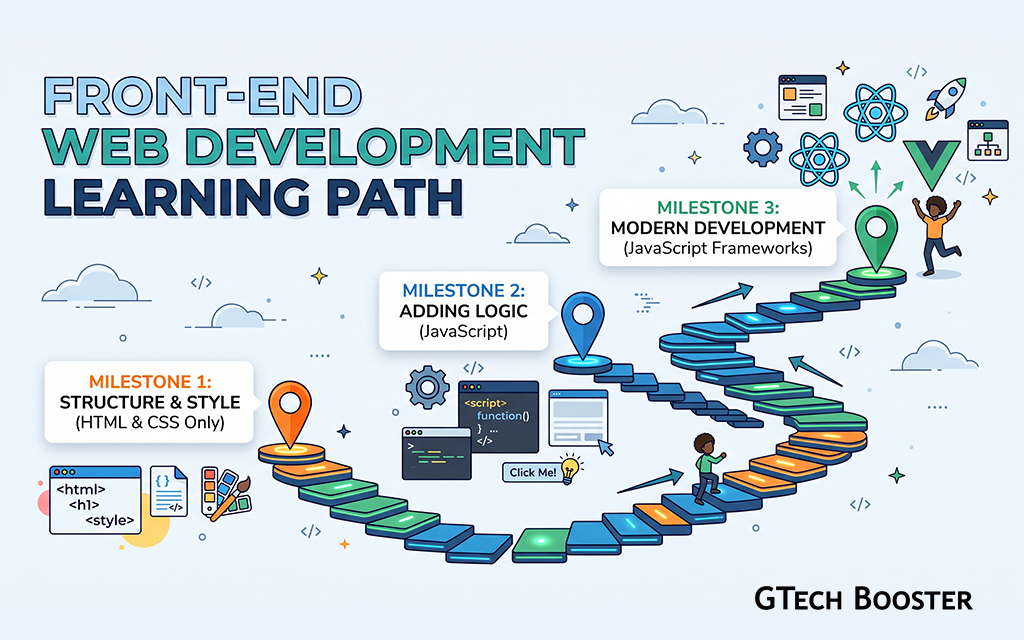
For anyone starting out, or anyone who jumped to a framework too early and wants to shore up the gap, a reasonable path looks something like this. Start by building several small, complete projects using only HTML and CSS, no JavaScript at all, focusing on semantic structure and responsive layout using Flexbox and Grid. From there, add plain JavaScript to those same kinds of projects, building interactive components like a tabbed interface, a form with custom validation, or a simple to-do list, all without any framework, forcing direct engagement with the DOM and event handling. Once that foundation feels comfortable, working with fetch to pull data from a public API and rendering it dynamically closes the gap on asynchronous JavaScript in a practical, low stakes context. Only after this groundwork does picking up a framework become dramatically easier, since most of what a framework does at that point will look like a more convenient way to do something already understood, rather than an entirely new and mysterious system.
Frameworks Are Still Worth Learning, Just Not First
None of this is an argument against frameworks. React, Vue, and their peers solve real problems around state management, component reuse, and application structure that become genuinely painful to handle manually as an application grows in size and complexity. The argument is specifically about sequencing. Learning a framework before understanding the fundamentals it’s built on tends to produce a developer who can move quickly within familiar patterns but struggles the moment a problem falls outside them. Learning the fundamentals first, then layering a framework on top, produces a developer who understands not just how to use the tool, but why it works the way it does, and what to do when it doesn’t.
Wrapping Up
HTML, CSS, and JavaScript are not the beginner’s version of web development, waiting to be outgrown once a framework enters the picture. They are the actual substance of the web platform, and every framework, however clever its abstractions, is ultimately just a particular way of organizing code written in these same three languages. Investing real time in understanding semantic structure, the CSS cascade and layout systems, and JavaScript’s core mechanics pays off long after any specific framework has fallen out of fashion, because the fundamentals underneath it all simply don’t expire the way frameworks eventually do.


















Conversation
Login to comment.
Log In / Register