Tizen OS – Inside Samsung’s Quiet Linux Empire
Tizen's history is unusually convoluted for an operating system, because it is really the product of several earlier, abandoned Linux mobile projects merging together rather than a single company building something from scratch.
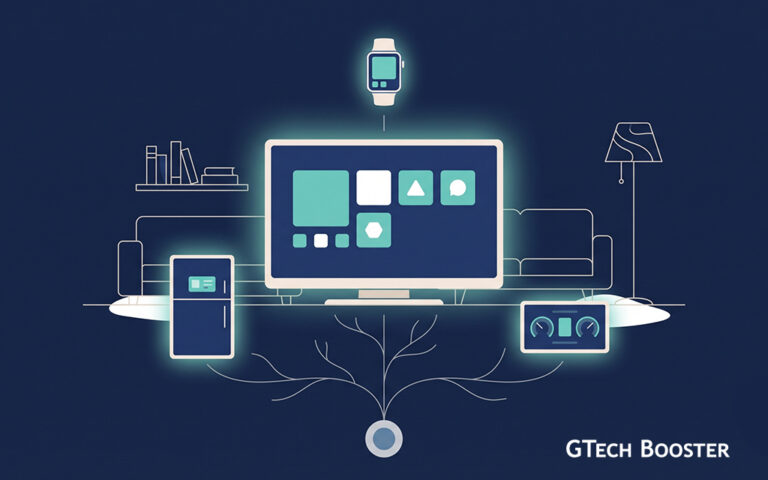
Most people who own a Samsung smart TV, an older Galaxy Watch, or a Family Hub refrigerator have used Tizen OS extensively without ever knowing its name. Unlike Android or iOS, Tizen never became a household brand, despite quietly powering more Samsung hardware today than most people realize. It is a genuine, open source, Linux based operating system with a long and somewhat tangled history, a real technical architecture worth understanding, and a present-day role that looks very different from what it was originally built for.
In this feature, we traces where Tizen came from, how it actually works, where it lives today across Samsung’s product lineup, and where its story appears to be headed.
A Tangled Family Tree: Where Tizen Actually Came From
Tizen’s history is unusually convoluted for an operating system, because it is really the product of several earlier, abandoned Linux mobile projects merging together rather than a single company building something from scratch.
The lineage traces back through a string of predecessors. Nokia’s Maemo project began in 2005. Intel launched its own mobile Linux effort called Moblin in 2007. In 2010, Nokia and Intel merged Maemo and Moblin together into MeeGo, with backing from a range of other hardware and software companies. That same year, Samsung was pursuing its own separate Linux based mobile platform called Bada, aimed at reducing its reliance on Android. MeeGo itself did not last: Nokia abandoned the project in 2011 to pivot toward Windows Phone, and Intel’s other MeeGo supporters drifted away shortly after.
Around the same time, Samsung had been developing its own Linux platform in collaboration with the Enlightenment Foundation Libraries project, an effort long referred to internally as LiMo. When Intel left MeeGo in September 2011, it joined Samsung’s LiMo effort instead, and the combined project was renamed Tizen. On January 1, 2012, the LiMo Foundation itself was renamed the Tizen Association, and Tizen was formally announced as a Linux Foundation hosted project on September 28, 2011, positioned as the direct successor to MeeGo. A common misconception, worth correcting directly, is that Tizen is simply a continuation of MeeGo. It is more accurate to describe it as building on the Samsung Linux Platform, itself a reference implementation delivered within the earlier LiMo project, with MeeGo serving more as a namesake predecessor than a direct ancestor. Samsung’s earlier Bada platform was subsequently merged into Tizen as well, bringing Bada’s native application framework along with it.
Tizen’s first public release arrived in January 2012 as a set of open Git repositories for the core operating system plus a preview SDK. Version 1.0, code-named “Larkspur,” followed on April 30, 2012, and version 2.0, code-named “Magnolia,” arrived in February 2013 with a much more capable web based application framework, improved HTML5 and W3C API support, and OpenGL ES support. Beyond Samsung and Intel, the Tizen Association’s early commercial backers included a notably broad list of telecom and electronics companies, among them Access Co., NEC Casio, NTT DoCoMo, Panasonic Mobile, SK Telecom, Telefónica, Vodafone, and later Sprint, reflecting Tizen’s original ambition as an industry-wide standard rather than a single-vendor project.
What Tizen Actually Is Technically
At its foundation, Tizen is built on the Linux kernel, using the GNU C library and standard Linux drivers and low-level system services, which makes it a genuine Linux distribution rather than a Linux-inspired reimplementation the way, for example, Android’s use of a modified Linux kernel with a completely different userspace often gets described. That said, Tizen is not “standard desktop Linux” either, and it is emphatically not Android. Samsung built a proprietary middleware layer and a dedicated Tizen-specific API surface on top of the Linux base, creating a platform purpose-built for the specific hardware categories it targets rather than a general-purpose desktop environment adapted to mobile use.
Application development on Tizen has historically supported two distinct paths, a design choice inherited from its LiMo and Bada ancestry:
- Web applications, built using HTML5, CSS, and JavaScript, originally leaning on jQuery and jQuery Mobile in earlier versions, aimed at lowering the barrier to entry for developers already comfortable with web technologies rather than native mobile development.
- Native applications, written in C and built on the Enlightenment Foundation Libraries graphical toolkit, offering deeper hardware access and better performance for applications that need it, an approach that traces directly back to Samsung’s Bada-derived Open Services Platform.
Tizen Studio, Samsung’s official development environment, supports both paths and is explicitly designed around a multi-platform philosophy: an application built for one Tizen device category, whether a smartphone, wearable, TV, or in-vehicle system, can typically be adapted to run on another Tizen platform with only modest modification, and in some cases can run essentially unmodified. This was intended to let developers use less mainstream categories, like wearables or TVs, as an easier stepping stone into building out an app ecosystem before tackling the much more competitive and saturated smartphone app market, though how well that strategy has actually paid off for third-party developers remains a genuinely debated question within the platform’s own community.
Much of Tizen is released as open source software, governed as a project within the Linux Foundation and administered by a Technical Steering Group historically composed primarily of Samsung and Intel. However, it is not entirely open: the software development kit contains proprietary components owned by Samsung, and portions of the operating system are distributed under the Flora License, an Apache 2.0 derivative that grants a patent license specifically to Tizen-certified devices rather than to the software unconditionally.
The Smartphone Chapter That Mostly Failed
It is easy to forget today, given where Tizen actually lives now, that it was originally conceived with smartphones as a central target, alongside netbooks, tablets, smart TVs, and in-vehicle entertainment systems. Samsung did release actual Tizen smartphones, most notably the Samsung Z series, which became one of the first devices to ship with Tizen as its primary operating system. These phones launched primarily in emerging markets such as India, Bangladesh, and parts of the Middle East, positioned as an affordable alternative to entry-level Android devices rather than as a flagship Android competitor.
The smartphone push never gained meaningful traction outside a handful of markets. Developer interest in building dedicated Tizen phone apps remained thin compared to the overwhelming gravity of the Android and iOS app ecosystems, and Samsung itself never fully committed its flagship phone lineup to the platform, keeping its most important Galaxy phones on Android throughout. Over time, Samsung’s phone-focused ambitions for Tizen quietly faded, and the project’s practical center of gravity shifted decisively toward the device categories where it actually found lasting success.
Where Tizen Actually Lives Today
The Tizen of 2026 looks quite different from the smartphone-centric vision of 2012, having settled into a smaller number of device categories where it has genuinely thrived rather than merely survived.
Smart TVs: Tizen’s strongest and most durable home
Samsung has shipped Tizen on every smart TV it has sold since 2015, and this remains, by a wide margin, the platform’s most successful and enduring deployment. According to industry tracking from Parks Associates, Samsung held the leading global smart TV market share position as of 2023, giving Tizen a footprint that dwarfs its brief smartphone chapter many times over. The Samsung TV app store built on Tizen serves streaming, gaming, fitness, sports, news, and education content categories, and for any developer or business targeting a lean-back, passive television viewing experience, building for Tizen reaches more smart TV screens than any single competing television platform.
Tizen on Samsung TVs has continued actively evolving rather than sitting still. Samsung’s most recent major software refresh, officially branded One UI Tizen and internally versioned as Tizen 9, has been rolling out progressively through 2026, bringing a visual design language deliberately aligned with One UI on Galaxy phones, reworking fonts, icons, pop-ups, and settings menus to feel far more consistent with the mobile Samsung experience users already know. The rollout has not been entirely smooth: many users found that Tizen 9’s smaller, mobile-inspired UI elements became genuinely difficult to read from typical television viewing distances, a usability complaint significant enough that Samsung shipped a dedicated accessibility fix, a “Zoom Menu and Text” option under the Accessibility settings menu, specifically to enlarge interface elements back to a comfortable size for living room use. Updates are delivered automatically over the air, with connected TVs checking for and installing new firmware overnight during standby without requiring any user action.
The now-closed smartwatch chapter
Tizen also found real, if ultimately temporary, success in wearables. Beginning with the original Samsung Galaxy Gear in 2013, Samsung used Tizen across eleven total smartwatch models over the following years: the Galaxy Gear, Gear 2, Gear Live, Gear S, Gear S2, Gear S3, Gear Sport, and the Galaxy Watch, Galaxy Watch Active, Galaxy Watch Active 2, and Galaxy Watch 3. This chapter has now definitively closed. Samsung switched its Galaxy Watch line over to Google’s Wear OS starting with the Galaxy Watch 4 in 2021, and has methodically wound down Tizen watch support since. The Galaxy Store stopped offering paid Tizen watch content on September 30, 2024, free downloads were removed on March 31, 2025, and all remaining Tizen watch services and the ability to download any further content, paid or free, ended entirely on September 30, 2025. Previously purchased content remains accessible on-device through the Galaxy Store’s My Apps section, but once deleted, it cannot be redownloaded, and no further updates or supported services will follow for any of these eleven Tizen watch models going forward. Existing owners have not lost basic watch functionality outright, but the smartwatch experience on these devices is now permanently frozen rather than maintained.
IoT and appliances: a quieter but real presence
Beyond screens people watch or wear, Tizen also powers a meaningful slice of Samsung’s connected home appliance lineup, including Family Hub refrigerators, connected washing machines, and various smart home display panels. This is a considerably lower-profile deployment than TVs, but it reflects Samsung’s broader strategy of standardizing a single internal software platform across as much of its consumer electronics portfolio as practical, rather than maintaining entirely separate operating systems for every product category.
In-vehicle infotainment
Tizen has also found adoption outside pure consumer electronics through Tizen IVI, its in-vehicle infotainment variant, which has been used in automotive dashboard systems. This traces back to an early industry alignment: the Automotive Grade Linux initiative announced its intent to use Tizen as the basis for its own reference automotive platform not long after Tizen’s initial launch, giving the project an early foothold in automotive software that has continued in various forms since. Select non-Samsung connected device manufacturers have also explored using Tizen for smart home products outside Samsung’s own product umbrella, though this remains a comparatively minor part of Tizen’s overall footprint compared to its role inside Samsung’s own ecosystem.
Understanding Tizen’s Real Identity Today
Put all of this together and a clear picture emerges. Tizen is not, and was never really destined to become, a smartphone operating system competing head to head with Android and iOS for app developer attention and market share, despite that being close to its original founding ambition. What it actually became is something narrower but genuinely durable: Samsung’s internal, standardized Linux platform for the categories of consumer electronics where Samsung dominates outright and where a heavyweight, general-purpose mobile OS like Android would arguably be excessive, namely televisions, appliances, and, historically, wearables before Samsung’s strategic pivot to Wear OS.
This is a meaningfully different kind of success than most operating systems chase. Tizen does not need third-party app developers racing to build for it the way Android’s ecosystem depends on that dynamic, because its primary job on a television or a refrigerator is running Samsung’s own first-party software reliably and efficiently, with a smaller supplementary app store layered on top for the specific categories, like TV streaming apps, where third-party content genuinely matters to the end user. Judged against that quieter but very real mandate, rather than against the smartphone ambitions it originally launched with, Tizen has been a substantial, ongoing success for Samsung, powering the single most widely sold smart TV platform in the world today, even if most of the people using it every evening have no idea what operating system is actually running behind their remote control.
Rounding up
Tizen’s story is a useful reminder that not every operating system needs to win the platform it was originally built to compete in to end up being a meaningful, lasting success. Born out of the wreckage of Maemo, Moblin, MeeGo, and Bada, and briefly pursuing smartphones as a genuine Android alternative before quietly abandoning that ambition, Tizen found its actual, durable home in the living room, inside the appliance, and for close to a decade, on the wrist. It remains an active, evolving, genuinely open source Linux project today, still receiving major yearly software updates on the television platform where it has thrived most, even as its smartphone chapter has faded into a mostly forgotten footnote and its smartwatch chapter has now formally closed for good.
More Information ℹ







Conversation
Login to comment.
Log In / Register