The Variety of Handsfree Audio Tools of Today
Today, handsfree audio tools range from small earbuds that disappear almost entirely into the ear, to open ear designs that leave the ear canal completely uncovered, to smart glasses that combine audio with other functions entirely. Understanding the differences between these categories helps explain why no single product dominates the market, since each approach solves a slightly different problem.

Handsfree audio refers to any device or technology that allows a person to listen to sound, and often speak or issue commands, without needing to hold a phone up to their ear or physically manage a wired connection. What began decades ago as a simple convenience, mainly aimed at allowing people to talk on the phone while driving, has grown into an enormous and varied category of products, each designed around a slightly different use case, environment, or priority.
Today, handsfree audio tools range from small earbuds that disappear almost entirely into the ear, to open ear designs that leave the ear canal completely uncovered, to smart glasses that combine audio with other functions entirely. Understanding the differences between these categories helps explain why no single product dominates the market, since each approach solves a slightly different problem.
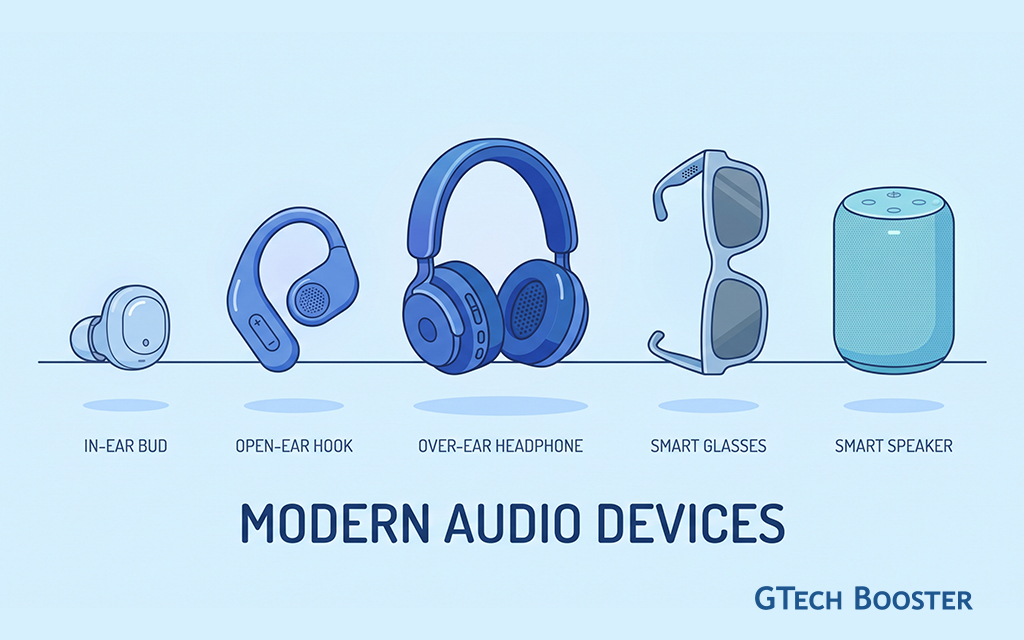
In Ear Wireless Earbuds
In ear wireless earbuds are likely the most widely recognized form of handsfree audio today. These are small devices that fit directly into the ear canal, connecting to a phone or other device wirelessly, typically through Bluetooth, and requiring no cables at all between the earbuds themselves or between the earbuds and the source device.
How They Work
In ear earbuds sit snugly within or at the entrance of the ear canal, often held in place with a soft silicone or foam tip that also helps block outside noise. They contain a small speaker, a microphone for capturing voice, a battery, and wireless communication hardware, all packed into a device often weighing just a few grams. Most modern versions come with a charging case that both stores the earbuds when not in use and recharges them between listening sessions.
Strengths and Trade Offs
Because the ear tip forms a seal within the ear canal, in ear earbuds are particularly effective at physically blocking a significant amount of outside noise, even before any electronic noise cancellation is applied. This makes them popular for use in loud environments such as public transportation, gyms, or busy offices. The trade off is that this same seal can make a person feel cut off from their surroundings, which can be a safety concern in situations like walking near traffic or cycling, where hearing ambient sound matters.
Open Ear Earbuds and Bone Conduction Headphones
A newer category of handsfree audio has emerged specifically to address the isolation created by in ear designs. Open ear earbuds and bone conduction headphones both aim to deliver sound to the listener while leaving the ear canal itself completely open and unobstructed.
Open Ear Earbuds
Open ear earbuds typically hook around the outer ear or rest just outside the ear canal, directing sound toward the ear without physically entering or sealing it. Because nothing blocks the ear canal, a person wearing these can still clearly hear traffic, conversations, or other ambient sounds around them while simultaneously listening to music, a podcast, or a phone call.
Bone Conduction Headphones
Bone conduction headphones take a fundamentally different technical approach. Rather than sending sound through the air into the ear canal at all, these devices rest against the cheekbone or temple, just in front of the ear, and use small vibrating transducers to send sound directly through the bones of the skull to the inner ear. This leaves the ear canal completely free, and it is a technology originally developed for specialized uses, such as allowing people with certain types of hearing loss to perceive sound, before becoming popular more broadly for sports and outdoor activities.
Why People Choose These Options
Runners, cyclists, and anyone who regularly needs strong situational awareness of their surroundings often gravitate toward open ear or bone conduction designs specifically because they prioritize safety and awareness over maximum noise isolation. The trade off is that these designs typically cannot block outside noise as effectively, meaning listening in a genuinely loud environment can be more difficult compared to a sealed in ear design.
Over Ear and On Ear Wireless Headphones
Over ear and on ear wireless headphones represent a larger, more traditional handsfree audio format, using cushioned ear cups connected by a headband rather than small individual earbuds.
Over Ear Headphones
Over ear headphones fully enclose the ear within a padded cup, creating a physical seal around the entire ear rather than just within the canal. This larger enclosure typically allows for bigger internal speakers and more room for battery capacity, often resulting in longer listening times per charge compared to smaller earbuds, along with generally stronger sound quality and more effective noise isolation.
On Ear Headphones
On ear headphones sit directly on top of the ear rather than fully surrounding it, offering a middle ground between the compact size of earbuds and the full enclosure of over ear designs. They tend to be lighter and more portable than over ear headphones while still offering better sound isolation than most open ear designs.
Active Noise Cancellation
Many headphones in this category, along with a growing number of in ear earbuds, include active noise cancellation, a technology that uses built in microphones to detect ambient sound and then generates an opposing sound wave to cancel it out before it reaches the ear. This is a genuinely different mechanism from the passive noise blocking created simply by an ear cup or ear tip physically covering the ear, and the two approaches are often combined for maximum effect.
Handsfree Car Audio Systems
Long before wireless earbuds existed, handsfree audio in vehicles was primarily about allowing drivers to make and receive phone calls without holding a device, and this remains an important category today.

Built In Vehicle Systems
Most modern vehicles include a built in handsfree system, connecting to a driver’s phone through Bluetooth and routing audio through the car’s own speakers and microphone system. This allows a driver to make calls, receive navigation prompts, and often issue basic voice commands, all without touching their phone, which is both a matter of convenience and, in many regions, a legal requirement while driving.
Aftermarket and Portable Options
For vehicles without a built in system, aftermarket handsfree devices exist as well, typically small units that clip onto a car’s sun visor or dashboard, containing their own speaker and microphone and connecting wirelessly to a phone. While less seamlessly integrated than a built in system, these devices serve the same essential purpose for older vehicles.
Smart Speakers and Voice Assistants
Although not worn on the body at all, smart speakers represent another significant branch of handsfree audio technology, allowing a person to interact with audio content and digital assistants entirely through voice, without touching any device whatsoever.
How Smart Speakers Function
A smart speaker sits in a fixed location, such as a kitchen counter or living room shelf, and listens continuously for a specific wake word or phrase. Once triggered, it can play music, answer questions, control other smart devices in a home, and carry out a wide range of tasks, all through spoken commands and spoken responses, without any physical interaction required at all.
A Different Kind of Handsfree
Smart speakers represent a distinct category from wearable handsfree audio tools, since they are not carried on a person’s body and generally cannot follow a user from room to room or outdoors. Their strength lies instead in creating an entirely voice driven interaction within a fixed space, making them especially popular for hands occupied situations at home, such as cooking, cleaning, or simply relaxing without wanting to hold or look at a screen.
Smart Glasses With Integrated Audio
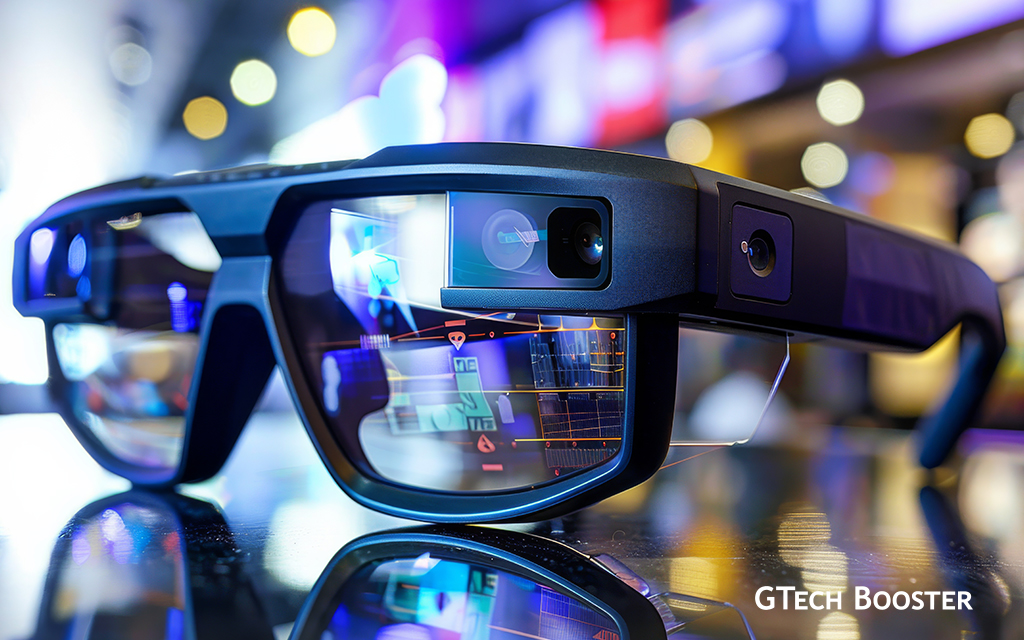
One of the more recent developments in handsfree audio blends sound directly into eyewear. Smart glasses with integrated audio look largely like ordinary glasses or sunglasses but contain small built in speakers positioned near the ears, along with microphones, allowing a wearer to listen to music, take phone calls, and interact with a voice assistant without wearing any separate earbuds or headphones at all.
How They Differ From Other Options
Because the speakers in these glasses are positioned near, rather than inside or sealed against, the ear, they function similarly in spirit to open ear earbuds, allowing outside sound to remain audible. Many versions also include a camera and connect to a smartphone app, expanding their function well beyond audio alone. This category represents a genuinely different form factor from earbuds, headphones, or speakers, aiming to make handsfree audio feel like a natural extension of something people already wear every day.
Choosing Between the Options
With so many handsfree audio tools available, the right choice largely comes down to matching a device’s design to a specific need. Someone prioritizing maximum noise isolation for a loud commute or focused work session is likely better served by sealed in ear earbuds or over ear headphones with active noise cancellation. Someone who needs to remain aware of traffic, other people, or their surroundings while exercising outdoors may find open ear earbuds or bone conduction headphones far more appropriate, even at the cost of some noise blocking. A driver benefits most from a dedicated vehicle handsfree system, while someone working around the house with their hands occupied may rely primarily on a smart speaker. Smart glasses, meanwhile, appeal to those wanting to consolidate audio, and sometimes additional functions, into a single familiar accessory.
Bringing It All Together
The range of handsfree audio tools available today reflects just how many different situations people encounter throughout a normal day, each with its own demands around noise, safety, comfort, and convenience. In ear wireless earbuds remain the most common choice for strong noise isolation in a compact form. Open ear earbuds and bone conduction headphones prioritize awareness of surroundings over isolation. Over ear and on ear headphones offer stronger sound quality and battery life at the cost of portability. Vehicle handsfree systems and portable car accessories keep drivers connected without distraction. Smart speakers bring a voice driven, entirely device free interaction into fixed spaces. Smart glasses fold audio directly into eyewear people already wear.
None of these categories has fully replaced the others, and that is precisely the point. Each was shaped by a different problem people needed solved, and understanding those differences makes it far easier to choose the right handsfree audio tool for a specific moment in someone’s day, rather than assuming one type of device should serve every situation equally well.
More Information ℹ


















Conversation
Login to comment.
Log In / Register