The journey of Glass – A Comprehensive Account
It is transparent yet solid, brittle yet capable of extraordinary strength when engineered correctly, and it is manufactured today in astonishing variety, from the window in a house to the screen of a smartphone to the optical fiber carrying internet traffic across an ocean floor.

Glass is one of the most familiar materials in daily life and simultaneously one of the strangest from a scientific point of view. It is transparent yet solid, brittle yet capable of extraordinary strength when engineered correctly, and it is manufactured today in astonishing variety, from the window in a house to the screen of a smartphone to the optical fiber carrying internet traffic across an ocean floor. Despite this familiarity, glass occupies a genuinely unusual place in materials science, sitting in a category of matter that is neither a conventional solid nor a conventional liquid in the strict scientific sense. This account examines glass from every major angle: what it actually is at a molecular level, how it has been made throughout history, the chemistry behind its many varieties, how it is manufactured at industrial scale today, the properties that make it useful, and the vast range of applications it serves across construction, technology, science, art, and everyday life.
What Glass Actually Is
An Amorphous Solid
Most solid materials, metals, minerals, and crystals, are made of atoms or molecules arranged in a highly ordered, repeating three dimensional lattice structure. Glass is fundamentally different. When molten glass cools, its constituent atoms do not settle into this kind of ordered crystalline arrangement. Instead, they become locked in place while still retaining the disordered, random atomic arrangement characteristic of a liquid. This is why glass is described scientifically as an amorphous solid, or sometimes a non-crystalline solid, a material that behaves mechanically like a rigid solid but lacks the ordered internal structure of a true crystal.
The Glass Transition
The process by which a liquid becomes glass on cooling is called vitrification, and the temperature range over which this happens is called the glass transition. Unlike crystallization, which occurs at a sharply defined melting or freezing point, the glass transition happens gradually over a temperature range, as the increasingly viscous liquid becomes so resistant to flow that its atoms effectively freeze in place before they have the opportunity to organize into a crystal lattice. This is why glass manufacturing is fundamentally about cooling a molten material fast enough, or with the right chemical composition, to prevent crystallization from occurring.
The Old Myth About Flowing Glass
A commonly repeated claim holds that old windowpanes are thicker at the bottom because glass is actually a very slow moving liquid that flows measurably over centuries. This idea, while intuitive given the amorphous nature of glass, is now understood by materials scientists to be incorrect as an explanation for old window glass. The uneven thickness observed in centuries old windowpanes is instead a result of the manufacturing methods used at the time, which produced glass sheets of naturally variable thickness, and which installers would often mount with the thicker edge at the bottom for stability. At room temperature, glass is for all practical purposes permanently rigid, and any true atomic scale flow would occur on timescales vastly longer than human history.
The History of Glass
Ancient Origins
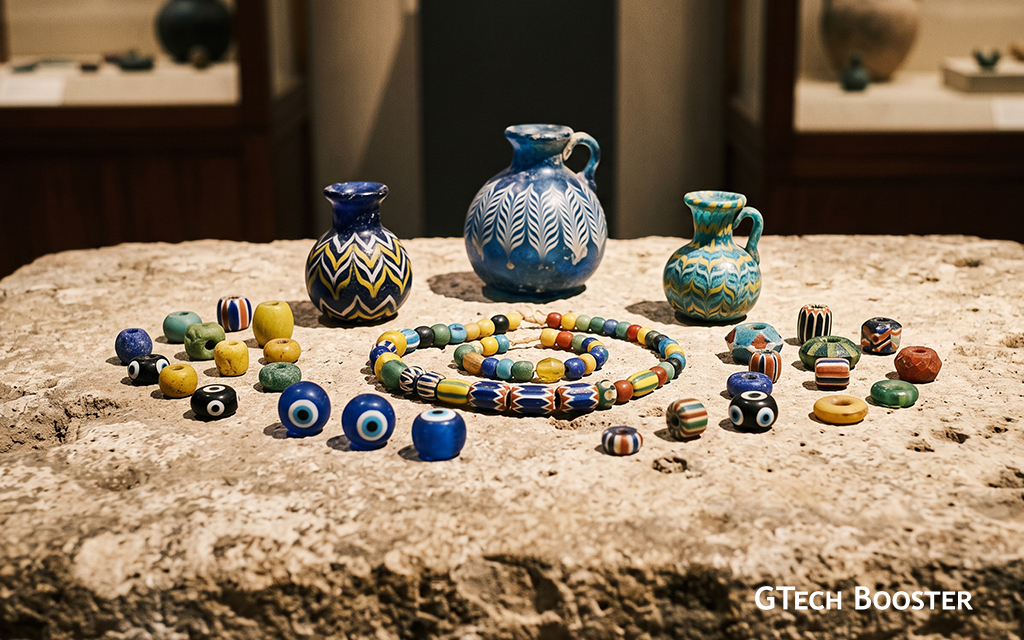
The earliest glass objects date back roughly five thousand years, with naturally occurring glass, such as obsidian formed from rapidly cooled volcanic lava, and fulgurites formed when lightning strikes sand, having been used by even earlier prehistoric peoples for cutting tools and ornamental objects. Deliberately manufactured glass is generally believed to have first emerged in Mesopotamia and ancient Egypt, initially in the form of glazes applied to pottery and beads before evolving into small standalone glass objects and vessels.
The Roman Glassblowing Revolution
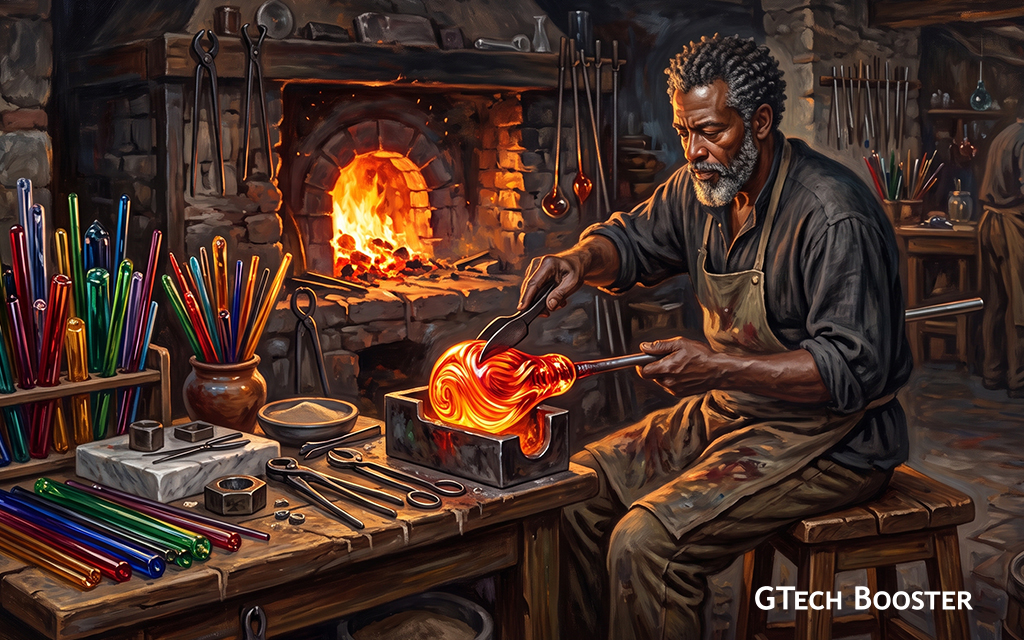
The single most transformative innovation in ancient glass history was the invention of glassblowing, generally attributed to craftsmen in the Syro-Palestinian region around the first century BCE. Glassblowing allowed a craftsman to gather molten glass on the end of a hollow blowpipe and inflate it into a wide variety of shapes far more quickly and cheaply than earlier techniques, which had relied on laboriously forming glass around a core or casting it in molds. The Roman Empire subsequently spread glassblowing technology and glass production widely across its territories, making glass vessels dramatically more available to ordinary households than they had ever been before.
Medieval and Renaissance Developments
Through the medieval period, glassmaking flourished in various regional centers, with the stained glass windows of European cathedrals representing one of the most artistically significant applications of colored glass in history, using metallic oxide additives to achieve vivid, light transmitting colors for religious and decorative imagery. The island of Murano near Venice became one of history’s most celebrated centers of fine glassmaking beginning in the medieval period, developing techniques for exceptionally clear, colorless glass called cristallo, along with elaborate decorative techniques that Venetian glassmakers guarded closely as trade secrets for centuries.
The Industrial Revolution and Mass Production
Glass manufacturing remained a largely artisanal, labor intensive craft until the industrial revolution introduced mechanization to the process. Innovations in the nineteenth and early twentieth centuries progressively automated glass production, including machine drawn window glass processes and automatic bottle making machines, dramatically reducing cost and enabling glass to become a genuinely mass produced, widely affordable material rather than a relatively luxury good.
The Float Glass Revolution
The most significant modern innovation in glass manufacturing was the float glass process, developed by the British company Pilkington and commercially introduced in the late 1950s. This process, described in more detail later in this account, made it possible to produce flawlessly flat, uniformly thick sheet glass continuously and at very large scale, and it remains the dominant method used to manufacture flat glass worldwide today.

The Chemistry and Composition of Glass
The Role of Silica
The overwhelming majority of commercial glass is based on silicon dioxide, commonly known as silica, typically supplied in the form of purified sand. Pure silica alone can be melted and cooled to form glass, and this produces fused silica or quartz glass, an extremely pure, highly heat resistant, and optically excellent material, but pure silica has an extremely high melting point, making it expensive and difficult to work with at industrial scale for most everyday applications.
Soda-Lime Glass
To reduce the melting temperature and cost of production, most everyday glass, used in windows, bottles, and drinking glasses, is soda-lime glass, made by combining silica sand with soda ash, chemically sodium carbonate, which significantly lowers the melting point, and lime, chemically calcium oxide, which improves the chemical durability and water resistance of the finished glass, since soda alone would make the glass soluble in water. This combination, refined over centuries, remains the most widely produced type of glass in the world today, accounting for the large majority of container glass and flat glass production.
Borosilicate Glass
Borosilicate glass incorporates boron trioxide into the silica base, producing a glass with a significantly lower coefficient of thermal expansion than soda-lime glass. This means borosilicate glass expands and contracts far less when heated or cooled, giving it excellent resistance to thermal shock, the tendency of ordinary glass to crack when subjected to rapid or uneven temperature changes. This property makes borosilicate glass the material of choice for laboratory glassware, cookware designed for oven use, and various industrial and scientific applications where temperature resistance matters more than raw cost efficiency.
Lead Glass
Lead glass, historically and still sometimes commercially called lead crystal even though it is not a true crystalline material, incorporates lead oxide into the glass composition. This addition increases the glass’s refractive index, giving it enhanced brilliance and sparkle, and also makes the glass softer and easier to cut with intricate decorative facets, which is why lead glass has long been favored for fine decorative glassware and ornamental cut glass pieces. Concerns about lead exposure, particularly from lead glass used to hold food or drink over extended periods, have led to reduced use of genuine lead glass in some contexts, with alternative high refractive index formulations developed to achieve similar optical brilliance without lead content.
Aluminosilicate and Specialty Glass
Aluminosilicate glass, which incorporates aluminum oxide, offers greater strength and higher resistance to scratching and thermal stress than standard soda-lime or even borosilicate glass, and forms the base composition used in many modern chemically strengthened glass products, including cover glass for smartphones and other portable electronic devices. Various other specialty glass compositions exist for specific optical, industrial, or scientific purposes, including glass formulated for particular refractive properties in lenses, glass designed to block or transmit specific wavelengths of light or radiation, and glass compositions engineered for exceptional chemical resistance in demanding industrial environments.
Colorants and Additives
Glass color is generally achieved by introducing small quantities of metallic oxides into the melt. Iron oxide, often present as an unwanted impurity in raw materials, imparts the faint greenish tint visible in ordinary window and bottle glass when viewed edge on, while deliberately added compounds such as cobalt oxide for blue, chromium oxide for green, and various gold or selenium based compounds for shades of red and pink, have been used for centuries to produce decorative and functional colored glass. Modern glass manufacturing can also introduce coatings and additives for purposes such as ultraviolet filtering, infrared reflection for energy efficiency, and self cleaning photocatalytic surface treatments.
How Glass Is Manufactured
Raw Material Preparation and Melting
Industrial glass production begins with carefully proportioned raw materials, primarily silica sand along with soda ash, limestone, and other additives depending on the desired glass type, being mixed and fed into a large furnace. These furnaces operate at extremely high temperatures, generally in excess of fifteen hundred degrees Celsius for common glass compositions, melting the raw materials into a homogeneous molten glass while also allowing trapped gas bubbles to rise out of the melt in a refining stage.
The Float Glass Process
For flat glass, the dominant modern manufacturing method is the float glass process. In this process, the molten glass flows continuously from the furnace onto the surface of a bath of molten tin, chosen because it remains liquid at the required temperatures and is denser than glass, causing the glass to float on top of it in a smooth, naturally flat layer, much like oil floating on water. As the glass moves along the tin bath, it gradually cools while remaining perfectly flat and developing a uniformly smooth surface on both sides, before being slowly cooled further in a controlled process called annealing, which relieves internal stresses that would otherwise make the glass prone to cracking, and finally cut into sheets of the required size. This continuous process can produce enormous quantities of high quality flat glass with remarkable consistency and minimal manual intervention.
Container and Pressed Glass Manufacturing
Glass containers such as bottles and jars are typically manufactured using automated machines that use a combination of pressing and blowing techniques, forming a rough gob of molten glass into a preliminary shape called a parison before blowing it into its final form within a mold, all performed at extremely high speed on continuous production lines capable of producing large volumes of containers per minute. Pressed glass, used for items such as tableware and certain decorative objects, is formed by pressing molten glass directly into a mold using a plunger, producing a solid shaped object without the hollow blowing step.
Fiberglass Manufacturing
Fiberglass is produced by forcing molten glass through extremely fine holes called bushings, drawing it out into thin continuous filaments that are then gathered, coated, and wound or chopped depending on the intended application, whether that is textile grade fiberglass fabric, reinforcement fiber for composite materials, or loose fill insulation material.
Annealing and Stress Relief
Regardless of the specific forming method used, virtually all glass manufacturing includes an annealing stage, in which the formed glass is cooled slowly and in a carefully controlled manner through a specific temperature range. This step is critical because rapid or uneven cooling creates internal stresses within the glass that can cause it to crack spontaneously, sometimes long after manufacturing, or make it unpredictably weak. Properly annealed glass has a much more uniform internal stress distribution and correspondingly more predictable mechanical behavior.
Strengthening and Safety Glass
Tempered or Toughened Glass
Tempered glass, also called toughened glass, is produced by heating ordinary annealed glass to a high temperature and then rapidly cooling its surfaces, typically with jets of cold air, while the interior of the glass cools more slowly. This differential cooling locks the outer surfaces of the glass into a state of permanent compression while the interior remains in tension, and this internal stress pattern dramatically increases the glass’s resistance to breakage under mechanical or thermal stress, typically several times stronger than equivalent ordinary annealed glass. When tempered glass does eventually break, the stored internal energy causes it to shatter into small, relatively blunt granular fragments rather than long dangerous shards, which is why tempered glass is widely required by building and safety codes for applications like shower doors, glass balustrades, and vehicle side and rear windows.
Laminated Glass
Laminated glass is produced by bonding two or more layers of glass together with an interlayer, commonly a tough polymer material such as polyvinyl butyral, under heat and pressure. If laminated glass breaks, the interlayer holds the broken fragments in place rather than allowing them to fall away or scatter, which is why laminated glass is required for vehicle windshields and is frequently specified for architectural glazing where fall prevention or blast and impact resistance is important, and it is also valued for its sound dampening properties compared to equivalent single pane glass.
Chemically Strengthened Glass
An alternative strengthening method, chemical tempering, involves immersing glass, typically an aluminosilicate composition, in a molten potassium salt bath. This process causes an ion exchange at the glass surface, replacing smaller sodium ions with larger potassium ions, which creates a compressive surface layer in a manner somewhat analogous to thermal tempering but capable of producing thinner, stronger glass with excellent scratch and impact resistance. This method underlies the branded cover glass products used on the majority of modern smartphones and other portable touchscreen devices, where thinness, strength, and scratch resistance are all critical requirements simultaneously.
Wired Glass and Other Specialty Safety Types
Wired glass, containing an embedded wire mesh, was historically used in fire rated applications, since the wire helps hold the glass in place even after cracking under fire exposure, though modern fire rated glazing has increasingly moved toward specially engineered ceramic and laminated glass products offering both fire resistance and improved impact safety compared to older wired glass designs.
Physical and Optical Properties of Glass
Transparency
Glass owes its characteristic transparency to its amorphous atomic structure, which lacks the grain boundaries and crystalline defects found in most opaque solid materials that would otherwise scatter visible light. Because glass has no regular crystal lattice to diffract light in predictable directions, and because common glass compositions do not strongly absorb visible wavelengths, light passes through relatively undisturbed, though certain impurities, colorants, and surface treatments can be introduced deliberately to tint, filter, or diffuse light passing through it.
Refraction and Optical Glass
Glass bends, or refracts, light passing through it, and the degree of this bending, described by a material’s refractive index, depends on its specific chemical composition. This property is fundamental to the entire field of optics, since precisely formulated optical glass, manufactured with tightly controlled composition and extremely high purity, is used to make the lenses found in cameras, microscopes, telescopes, eyeglasses, and countless other optical instruments, with different glass formulations selected to control not just refraction but also dispersion, meaning how much a material’s refractive index varies across different wavelengths of light, which affects color fringing and image sharpness in optical systems.
Brittleness and Fracture Behavior
Glass is characteristically brittle, meaning it tends to fracture with little or no plastic deformation beforehand, unlike ductile materials such as most metals, which can bend and stretch considerably before breaking. This brittleness arises from the strong, rigid covalent and ionic bonding network within the glass structure, which resists the kind of atomic layer sliding that allows ductile materials to deform without immediately fracturing. Glass strength is also highly sensitive to surface flaws, since microscopic surface scratches and defects concentrate stress and act as starting points for crack propagation, which is a major part of why techniques like tempering, which put the glass surface under compressive stress, so dramatically improve practical strength even though the underlying material composition is unchanged.
Thermal Properties
Ordinary soda-lime glass has a relatively high coefficient of thermal expansion, meaning it expands and contracts noticeably with temperature changes, which makes it vulnerable to thermal shock cracking if heated or cooled unevenly or too rapidly. Specialty compositions such as borosilicate and certain ultra low expansion glass ceramics dramatically reduce this sensitivity, making them suitable for applications ranging from cooking and laboratory glassware to precision optical instruments and telescope mirror substrates that must maintain their exact shape across a range of operating temperatures.
Electrical and Chemical Properties
Glass is generally an excellent electrical insulator, a property exploited historically in applications like insulators for overhead power lines, and it is also chemically inert and resistant to attack by most common substances, though it can be etched or dissolved by hydrofluoric acid and, over very long timescales or under strongly alkaline conditions, by some other chemicals as well, a property relevant to the long term durability of glass used in demanding chemical or environmental contexts.
Applications of Glass
Architecture and Construction
Flat glass produced by the float process is fundamental to modern architecture, used in windows, doors, curtain wall facades on skyscrapers, skylights, and increasingly sophisticated energy efficient glazing systems that incorporate multiple panes, inert gas fills, and specialized coatings to control heat transfer, solar gain, and glare while maximizing natural light and unobstructed views. Structural glass applications, including frameless glass balustrades, glass floors, and glass staircases, rely on toughened and laminated safety glass engineered to bear significant structural loads while preserving visual transparency.
Packaging and Containers
Glass containers remain widely used for food, beverages, pharmaceuticals, and cosmetics, valued for being chemically inert, impermeable to gases and moisture, fully recyclable, and imparting no taste or odor to their contents, characteristics that plastic and metal packaging alternatives cannot always match, though glass containers are heavier and more fragile than many alternative packaging materials, which affects transportation cost and breakage risk.
Automotive and Transportation
Vehicles rely extensively on both laminated glass, used for windshields to hold fragments in place and provide structural integrity in a crash, and tempered glass, used for side and rear windows where rapid, low hazard fragmentation on impact is preferred, along with a growing use of advanced coated and tinted glass for solar control, acoustic insulation, and heads up display integration in modern vehicles.
Consumer Electronics
Chemically strengthened aluminosilicate cover glass has become a defining material in modern consumer electronics, protecting the touchscreens of smartphones, tablets, and wearable devices while remaining thin enough to preserve touch sensitivity and optical clarity, with ongoing materials research continuing to push toward thinner, tougher, and more scratch resistant formulations.
Fiber Optics and Telecommunications
Extraordinarily pure silica glass fiber forms the physical backbone of the modern internet and global telecommunications network, carrying data as pulses of light over enormous distances with very low signal loss, a technology that fundamentally depends on achieving glass purity levels far beyond what is required for ordinary optical or architectural glass, since even minute impurities would otherwise scatter or absorb light over the long distances involved.
Scientific and Medical Instruments
Precision optical glass underpins the lenses of microscopes, telescopes, cameras, and countless scientific instruments, while borosilicate and other specialty glass compositions are essential to laboratory glassware, pharmaceutical vials and ampoules, and medical devices that require chemical inertness, precise dimensional stability, and resistance to sterilization processes involving heat or chemicals.
Textile and Composite Reinforcement
Fiberglass, in the form of woven fabric, chopped strand, or continuous filament, is used extensively as a reinforcing material in composite products ranging from boat hulls and automotive body panels to wind turbine blades, and as loose or batt insulation material in building construction, valued for its combination of strength, light weight, and thermal insulating properties.
Art and Decoration
Glass has a long and rich history as an artistic medium, from ancient Egyptian and Roman decorative glassware through medieval stained glass windows to the celebrated blown and sculpted art glass traditions of Murano and, more recently, the large scale sculptural glass art movement associated with artists working in blown and cast glass as a fine art medium in its own right, exploiting the material’s unique combination of transparency, color, and light interaction.
Environmental Considerations and Recycling
Recyclability
Glass is fully and indefinitely recyclable without any loss of quality or purity, since it can be melted down and reformed into new glass products repeatedly with no degradation to its fundamental material properties, distinguishing it favorably from materials like some plastics, which typically degrade in quality through repeated recycling cycles. Recycled glass, commonly called cullet, also offers a genuine energy efficiency benefit in manufacturing, since it melts at a lower temperature than raw silica sand and other virgin raw materials, reducing the energy required in the furnace melting stage.
Environmental Costs of Production
Despite its recyclability, primary glass manufacturing is an energy intensive process due to the very high furnace temperatures required to melt raw materials, and the extraction of raw materials such as silica sand carries its own environmental considerations, including habitat disruption and, in some regions, concerns about sand mining sustainability given the scale of global demand across construction and glass manufacturing combined. The overall environmental footprint of glass depends heavily on factors including the proportion of recycled cullet used in production, the efficiency and fuel source of the furnace, and the transportation distances involved given that glass is a comparatively heavy material relative to many packaging alternatives.
Emerging Technologies and the Future of Glass
Smart Glass
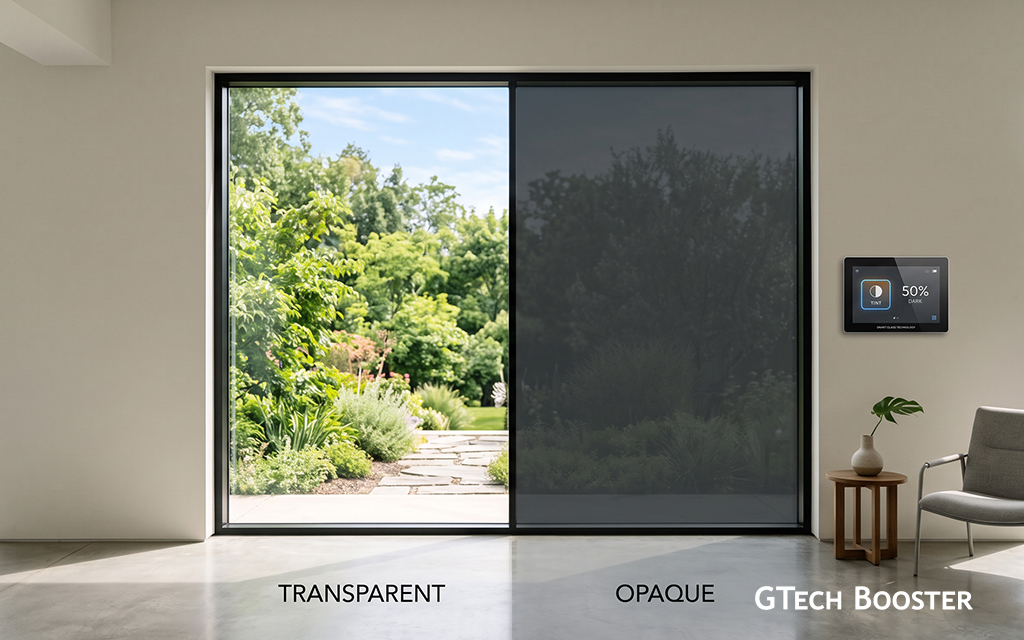
Smart glass technologies allow the optical properties of glass, most commonly its transparency or tint, to be actively controlled, typically through an applied electrical voltage, enabling windows that can switch between clear and darkened states on demand for privacy or solar heat control, a technology increasingly deployed in architecture, automotive sunroofs, and aircraft windows.
Self Cleaning and Functional Coatings
Advanced surface coatings applied to glass can provide self cleaning properties through photocatalytic reactions that break down organic dirt under exposure to ultraviolet light combined with a hydrophilic surface that allows rainwater to sheet off cleanly rather than forming droplets, along with a wide range of other functional coatings for solar control, anti reflection, anti microbial surface properties, and enhanced durability.
Thinner, Stronger Cover Glass
Ongoing materials science research continues to push toward glass compositions and strengthening processes capable of producing ever thinner, lighter, and more damage resistant cover glass for electronic devices, along with flexible and foldable glass formulations thin and pliable enough to be used in foldable smartphone and other flexible display products, an area of active and rapidly evolving development.
Bioactive and Medical Glass
Specialized bioactive glass compositions have been developed for medical applications, including bone regeneration and tissue engineering, exploiting glass formulations that can bond with living bone tissue or gradually dissolve within the body in a controlled and biologically beneficial way, representing a significant departure from the traditional inert role glass plays in most other applications.
Wrapping Up
Glass is a material defined by a fundamental paradox: it is scientifically classified as an amorphous solid that never quite achieves the ordered structure of a true crystal, yet this very disorder is what grants it the optical transparency, chemical inertness, and versatility that have made it indispensable to human civilization for thousands of years. From the earliest glass beads of ancient Mesopotamia to the ultra pure optical fiber carrying global internet traffic today, glass has continually been refined, reformulated, and re-engineered to meet new demands, whether that meant Roman glassblowers making vessels affordable for ordinary households, Venetian craftsmen perfecting crystal clarity, or modern materials scientists developing chemically strengthened cover glass thin enough for a folding smartphone screen. Its properties, transparency, strength when properly engineered, chemical resistance, electrical insulation, and full recyclability, ensure that glass remains not a relic of older technology but an actively evolving material at the center of architecture, transportation, telecommunications, medicine, and consumer technology, with new formulations and applications continuing to emerge as materials science advances further still.
More Information ℹ


















Conversation
Login to comment.
Log In / Register