How HarmonyOS stacks up against iOS and Android in 2026
See how HarmonyOS stacks up against iOS and Android in 2026. Looking at market share, app ecosystem, performance, and multi-device features compared side by side.
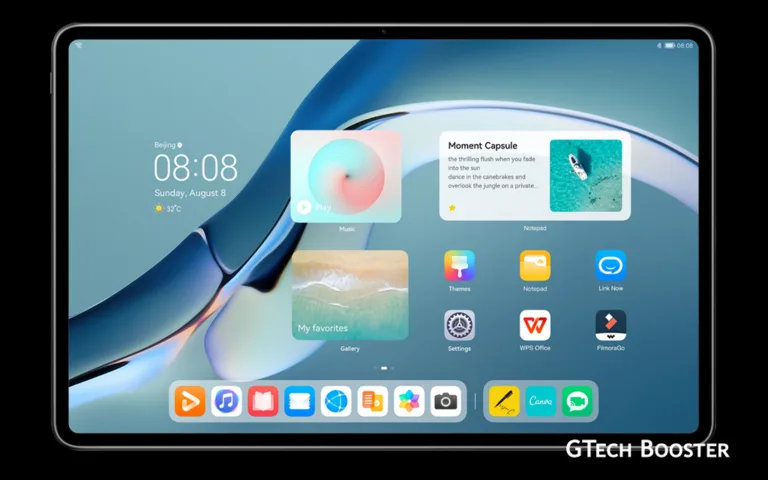
HarmonyOS NEXT, Huawei’s latest version, cut ties with Android entirely. Earlier versions were based on the Android Open Source Project and supported Android apps, but HarmonyOS Next uses Huawei’s own microkernel and ends Android app compatibility. It’s a genuinely separate platform now, not an Android skin.
Market share
Globally, HarmonyOS is still small; around 4% worldwide, while Android holds roughly 72% and iOS about 28%. But in China, it’s a different story: HarmonyOS’s app ecosystem reportedly reached 17% share in China, overtaking iOS there, while Android still dominates globally at about 66%.
Android
72%
global share
Largest app library
Widest device range
Most customizable
Most established
iOS
28%
global share
Strongest security model
Most polished experience
Tight Apple device ecosystem
HarmonyOS
~4%
global, 17% in China
Lightest, fastest on low-end hardware
Best multi-device handoff
Smallest global app library
App ecosystem – the biggest weak point
This is where HarmonyOS still trails. HarmonyOS Next runs on over 1 billion devices with more than 2 million developers on board, and is already the second-largest platform in China, though Android still holds about 64% share there. Outside China, the gap is bigger: the Huawei AppGallery has grown to over 15,000 apps for HarmonyOS Next, with the top 5,000 Chinese apps supported, but it still lacks global staples like Gmail, YouTube, and WhatsApp, which limits its current appeal outside China by a small but imprtant margin currently as TikTok continues to surge. Workarounds exist; third-party tools have managed to bring back common apps like Google Maps, Chrome, Gmail, and YouTube but it takes extra effort compared to just opening an app store.
Performance and design
This is where HarmonyOS holds its own or even leads in some benchmarks. HarmonyOS Next is benchmarked around 30% smoother than competitors, with a battery edge of about 56 minutes over rivals, and lower rendering latency than Android. Its microkernel design is optimized for low-spec hardware, enabling smooth performance on earbuds, watches, and IoT devices, and HarmonyOS Next reportedly cuts code by 40%, improving battery life even on weaker chips.
Multi-device experience
This is arguably HarmonyOS’s strongest pitch. It focuses heavily on cross-device compatibility, with features like fast tap-to-connect and multi-screen collaboration across phones, tablets, and other devices. Android and iOS both do multi-device work too, but more as an add-on than a core design principle.
Where iOS and Android still win
- iOS: Prioritizes security and a polished, consistent user experience, but it’s locked to Apple hardware.
- Android: Offers flexibility and the broadest device support, with millions of apps via the Play Store, though it relies heavily on Google Mobile Services and can be fragmented across manufacturers.
If you’re outside China, Android and iOS are still the practical choice, the app ecosystems are mature and everything just works. HarmonyOS is genuinely impressive on performance and device-to-device features, and it’s becoming a real third option in China. But it has a noticeably steeper learning curve than switching between iOS and Android, mainly because of the app gap. For most people outside China, it’s not yet a like-for-like replacement but it’s one to watch.
More Information ℹ
- Huawei new operating system HarmonyOS
- What is Harmony OS and how does it differ from other operating systems?









Conversation
Login to comment.
Log In / Register