WhatsApp Username Reservation Is Broken by Design – Why Your Facebook or Instagram Handle Should Have Been Enough
You cannot reserve a WhatsApp username without an existing WhatsApp account, and you cannot have a WhatsApp account without a phone number. The username feature does nothing to change that. High-profile names are protected. Everyone else is on a first-come, first-served basis, and a business without an account cannot compete.
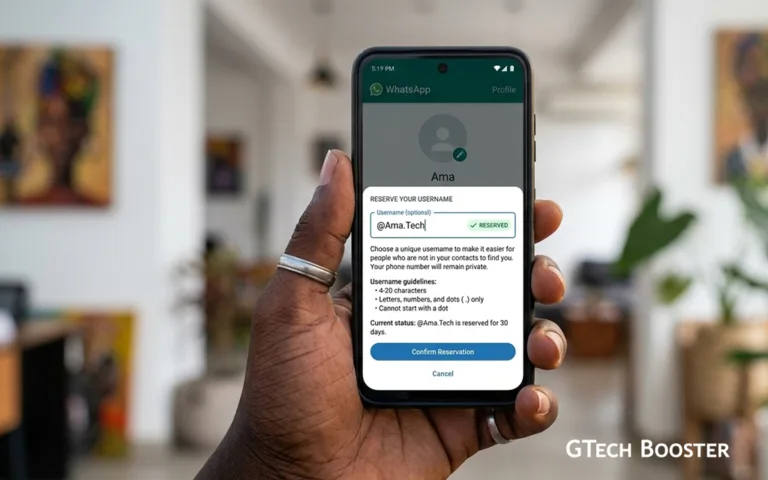
Let us be honest about what WhatsApp is asking some businesses and users to do. To reserve a username on the one of the largest messaging platform of the world, a business that does not currently use WhatsApp is being told, in effect, to go out and acquire a phone number, purchase or assign a handset, register a WhatsApp Business account, verify that account, update the app, and then navigate to Settings, Account, and Username just to lock in a name it already owns on every other Meta platform.
Not to use WhatsApp. Not to serve customers through it. Not because the business has any intention of operating on WhatsApp in the foreseeable future. But purely to stop someone else from claiming its own name before the feature goes live. That is not a reasonable ask. It is not a prudent one. And it exposes a failure of thinking at the heart of WhatsApp’s entire username rollout strategy.
You Already Own the Name. Meta Already Knows It.
Here is the part that makes the current system particularly difficult to defend. WhatsApp is owned by Meta. Facebook is owned by Meta. Instagram is owned by Meta. Threads is owned by Meta. If a business has built and maintained a verified, active presence on any of those platforms under a specific username, Meta already holds the proof of ownership. The brand association already exists inside Meta’s own infrastructure. There is no ambiguity about who that name belongs to.
Meta said that if businesses and creators want to maintain uniformity, they can claim their Facebook or Instagram username as their WhatsApp username. That provision acknowledges the logic. Meta recognises that cross-platform consistency is valuable and that businesses with existing handles on its other platforms have a legitimate claim to the same name on WhatsApp. So far, so reasonable.
But then the system requires those same businesses to have an active WhatsApp account backed by a phone number before they can exercise that claim. The proof of ownership is inside Meta’s own database. The entitlement has been acknowledged in Meta’s own announcement. And yet the door to the reservation process remains locked behind a requirement that has nothing to do with identity and everything to do with whether you have a SIM card.
That is an internal contradiction. And it is one that falls hardest on the businesses least equipped to navigate it quickly.
The Absurdity of the Phone Number Barrier in This Context
A phone number, in the context of WhatsApp username reservation for brand protection, serves no meaningful purpose. It does not verify the identity of the business. A phone number can be purchased by anyone for a few cedis or a few dollars in any country in the world. It provides no more proof of legitimacy than an email address.
It does not establish prior claim to a brand name. The name a business has traded under for years, built advertising campaigns around, and registered on Facebook, Instagram, and Threads carries infinitely more weight as evidence of brand ownership than a newly acquired SIM.
It does not protect against squatters. A squatter who wants to claim a business’s WhatsApp username has just as much access to a phone number as the legitimate business does. The phone number requirement does not filter out bad actors. It filters out legitimate businesses that simply do not use WhatsApp yet.
What the phone number does is ensure WhatsApp grows its registered user base. Every business forced to acquire a number and create an account to protect its brand name is a new WhatsApp account. There is a commercial logic to the requirement, but it is Meta’s commercial logic, not the business’s.
Asking a business to take on an infrastructure cost it does not need, for a platform it does not intend to use, in order to protect a name it already demonstrably owns on Meta’s own platforms, is not a privacy feature. It is an attempt of forced registration drive dressed up as brand protection.
What the Prudent System Would Have Looked Like
The alternative was not complicated. It did not require new technology. It required only the application of common sense to a situation where Meta already held all the relevant information.
The prudent approach would have been this: any business or creator with an active, established account on Facebook, Instagram, or Threads under a given username should have been able to reserve that same username on WhatsApp automatically, or at minimum through a simple cross-platform verification process, without needing a WhatsApp account at all.
Meta could have sent a notification through Facebook Business Manager, through the Instagram professional account interface, or through Threads, informing verified business accounts that their existing username was being held for them on WhatsApp and giving them a set period to confirm the claim. No phone number. No new SIM. No WhatsApp account required until the business actually decides to use the platform. Meta cannot claim unknown territory because Telegram already has username the extra with meta is it has three additional platform which leaves no room for an excuse for this lapse.

This would have served everyone better.
Legitimate businesses would have had their names protected without artificial cost or friction. The reservation process would have been credible because it was anchored in verified, established identity rather than newly acquired phone numbers. Squatters would have had a much harder time claiming names already protected under the cross-platform framework. And Meta would have demonstrated that owning multiple platforms is a genuine advantage for users rather than a silo of disconnected requirements.
Instead, Meta chose a model where the protection a business needs depends on whether it has already joined the platform it needs protection on or falls within their “favorite brands”. That is circular, and for businesses that have not joined WhatsApp, it is a trap.
The Businesses Most Exposed
The businesses that suffer most under the current model are not the large corporations with dedicated digital teams who will have WhatsApp Business API access set up before the end of this week. Those businesses will be fine. They have the resources, the relationships with Meta Business Partners, and the technical infrastructure to navigate the process.
The businesses that suffer are the small and medium enterprises, the sole traders, the community organisations, the nonprofits, the boutique brands, and the independent professionals who have built genuine identity on Instagram or Facebook over years, who have no particular need for WhatsApp as an operational tool, and who are now being told that protecting their name requires them to acquire telephony infrastructure they do not want or need when they arguably pay the most for ads on recurrence basis.
A hairdressing salon in Kumasi with ten thousand Instagram followers under a carefully crafted handle should not have to buy a new SIM card to stop someone else from claiming that name on WhatsApp. A clothing brand in Nairobi with a verified Facebook Business page should not have to set up a WhatsApp account it has no intention of actively using just to perform a defensive registration. A community radio station with a recognised Threads presence should not face the prospect of its name being claimed by an opportunist because it lacks the WhatsApp infrastructure to file a reservation.
These are real businesses with real brand equity. The system as designed does not protect them. It inconveniences them and leaves their names exposed.
What Meta Should Do to Fix This
The reservation window is still open. The full feature has not yet launched globally. There is still time to correct this. Meta should extend the cross-platform identity protection framework to cover all active, established business accounts on Facebook, Instagram, and Threads, without requiring a WhatsApp account as a prerequisite for reservation.
At minimum, Meta should create a dedicated web-based reservation portal, accessible through Facebook Business Manager or the Meta Business Suite, that allows businesses with verified Meta identities to claim their WhatsApp username without installing WhatsApp or registering a phone number. The claim could be held in reserve until the business chooses to activate a WhatsApp account at a future date.
Meta should also publicly clarify the dispute process for businesses whose names are claimed by squatters before this gap is addressed. If a business can demonstrate prior use of a name on any Meta platform, it should have a straightforward path to reclaiming that name from a bad-faith registration.
None of this is beyond Meta’s technical capability. It is a policy decision, and it is one that can still be made before the damage is done. After all that leverage exists arguably in their “ads ops”.
A Feature That Could Have Been Genuinely Fair
WhatsApp’s username feature is, in principle, a good idea. Cross-platform consistency, reduced phone number exposure, cleaner brand identity, and better privacy for users who do not want to share personal numbers with every new contact. These are real benefits.
But a feature designed to give businesses control over their identity should not strip control away from businesses that have not yet joined the platform. A feature positioned as a privacy advance should not force businesses into an unnecessary registration purely to protect names they already own within the same corporate family.
The logic is already there. Meta knowledge of the businesses and their username data. Meta knows who holds these names. Meta acknowledged the cross-platform claim in its own announcement. All that is missing is the willingness to extend that acknowledgement to businesses that have not yet activated WhatsApp, rather than treating the absence of a WhatsApp account as a disqualification from a process rooted in Meta-wide identity. Your Facebook handle, your Instagram handle, your Threads handle should have been enough. That would have been the prudent way to run this reservation. It still can be.
More Information ℹ














Conversation
Login to comment.
Log In / Register