WhatsApp Is Ditching the Phone Number – What It Means, Why It Is Happening, and What Comes Next
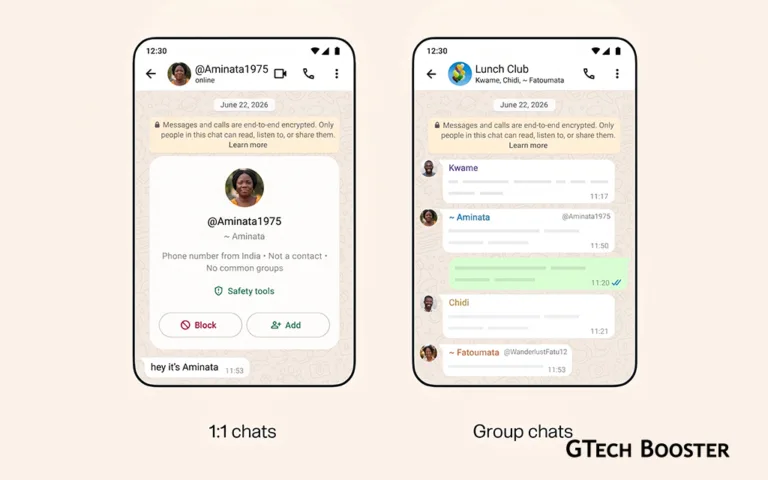
On 29 June 2026, Meta-owned WhatsApp announced that it is introducing optional usernames, allowing its more than three billion users to communicate with new contacts without revealing their phone number at all.
For nearly fifteen years, your phone number was WhatsApp. You could not create an account without one. You could not be found, contacted, or identified on the platform without handing your digits to anyone who wanted to reach you. The phone number was not just a login detail. It was your identity on the world’s most widely used messaging app. That is now changing.
On 29 June 2026, Meta-owned WhatsApp announced that it is introducing optional usernames, allowing its more than three billion users to communicate with new contacts without revealing their phone number at all. Users can already begin reserving their chosen username now, ahead of a phased rollout across countries later in the year. When it becomes available in your region, WhatsApp will send an in-app notification.
It is the most significant shift in how WhatsApp identifies its users since the app was founded in 2009. And it raises a series of important questions: why is WhatsApp making this move now, what does it actually change for users, and what are the deeper forces driving it?
What WhatsApp Is Actually Doing
The change is straightforward in its mechanics, even if its implications run deeper. WhatsApp is allowing users to create a unique username, between three and thirty-five characters long, containing lowercase letters, numbers, periods, and underscores. Usernames cannot begin with “www.” or end in internet domain extensions like “.com” or “.net”, a rule designed to reduce impersonation and phishing risks.
Once the feature launches in your country, anyone messaging you for the first time through your username rather than your phone number will not see your number in the conversation. Your phone number stays private unless you choose to share it separately.
Crucially, there is no public directory. There is no directory to browse and no suggestions: people will need to know your exact username to contact you for the first time. This is a deliberate design choice that separates WhatsApp usernames from the discoverability model used by Twitter, Instagram, or TikTok, where anyone can search for and find your handle. On WhatsApp, the username is a key, not a billboard.
WhatsApp is also introducing an optional username key, which adds a further layer of contact filtering for those who want it.
For creators, small businesses, and organisations, businesses and creators can even link their WhatsApp username to their existing Instagram or Facebook profiles, keeping their online presence consistent across platforms.
To reserve a username, users need to update to the latest version of the app, then navigate to Settings, then Account, then Username.
Why WhatsApp Is Doing This: The Reasons Behind the Move
WhatsApp’s stated reason is privacy. “Usernames are our latest step to make WhatsApp even more private,” WhatsApp said in a blog post. But while that is true as far as it goes, the full picture is considerably more layered. Several forces, some competitive, some regulatory, some cultural, have been pushing WhatsApp in this direction for years.
1. The Phone Number Was Always a Privacy Vulnerability
A phone number is not simply an identifier. It is a thread that can be pulled. Once someone has your number, they can look you up across other platforms, potentially cross-reference it with data broker databases, link it to your real identity, or use it as a vector for SIM-swap attacks, in which fraudsters convince a mobile carrier to transfer your number to a new SIM card they control.
WhatsApp itself has long acknowledged this tension. WhatsApp noted in its announcement: “When someone new walks into your life, a classmate, a neighbour, someone you meet at an event, sharing a phone number can feel like a big step. That’s because a phone number is personal and it’s tied to so many parts of your life. Sometimes you just want to chat without handing over your digits.”
For journalists, activists, whistleblowers, lawyers, medical professionals, and anyone who regularly communicates with people they do not fully know and trust, the requirement to share a phone number before any conversation could begin has been a meaningful friction point. A username removes that exposure.
2. The NSO Group Pegasus Scandal Kept the Pressure On
The privacy argument carries particular weight in the context of WhatsApp’s recent legal history. In June 2026, a US court unsealed evidence that NSO Group continued deploying Pegasus spyware against WhatsApp users even after a court injunction. The revelation was a sharp reminder that phone numbers on WhatsApp have been exploited as attack vectors by sophisticated surveillance actors.
For a company whose core brand promise is private, secure communication, the persistence of phone number-linked vulnerabilities was an ongoing reputational problem. The username feature does not eliminate the threat of spyware, but it does reduce the surface area of exposure by limiting how much personal data a stranger needs to initiate contact.
3. Competition from Telegram and Signal
WhatsApp’s dominant position in global messaging has not insulated it from competition, and its rivals have long held a structural advantage on the phone number question.
Telegram introduced usernames years ago, allowing users to share a handle rather than a number. Signal, while requiring a phone number to register, has progressively added features to mask it from contacts. Both platforms have attracted users who specifically valued the ability to communicate without exposing their personal number.
WhatsApp’s enormous user base has meant it could afford to be conservative about feature changes. But with Signal positioning itself as the gold standard of private messaging and Telegram holding a strong share among users who want pseudonymous communication, the competitive pressure to close this gap has been real.
4. Regulatory and Legal Pressure Around Data Privacy
The regulatory environment for tech companies handling personal data has grown sharply more demanding over the past decade. The European Union’s General Data Protection Regulation (GDPR), as well as a growing number of national data protection laws, places obligations on companies to minimise the personal data they collect and expose. A system in which users must share their phone number to communicate with anyone on the platform is harder to defend under a data minimisation standard than one in which a pseudonymous username suffices.
Meta has faced sustained regulatory scrutiny in Europe in particular. Offering a privacy-enhancing feature of this kind gives WhatsApp a defensible position in conversations with regulators: the platform is actively reducing the exposure of sensitive personal identifiers, not just collecting and monetising them.
5. The Business and Branding Opportunity
Beyond the individual user, the username system opens up a significant new dimension for businesses operating on WhatsApp. The move represents a fundamental shift from WhatsApp’s traditional phone-based identity system to a privacy-first, handle-driven model more typical of modern social apps.
For brands, usernames present a clear advantage: they can mirror social handles across channels, improve recognition, and strengthen trust with audiences. Consumers will see recognisable, verified handles in chats, which may encourage higher message engagement and conversion rates.
A business that operates on Instagram as @brandname, on X as @brandname, and on Facebook as brandname can now present itself consistently on WhatsApp too. This matters for brand coherence and customer trust in a way that a phone number simply cannot deliver.
6. The Practical Reality of a Three-Billion-User Platform
There is also a straightforward social reason for the change. WhatsApp said it is opening username reservations early because “a lot of names overlap,” giving people an opportunity to secure the username they want before the feature becomes widely available. The sheer scale of the platform means that common names, professional handles, and brand identifiers will be contested. Opening reservations before the full rollout is a logistical necessity as much as anything else.
What This Does Not Change
It is worth being clear about what the username system does not do, because the announcement has generated some misunderstanding.
Your phone number is not going away. WhatsApp is not eliminating the requirement to register with a phone number. The number remains the root of account verification and identity on the platform. What changes is how much of that number is exposed to new contacts when you communicate through a username.
The feature is meaningful protection against stranger contact, but not full anonymity. Existing contacts who already have your number will continue to see it. WhatsApp, and by extension Meta, will still hold your number on its servers. The feature protects your number from new contacts, not from the platform itself or from law enforcement acting under a legal order.
The Technical Rules and Rollout
Usernames must meet strict criteria. They must contain between three and thirty-five characters, include at least one letter, and may only contain lowercase letters, numbers, periods, and underscores. Usernames cannot begin with “www.” or end with internet domain extensions such as “.com” or “.net,” in an effort to reduce impersonation and phishing risks.
The rollout is gradual. WhatsApp says the new feature will be released over the coming months and that it will notify users when it is available in their country. For businesses and developers using WhatsApp’s API, the transition will require some technical work. Businesses using WhatsApp APIs will need to update message logic and webhook configurations for the new identifier fields, adjust CRM and support dashboards that currently link users by phone number, and review identity-matching rules to avoid duplicate customer entries.
A Shift Years in the Making
What makes this moment significant is not just the feature itself but what it represents about the direction of digital identity. The phone number as a universal identifier is showing its age. It was designed for voice calls in an era before smartphones, before social media, before data brokers, and before state-sponsored spyware. It was never built to bear the weight of being the primary key to someone’s online messaging life.
WhatsApp’s shift toward usernames reflects a broader pattern in how platforms are rethinking identity: away from persistent personal identifiers tied to real-world infrastructure, toward handles that people choose and can change, that carry only as much personal information as the user decides to attach to them.
Whether this move comes from genuine conviction about user privacy, competitive necessity, regulatory calculation, or some combination of all three is almost beside the point. For the billions of people who use WhatsApp every day, the outcome is the same: for the first time, you will be able to decide whether the person on the other end of the conversation needs to know your phone number at all. That is a meaningful change. And it has been a long time coming.
More Information ℹ












Conversation
Login to comment.
Log In / Register