Gaming in Ghana – From waste of time to Real career paths
Ghana sits near the centre of that shift. It is not yet the continent's largest gaming market, but it is one of its most interesting, a place where the collision between a young, digitally connected population, a growing developer community, and deep cultural storytelling traditions is producing something genuinely distinctive.
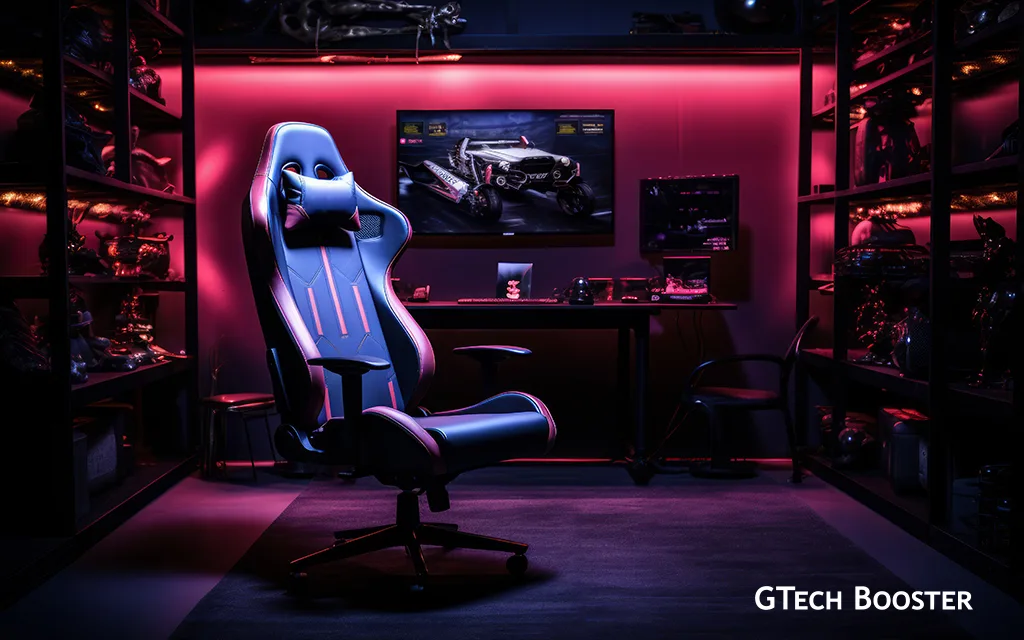
For years in many Ghanaian homes, gaming carried a bad reputation. Parents saw it as a distraction. Teachers warned students to stay away from it. Friends joked that gamers were simply wasting time in front of screens instead of studying or learning a trade. But the world has changed and Ghana is changing with it. Today, gaming is no longer just entertainment. It is a billion-dollar global industry creating careers in e-sports, content creation, software development, animation, marketing, event management, and cybersecurity. What many once dismissed as a hobby is now opening real opportunities for young Ghanaians willing to learn, compete, and innovate.
In a small office in Accra, a young programmer is building a game set in ancient Mfantseman. The characters speak Fante. The mythology is drawn from Akan folklore. The art style owes nothing to Europe or America. He is not building this for a niche market. He is building it because he grew up playing games that never looked like him, never sounded like him, and never told stories from the world he actually lived in. He is building it because nobody else was going to.
That programmer, and thousands like him across Accra, Kumasi, and Tema, represents something new in the global games industry: a generation of African developers who have decided that the continent’s one billion stories deserve to be played, not just told.
Ghana sits near the centre of that shift. It is not yet the continent’s largest gaming market, but it is one of its most interesting, a place where the collision between a young, digitally connected population, a growing developer community, and deep cultural storytelling traditions is producing something genuinely distinctive. Understanding where Ghanaian gaming came from, where it stands today, and where it is heading requires looking at all of those forces at once.
The numbers first
Contents
Ghana’s video game market generated an estimated US$135.50 million in revenue in 2024, making it the fifth largest gaming market on the African continent behind South Africa, Egypt, Nigeria, and Algeria. The market is projected to grow at a compound annual rate of 8.23 percent through to 2027, reaching US$171.80 million and approximately 4.9 million users. User penetration, currently at 12.6 percent of the population, is expected to reach 13.8 percent by 2027.
Mobile gaming is the engine of all of this. The largest single segment within Ghana’s video game market is mobile games, which generated US$90.26 million in 2024, accounting for more than two thirds of total gaming revenue. This is not unique to Ghana. Across Africa, 92 percent of gamers play exclusively on mobile devices, and mobile gaming accounts for nearly 90 percent of the continent’s total gaming revenue. The reason is structural: smartphones have penetrated far ahead of PCs and consoles, data plans are becoming more affordable, and the free-to-play model means the cost of entry to gaming is essentially zero.
The average Ghanaian gamer spends between GH₵22 (US$2 ) and GH₵55 (US$5) per year on games, well below the global average revenue per user of GH₵353 (US$31.87). This gap tells the story of a market that is enormous in users and still modest in monetisation, a combination that makes it simultaneously attractive to global publishers hunting for growth and challenging to serve profitably.
The online gambling sector, distinct from video gaming but part of the same digital entertainment landscape, has grown even faster. Ghana’s online gross gaming win reached US$903.5 million in 2025, up 24 percent from US$729.8 million in 2024. This makes Ghana one of the fastest-growing online gambling markets in Africa, with analysts watching whether it becomes the continent’s fourth largest market in this segment.
Shifting perceptions of the game center culture
Also, not too long ago, gaming in Ghana was mostly associated with crowded game centers, loud FIFA arguments, and young people spending hours in front of PlayStation consoles enjoying the likes of Mortal Kombat, Super Mario, Pokeman, Sonic, PS Soccer games, Pro Evolution Soccer games and many others while adults nearby complained about spoilt youth. To many people, gaming looked unproductive because there were no visible examples of it leading anywhere meaningful. Unlike medicine, law, engineering, or traditional businesses, gaming did not appear connected to success or financial stability. However, while that perception remained common in many homes, the rest of the world was transforming gaming into one of the most powerful industries in modern entertainment and technology.
The tech literacy
This shift became even more noticeable with the rise of mobile gaming. In a country where expensive gaming PCs remain out of reach for many people, smartphones created access for an entirely new generation of players. Games like PUBG Mobile, Free Fire, Call of Duty Mobile, and EA Sports FC became social spaces where competition, teamwork, communication, and online culture merged together. More importantly, gaming started becoming one of the first ways many young people interacted deeply with technology itself. Some became curious about how games are designed, how livestreams work, or how creators edit content, eventually pushing them toward coding, animation, software development, or other digital skills that are increasingly valuable in today’s economy.
How it started: the mobile revolution
Ghana’s gaming story begins not in a studio but in a pocket. The widespread adoption of affordable Android smartphones from around 2012 onwards brought gaming to a population that had previously accessed it primarily through computer cafes, imported consoles, and pirated cartridges. The phone changed the equation entirely. Gaming became something you did on the bus, in the queue at the bank, during lunch break. It became ambient, habitual, and social.
The games that Ghanaians downloaded in those early years were almost entirely foreign. Candy Crush, Temple Run, Subway Surfers, FIFA Mobile, and a roster of Chinese casual games dominated the charts. These games were fun, accessible, and designed for exactly the mobile-first, data-conscious user that the Ghanaian market represented. They had nothing to say about Ghana, but that was not, at first, what users were looking for. They were looking for entertainment. They found it.
But as the smartphone generation grew up inside games, a question began to surface in creative circles: where are we in this? Where are the games set in Accra? Where are the characters who look like us? Where are the stories drawn from the mythology, the history, the humour, the daily life that Ghanaians actually inhabit?
That question did not stay rhetorical for long.
Leti Arts: the pioneer
In 2009, a young man from Kumasi named Eyram Tawia co-founded a game development studio in Accra with Wesley Kirinya. He named it Leti Games, after the Ewe word for starlight or moonlight, and his ambition was straightforward and enormous in equal measure: to bring authentic African stories to a global audience through interactive content.
Tawia had grown up fascinated by comics and video games. He was not troubled by the foreign origins of the characters he played as a child. But he recognised the power that games had to teach about culture and society, and he began to wonder why that power was never pointed at the world he actually came from. “Our mission is to challenge stereotypes and provide a platform for African voices in the gaming industry,” he said. The studio would not just make games. It would make games that felt like home.
Leti Games rebranded as Leti Arts in 2013, reflecting an expanded vision that moved beyond game development into digital comics and animated content (remember Theme Song Music for Karmzah Comic released). The company’s flagship series, Africa’s Legends, drew directly on African mythology and history, introducing characters and narratives from across the continent’s heritage into interactive form. The word “leti” captured the aspiration: a guiding light for a whole new industry.
Leti Arts now operates offices in Accra and Nairobi, employs a diverse team of around 20 people, and runs one of the most respected internship programmes in the African games industry. In 2024, the studio received over 300 applications for its internship programme and successfully onboarded 98 interns, a scale that signals both the quality of the programme and the depth of young Ghanaian interest in game development. In that same year, Leti Arts achieved a landmark: its games were featured on the Gameloft platform, one of the world’s largest mobile gaming publishers. For a studio founded on the belief that African-made games deserve global audiences, the Gameloft placement was proof of concept at scale.
Current projects include new episodes of Africa’s Legends alongside Puzzle Scout and Sweave, available on both the Apple App Store and Google Play Store. Educational games and advocacy-focused applications round out a portfolio that has always treated gaming as both entertainment and a tool for cultural and social impact.
The rise of online communities and The developer ecosystem
As internet access improved and smartphones became more common across Ghana, gaming slowly evolved from a private hobby into part of a larger online culture. Young people were no longer just playing games for fun; they were now watching livestreams, creating content, joining online communities, and following global esports competitions involving millions of viewers worldwide. Platforms like YouTube, TikTok, Twitch, and Facebook Gaming made it possible for ordinary gamers to build audiences, create brands, and even earn income through content creation. Suddenly, the same teenager once criticised for playing too many games could also learn video editing, graphic design, streaming, digital marketing, or audience building without realizing they were developing real-world skills along the way.
Leti Arts is the most internationally recognised of Ghana’s game studios, but it is not alone. A community has been building around it.
Gasbros Gaming Network (GGN) has emerged as one of the most active community hubs in Ghanaian gaming, hosting developer events, gaming nights, and competitive tournaments. The Spawn Camp Fire Party, organised by GGN, has become a cornerstone event in Ghana’s gaming calendar, drawing developers, artists, and players together in an atmosphere that one participant described as unlike any other gaming event in West Africa. The Global Game Jam, the world’s largest game creation event, has found a committed community in Ghana: both Leti Arts and GGN hosted jam sites for the 2025 edition, with developers spending 48 hours building games around a shared theme. The keynote for the 2025 Ghana jam featured Hugo Obi, the founder of Maliyo Games, whose presence was described by participants as a signal that the African video game industry is making serious strides.
DOBIISON, another Accra-based company, has carved out a distinct niche in immersive technology, offering VR and AR products and services across real estate, education, retail, entertainment, and hospitality. DOBIISON was named the 2022 Ghana VR Company of the Year by MEA Markets. Its work represents a strand of the Ghanaian technology sector that uses gaming and entertainment infrastructure for commercial and professional applications, a pathway that connects the games community to the broader economy.
Across the developer community, 64 percent of African game developers work with Unity, 14 percent with Unreal Engine, and 8 percent with Godot. These are the same tools used by studios in London, Tokyo, and Los Angeles. The global developer ecosystem is accessible to anyone with a laptop and an internet connection, and Ghanaian developers are using it.
The challenges are real and well understood within the community. Power supply and affordable fast internet remain the primary infrastructure concerns for developers across Africa, and Ghana is no exception. Funding is the other persistent difficulty. Only about 8 percent of African-developed games have generated over GH₵11,000,000 (US$1 million) in revenue. Navigating the funding landscape, in Eyram Tawia’s words, has been challenging, requiring studios to build on a combination of grants, partnerships, and consulting revenue rather than the venture capital pipelines that fuel studios in larger markets.
Esports: the competitive layer
Alongside the development community, competitive gaming has taken root in Ghana with its own institutions and ambitions.
Ghana signed a pact with the Global Esports Federation in 2024, formalising its membership in the international body and creating structured pathways for talent development, competition pathways, and governance. The federation now counts seventeen African member organisations, and Ghana’s membership connects local esports players to a global network of tournaments, rankings, and professional opportunities.
ACE Gamers Esports is one of the leading esports organisations operating in Accra, running Call of Duty tournaments, Mortal Kombat competitions, EA FC leagues, gaming events, and EdTech programmes with schools across Ghana. The combination of competitive gaming and educational outreach reflects a maturity in how Ghanaian esports is positioning itself: not only as entertainment but as a development pathway for young people, a place where skills in strategy, communication, teamwork, and digital literacy are built alongside the games themselves.
The infrastructure for competitive gaming in Africa improved significantly in March 2025 with the launch of a dedicated League of Legends server for the African continent. High latency, the delay between player input and game response caused by the physical distance between a player’s device and the game’s servers, had long been the most significant technical barrier to competitive African gaming at a global level. With servers physically located on the continent, ping times dropped dramatically, improving both the competitive experience and the spectator appeal of African esports. Sponsorship from telecoms companies and consumer brands has followed, converting viewership into diversified revenue for organisers and players.
The cultural dimension
What distinguishes Ghana’s gaming scene from many of its continental peers is the seriousness with which its most ambitious practitioners treat cultural authenticity as a design principle rather than a marketing strategy.
Leti Arts builds games from African mythology because Eyram Tawia believes those stories deserve to be interactive. The studio’s work on the Kwaku Ananse trickster god series, one of its earliest multi-channel projects, was not an attempt to appeal to a diaspora nostalgia market. It was an attempt to do what games do best: put the player inside a world and let them experience it from within.
This approach has wider resonance. In 2024, Lemi, a survey by Usiku Games and the Pan African Gaming Group found that 56 percent of African gamers did not know or play games made in Africa. The market for culturally rooted African games exists but has not been fully unlocked. The developers who are building those games, in Accra and Nairobi and Lagos and Kigali, are working against a perception challenge as much as a production one: convincing players that local-made is worth choosing over the global defaults.
Ghana’s storytelling tradition runs deep. The country that gave the world Anansi stories, that has one of Africa’s richest oral tradition histories, that produced Efua Sutherland and Ama Ata Aidoo and Ayi Kwei Armah in literature, has material enough for a games industry that could run for decades without repeating itself. The work of studios like Leti Arts is to build the technical and financial infrastructure that allows that material to become playable.
The gambling question
Any account of gaming in Ghana that does not address the gambling sector is incomplete, because in terms of market size, the gambling industry dwarfs the video game market.
Ghana’s online gross gaming win of US$903.5 million in 2025 places it in a different economic category from the US$135.50 million video games market. Sports betting is particularly embedded in Ghanaian popular culture, driven by deep football fandom, smartphone accessibility, and a regulatory environment that has generally supported rather than suppressed the sector. The government’s decision to remove a 10 percent withholding tax on gambling winnings in 2024, following sustained industry pressure, was seen as a sign of regulatory maturity that has attracted further international operators.
In February 2026, Kaizen Gaming launched its Betano brand in Ghana, citing the market’s strong digital adoption and forward-looking regulatory framework. International operators entering Ghana are betting, in the most literal sense, on a market they believe is still in its early growth phase.
The relationship between gaming and gambling is culturally and economically complex. For many Ghanaian users, the distinction between the two is less clear than it might appear to an outsider. Mobile games with in-app purchase mechanics, casual casino games accessible through social media, and sports betting apps all occupy overlapping space in the same digital entertainment ecosystem. Regulators, developers, and consumer advocates are navigating this landscape with varying degrees of coordination.
Infrastructure and investment: what the next phase needs
Ghana’s gaming market is growing but growing from a low base, and the constraints on acceleration are well understood.
Internet penetration, while improving, remains inconsistent outside Accra and the major regional cities. 5G rollout is underway but not yet widespread. The cost of data, though falling, still makes high-frequency online gaming a meaningful expense for users in lower income brackets. Power reliability affects both users and developers, interrupting sessions and creative work alike.
The funding gap is the deepest structural challenge. African gaming studios, including Ghanaian ones, have largely been excluded from the venture capital pipelines that fund game development in the United States, Europe, and East Asia. The reasons include investor unfamiliarity with the market, uncertainty about monetisation at scale, and the absence of large exits that would give institutional investors confidence in the sector. Carry1st, the South African-based but pan-African gaming company, raised US$27 million in a pre-Series B round and operates as the continent’s largest gaming company, working with international publishers to distribute and monetise games across African markets. Its success has demonstrated the model but not yet triggered the wave of investment behind it.
For Ghana specifically, the combination of the VASP Act and the Bank of Ghana’s evolving digital payments infrastructure creates an interesting opportunity: as mobile money and digital payments become more sophisticated, the monetisation infrastructure that has constrained African game revenues becomes more capable. The Ghanaian gamer who currently spends GH₵22 (US$2 ) and GH₵55 (US$5) per year on games is not necessarily a gamer who values games at that price. They are a gamer whose payment options currently make higher spending difficult. Lowering that friction is one of the most direct routes to unlocking the market’s true revenue potential.
Balancing passion with discipline
Of course, concerns about gaming have not disappeared completely, and some of them are understandable. Excessive gaming without discipline can affect productivity, academics, sleep, and social life. But the same can also be said about social media, television, or any form of entertainment used without balance. The real conversation today is no longer whether gaming is automatically good or bad, but whether young people can channel it into something productive. Around the world, gaming has already proven that it can create careers, businesses, communities, and technological innovation. Ghana may still be developing in that area, but the direction is becoming increasingly clear.
Where Ghana’s gaming industry is going
What makes this change important is that it reflects something bigger than gaming itself. It reflects a generation growing up in a digital world where careers are no longer limited to traditional paths alone. Technology is reshaping entertainment, communication, education, and business at the same time, and gaming sits right at the center of that transformation.
The child who spends time gaming today may eventually become a content creator, software engineer, cybersecurity specialist, digital artist, or entrepreneur tomorrow. In that sense, gaming is no longer just about passing time in front of a screen. For many young Ghanaians, it is becoming one of the gateways into the future digital economy, a future that is already arriving faster than many people expected.
The trajectory is clear even if the timeline is uncertain. A young population with median age below 20, rapidly improving smartphone penetration, growing internet access, an established developer community anchored by Leti Arts, an esports ecosystem formalised through federation membership, and a global games industry actively looking for the next growth market: all of these vectors point in the same direction.
Ghana will not simply consume the global games industry. Ghana is building, slowly, with limited resources, against the headwinds of infrastructure gaps and funding constraints, but with the creative depth and cultural material to build games that do not exist anywhere else in the world.
The programmer building a game about ancient Mfantseman in a small Accra office is not working in isolation. He is part of a community that has been building toward this moment for fifteen years, since the day Eyram Tawia sat down in Kumasi with a sketch of an African wisdom god and decided that the stories he grew up with deserved to be played.
The level is loading.
More Information ℹ



Be polite and constructive with your point.