Bank of Ghana Issues Stern Warning to Crypto Platforms
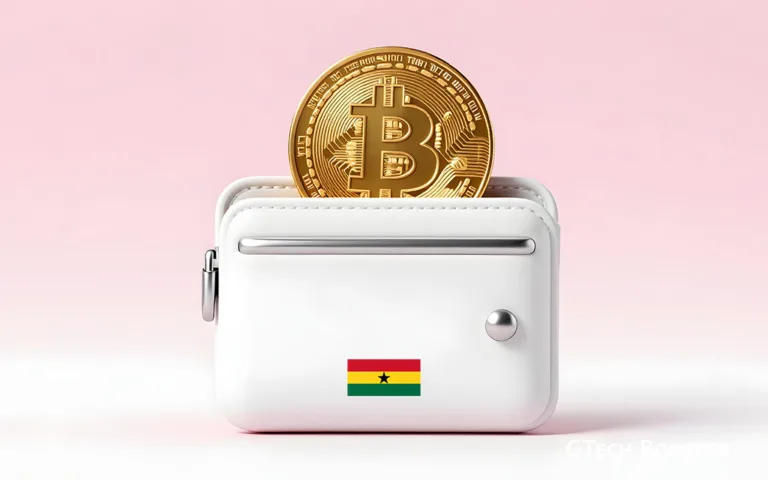
On Sunday, June 14, 2026, a directive quietly landed in the inboxes of every regulated financial institution in Ghana. It was brief, unambiguous, and effective immediately. The Bank of Ghana had seen enough.
Issued as Notice No. BG/GOV/SEC/2026/14, signed on June 12 by Bank Secretary Aimee Vyda Quashie, and carrying no grace period for compliance, the directive ordered every bank, fintech, mobile money operator, payment service provider, card acquirer, and electronic money issuer to immediately cut all ties with cryptocurrency platforms offering unauthorised US dollar wallet services to Ghanaian users. Institutions already supporting such arrangements were told to remove the technical systems connecting them. Failure to comply would attract supervisory and enforcement action. No specific platforms were named. None needed to be. The instruction covered all of them.
It is the most direct intervention the Bank of Ghana has ever made at the intersection of cryptocurrency and the formal financial system, and it arrives at a moment dense with significance.
What the Bank of Ghana found
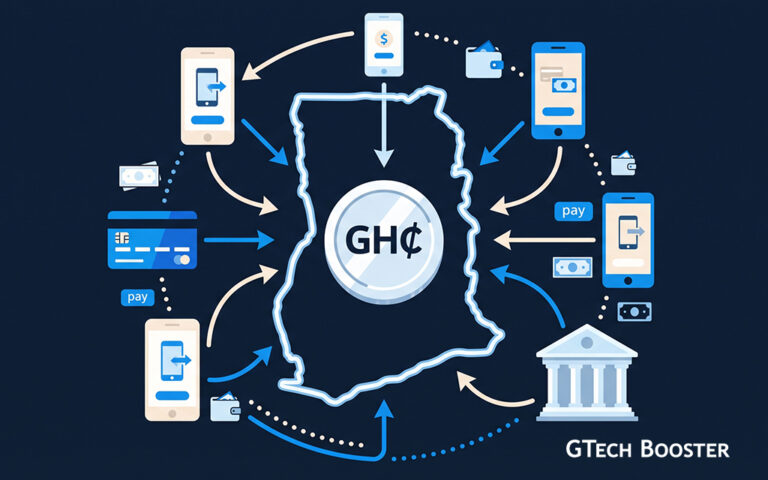
The central bank had been watching a pattern develop. A growing number of cryptocurrency platforms had begun offering digital wallets denominated in US dollars to users in Ghana. These wallets were funded through local bank transfers, mobile money accounts, and payment cards, and allowed Ghanaians to hold, send, and receive US dollars outside the formal banking system.
From a user perspective, the appeal was obvious. Ghana remains a key hub for cryptocurrency use in sub-Saharan Africa, with approximately three million Ghanaians, roughly 9 percent of the population, estimated to have made crypto transactions totalling more than US$3 billion between July 2023 and June 2024. Many of those users were drawn not by speculative interest in crypto assets but by a practical desire to hold dollar-denominated savings as a hedge against cedi volatility, a behaviour the Bank of Ghana understands well given the currency’s turbulent recent history.
But the mechanism these platforms were using was the problem. The Bank of Ghana stated that these activities require authorisation under the Payment Systems and Services Act, 2019 (Act 987), the Foreign Exchange Act, 2006 (Act 723), and other regulatory requirements. “The relevant crypto platforms have not been authorised by the Bank of Ghana to undertake such activities,” the notice read.
The issue was not cryptocurrency itself. It was the dollar wallet. By allowing Ghanaians to hold and transact in foreign currency through channels that bypassed the oversight mechanisms built into the formal banking system, these platforms were operating parallel foreign exchange infrastructure outside Ghana’s forex control regime, and doing so without a single licence to show for it.
What the directive requires
The Bank of Ghana issued the directive targeting fiat currency wallet arrangements, mainly denominated in United States dollars, that some crypto platforms have been offering through bank transfers, payment cards, and other channels without obtaining the required authorisations under the Payment Systems and Services Act, 2019 (Act 987) and the Foreign Exchange Act, 2006 (Act 723).
The BoG clarified that no cryptocurrency company has been granted approval to run foreign currency wallet services or operate parallel banking systems in Ghana. As part of the directive, institutions currently helping these platforms process payments, card transactions, or settlements have been ordered to immediately stop such arrangements and remove all related technical systems.
The scope of institutions covered is total. The ban covers commercial banks, mobile money issuers, fintechs, payment service providers, and card processors. Any institution helping these platforms process payments, card transactions, or settlements must stop immediately and remove the technical systems that connect them. Non-compliance carries strict penalties, and the BoG warned that delays or failure to comply will attract regulatory action and supervisory sanctions.
For platforms seeking a route to compliance, the Bank of Ghana directed enquiries to its dedicated Virtual Asset Service Provider portal at vasp@bog.gov.gh.
Why the timing matters
The directive did not arrive in a vacuum. To understand what it means, the sequence of events leading up to it needs to be stated clearly.
For years, cryptocurrency existed in Ghana in a legal grey area. It was not illegal, but it was not regulated either. The Bank of Ghana had issued warnings, the Securities and Exchange Commission had raised concerns, and users and platforms operated without formal rules on either side of the relationship.
That changed on December 22, 2025. Ghana’s parliament passed the Virtual Asset Service Providers Bill, 2025, formally legalising cryptocurrency trading and establishing a comprehensive regulatory framework for digital assets. The Bank of Ghana would oversee licensing and supervision of virtual asset service providers, including exchanges, wallet operators, and custody services. President John Dramani Mahama signed the Act, designated Act 1154, into law on December 29, 2025.
When the law passed, both the Bank of Ghana and the Securities and Exchange Commission committed to issuing licensing and registration guidelines within the first quarter of 2026 to operationalise the framework. Those instruments are still pending, and the June 12 crackdown suggests the central bank is using existing forex and payments legislation to close a regulatory gap in the interim.
This is the critical context. The VASP Act created the legal architecture. The licensing rules that would allow platforms to operate within it have not yet been published. In that gap, platforms continued operating as they had before the law passed, as if nothing had changed. The June 12 directive is the Bank of Ghana’s answer to that assumption.
More than 100 crypto firms have registered operations in Ghana since the legislation came into force, with licensing and supervisory rules rolling out in phases during 2026. None of them hold the authorisation needed to operate dollar wallet services. The directive makes clear that operating without authorisation while the licensing process is underway is not a temporary tolerance. It is a violation.
What this means for users
For the approximately three million Ghanaians using cryptocurrency platforms, the immediate practical impact falls on dollar wallet services specifically. For consumers, the immediate risk is disruption to dollar wallet funding or withdrawal channels on affected platforms if their local bank or payment provider withdraws support.
What is not affected, at least directly, is cryptocurrency trading itself. The directive targets the fiat-to-crypto and crypto-to-fiat rails, specifically the dollar-denominated ones, rather than cryptocurrency holdings or peer-to-peer transactions. A Ghanaian who holds Bitcoin or USDT on a platform is not told to liquidate. A Ghanaian who was using a crypto platform as a dollar savings account, funding it from their mobile money wallet, will find that the funding channel is severed.
This matters because the dollar wallet use case was serving a genuine need. Ghanaians using crypto platforms for dollar-denominated savings were responding rationally to a history of cedi depreciation. Removing that access without immediately providing a regulated alternative channels the need underground rather than eliminating it.
What this means for financial institutions
For banks and payment firms, the compliance obligation is immediate. Existing commercial and technical arrangements that connect regulated institutions to unauthorised crypto dollar wallet platforms must be terminated.
This is not a warning to begin winding down. It is an instruction to stop today. Institutions that have built payment corridors, card processing agreements, or settlement relationships with affected platforms face the choice of immediate disconnection or supervisory sanction. Given the Bank of Ghana’s track record of enforcement action in recent years, this is not a threat to be tested.
The directive is also a signal about the Bank of Ghana’s expectations as the licensing framework rolls out. Regulated institutions that want to work with the crypto sector legitimately will need to do so through properly licensed virtual asset service providers, not platforms operating in a legal gap. The message is that the days of informal accommodation are over.
The gold-backed stablecoin dimension
The June 12 directive acquires another layer of meaning when placed alongside what the Bank of Ghana has been signalling about the future of digital finance in Ghana. The Bank of Ghana’s 2026 focus includes exploring gold-backed stablecoins for cross-border settlements.
A central bank that is actively designing its own digital currency instruments, potentially backed by Ghana’s considerable gold reserves, has a structural interest in ensuring that privately operated foreign currency wallets do not establish themselves as the de facto digital dollar infrastructure before a regulated alternative is in place. The crackdown is not only about compliance. It is about who controls the rails on which Ghana’s digital economy moves.
The regulatory arc
Taken together, the sequence from the VASP Act’s passage in December 2025 through to the June 12 directive tells a coherent story about where Ghana’s regulatory posture on cryptocurrency is heading.
The country is not hostile to crypto. Governor Asiama said regulation would lower costs for banks, improve customer experience, and support small and medium-sized businesses, and that a clear rulebook could attract responsible investors, exchanges, and fintech firms that previously avoided Ghana due to legal risk.
But the Bank of Ghana is determined that the digital asset sector will operate within the same oversight framework as the rest of the financial system, not alongside it. Dollar wallets without authorisation, payment rails without licensing, and foreign currency flows outside the forex control regime are not informal innovation that deserves tolerance while the rules catch up. They are compliance failures, and the central bank is now treating them as such.
The licensing guidelines that were promised in the first quarter of 2026 remain the missing piece. Their publication will determine whether this directive marks the beginning of an orderly transition to a regulated crypto sector, or an extended period of enforcement action against platforms and institutions that cannot obtain clarity on what compliance actually requires.
The Bank of Ghana has made its position clear. The next move belongs to the Securities and Exchange Commission, whose joint licensing framework with the Bank of Ghana is the document the entire industry is waiting for.
More Information ℹ












Conversation
Login to comment.
Log In / Register