CSA Warns Ghanaian Universities to Tighten Defenses Against Cyber Threats
The Cyber Security Authority instructs Ghanaian universities to secure their critical information infrastructure following a massive data breach at a UK university.
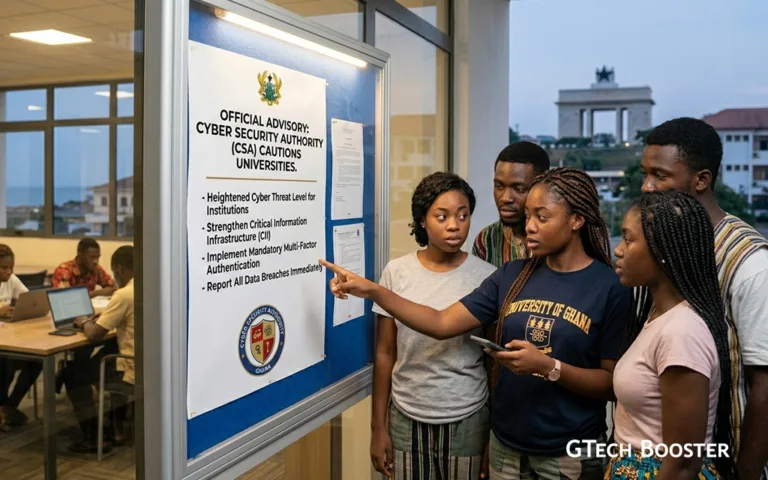
The Cyber Security Authority (CSA) of Ghana has issued an official warning to universities and other operators of Critical Information Infrastructure (CII) across the country to urgently strengthen their cybersecurity systems.
The warning serves as an immediate wake-up call following a massive cyberattack on the University of Nottingham in the United Kingdom, which compromised the sensitive personal, identification, and financial data of roughly 450,000 students and alumni.
Key Takeaways from the CSA Advisory
Expanded Attack Surface
The CSA pointed out that Ghanaian universities are undergoing rapid digital transformation. They rely heavily on online learning environments, student information portals, cloud services, and digital payment platforms. While convenient, this expansion creates highly profitable targets for cybercriminals.
A Matter of “When,” Not “If”
The Authority explicitly stated that no educational institution, regardless of its size or reputation, is immune. The core issue is not whether Ghanaian institutions will be targeted, but whether they are prepared to defend themselves when it happens.
Broader Implications
Beyond education, the warning emphasizes that vulnerabilities in critical networks can spill over into other highly dependent national sectors, including Health, Telecommunications, and Transportation.
Required Actions for Institutions (CII Directive)
The CSA is directing all critical digital infrastructure owners to strictly comply with the national Directive for the Protection of CII, which was launched in October 2021. To minimize the likelihood and devastating impact of an attack, institutions must immediately implement the following protocols:
- Cybersecurity Governance: Establish internal, dedicated leadership structures specifically to oversee data security.
- Risk Assessments & Audits: Perform regular security controls, audits, and technical vulnerability testing.
- Incident Reporting: Build out robust incident response frameworks and report any digital breaches or anomalies directly to the CSA without delay.
The Attack
The cyberattack on the University of Nottingham was a massive data breach that occurred in June 2026.
Summary of it
1. Massive Data Leak
A notorious cybercriminal collective known as ShinyHunters claimed responsibility for the breach. Instead of locking the systems down via standard ransomware, the hackers stole over 40 gigabytes of data and published it on their dark web leak site.
2. Affected Information
The breach exposed roughly 455,000 unique email addresses. The compromised files belonged to current students, applicants, and alumni. Because the university operates global branches, records from its international campuses in Malaysia and China were also caught up in the leak.
The stolen and published data fields included:
- Full names, usernames, postal addresses, and phone numbers.
- Staff and student ID numbers.
- Financial records, including billing histories, fee payments, and credit card details.
- Highly personal information, including dates of birth, nationalities, passport numbers, National Insurance numbers, ethnicities, and recorded disabilities.
3. Current Status & Response
The university quickly took the affected platform completely offline to contain the incident and began working with third-party experts to securely rebuild the system. Law enforcement and regulatory bodies, including the UK’s Information Commissioner’s Office (ICO) and the East Midlands Special Operations Unit, launched criminal and forensic investigations into the breach.
While ShinyHunters published the data as part of an extortion campaign, university officials confirmed that they did not receive a direct ransom request before the files were leaked. Affected students and alumni were advised to monitor their financial accounts closely and change any passwords that shared credentials with the university network.
This is a necessary shift in regulatory enforcement. Historically, academic institutions have operated on relatively open networks to facilitate research and student access, making them incredibly soft targets for ransomware and data harvesting. By treating universities under the same strict umbrella as banking or telecommunications infrastructure, the CSA is making it clear that digital security can no longer be treated as a secondary IT afterthought in Ghana’s higher education system.
More Information ℹ










Conversation
Login to comment.
Log In / Register