Beneath the Surface – A Complete Guide to Every Layer of the Web, From What You See to What Nobody Can Prove Exists
The surface web is your front door. The deep web is where most of the internet's important work actually happens, and you are already in it every time you log into any private account.
Most people interact with the internet the way a tourist walks through an airport: familiar with the terminal, comfortable in the shops and lounges, completely unaware of what lies beneath the floor, behind the walls, and in the restricted zones that the signs do not mention and the maps do not show.
The web you use every day, the news sites, the social media feeds, the shopping pages, the YouTube videos, is not the internet. It is the front door of the internet. Behind that door are layers of increasing depth, decreasing visibility, and, depending on how far you go, increasing risk. Some of these layers serve legitimate, vital purposes. Some are home to the darkest human impulses. And some may not exist at all except in the imagination of people who find the idea of hidden digital worlds too compelling to resist.
This is a complete guide to all of them, from the surface to the abyss, fact by fact, layer by layer.
The Iceberg Analogy and Why It Matters
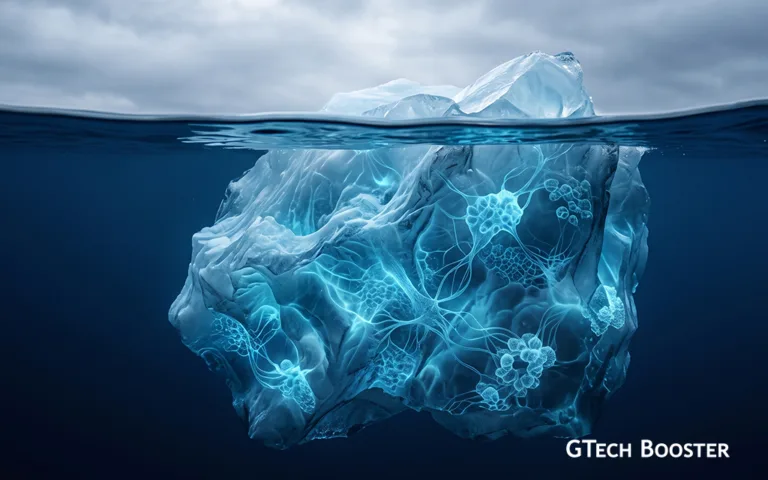
Before diving into the layers themselves, the most useful mental model for understanding the web’s structure is an iceberg.
The surface web is like the visible tip of a massive digital iceberg, shiny, visible, and completely unaware of the complex world lurking just beneath. Everything above the waterline is what you can find through a search engine. Everything below it is either hidden by design, locked behind authentication, or deliberately concealed from public view.
The surface web is the small visible portion indexed by Google. The deep web is the huge mass of private or unindexed content below the surface. The dark web is a small but notorious zone where anonymity reigns, attracting both those seeking privacy and those with nefarious intent.
But the iceberg model, though useful, understates the complexity of what lies below. The deeper you go, the more the layers blur between fact, speculation, and internet mythology. A clear-eyed guide must be honest about which is which.
Layer 1: The Surface Web (The Visible World)
The surface web is where almost every person on earth spends almost every moment of their internet life. It is defined by one simple criterion: if a search engine can find it, it is on the surface web.
The surface web is the portion of the internet accessible to everyone. It represents less than 10 percent of the total online content. All content in this layer is indexed by search engines, making it easily discoverable. Examples include blogs, news websites, social media platforms, e-commerce stores, and public forums.
The surface web includes websites that search engines like Google, Bing, or DuckDuckGo can find, such as Wikipedia, YouTube, and Amazon. These pages are public, indexed, and safe for normal browsing.
The mechanisms that make the surface web work are called web crawlers or spiders, automated programs that travel from link to link across the internet, reading page content and filing it in a searchable index. When you type a query into Google, you are not searching the internet in real time. You are searching Google’s pre-built index of the surface web, a catalogue assembled by billions of crawls over billions of pages.
Despite its familiarity, the surface web is surprisingly small relative to the whole. The surface web makes up less than 5 percent of the total internet content. Everything else lies below.
What the surface web contains is enormous in absolute terms: billions of pages of news, entertainment, commerce, reference material, government information, social media, academic publishing, and creative work. But as a proportion of what the web actually holds, it is the visible fraction of a far larger whole.
Layer 2: The Bergie Web (The Grey Fringe)
The Bergie Web, sometimes called the Burgie Web, occupies an interesting and frequently misunderstood position. It is not truly hidden, but it is not fully visible either. It sits at the edge of the surface web, in a zone that is accessible without any special tools but that does not typically appear in standard search results.
The Burgie Web is a layer that is not quite visible in regular searches. It includes sites that are not in standard search results, like platforms for bypassing geographic restrictions or accessing niche communities. For people in countries where content is blocked, this layer becomes a lifeline. Platforms like 4chan exist here, wild, anonymous spaces where discussions range from pop culture to conspiracy theories. While it is not as secretive or notorious as deeper internet layers, it is not typical browsing. These spaces often require direct URLs or specialized knowledge to access.
The Bergie Web essentially encompasses content that search engines have chosen not to index, or content that has been de-indexed after being removed from results, but which remains technically accessible if you know or can find the direct URL. It includes image boards, alternative forums, proxy-accessible content, and communities that operate outside the mainstream while stopping short of requiring anonymising software.
It is worth noting that the Bergie Web is not a formally defined technical category. It does not have its own protocols or infrastructure distinct from the surface web. It is more of a conceptual zone than a technical layer. Content in this space can be entirely legal, mildly edgy, or genuinely objectionable, often all on the same platform.
Layer 3: The Deep Web (The Vast Majority)
The deep web refers to all online content that is not indexed by standard search engines. It includes subscription-based academic databases, private servers, cloud storage, and internal corporate or government systems.
The deep web is not the dark web. This distinction is critical and widely misunderstood. The deep web is not a place of criminals and secrets. It is where the majority of useful, legitimate, sensitive online activity takes place.
The deep web is often misunderstood as a shadowy, sinister place, but it is far from that. It is an enormous reservoir of legitimate, useful, and often secure information that search engines cannot index. This includes medical records, subscription-based academic research, online banking portals, and internal corporate networks. The deep web makes up about 96 percent of the internet.
Consider everything you do online that is not publicly searchable: logging into your bank account, accessing your private email inbox, checking your medical records on a hospital patient portal, reading an article behind a subscription paywall, or logging into your company’s internal systems. All of that is deep web activity. You are in the deep web dozens of times a week without any specialist tools, without any legal risk, and without any awareness that you have crossed any kind of boundary.
The deep web exists for a fundamental reason: not all information should be publicly accessible. Privacy, security, confidentiality, and business necessity all require that enormous volumes of data be kept away from public indexing. The deep web is the internet being a responsible custodian of information that should not be on a search results page.
What lives in the deep web includes:
Government databases and classified internal systems. Intelligence agencies, military networks, and government ministries run internal communications systems that are connected to the internet but completely inaccessible to the public. The data does not live on a separate physical internet. It lives on the same infrastructure, just behind walls that search engines cannot scale.
Corporate intranets. Every large company operates an internal network accessible to employees. These systems hold project files, communications, strategic plans, personnel records, and financial data. They are online. They are not searchable.
Academic and research databases. Journals like JSTOR, Elsevier, and PubMed hold millions of research papers that require institutional or paid subscription access. The papers exist online. Google cannot index them in full.
Healthcare systems. Hospital records, diagnostic imaging, prescription histories, and patient communications are all held in online systems behind authentication layers.
Financial systems. Bank account portals, investment dashboards, pension fund management systems, and payment processing infrastructure all live on the deep web.
Cloud storage. Every file you store on Google Drive, Dropbox, iCloud, or Microsoft OneDrive is on the deep web. It is connected to the internet. It is not searchable.
The deep web is, in essence, the private internet. It is larger than the public internet by an enormous margin, and almost all of it is completely mundane.
Layer 4: The Dark Web (Where Anonymity Begins)
This is where the nature of the web changes fundamentally. The dark web is not simply unindexed content behind a login. It is a set of networks intentionally built to be hidden, requiring specialised software, and designed from the ground up to make users and hosts as anonymous as possible.
The dark web exists on encrypted networks such as Tor, I2P, and Freenet. It is intentionally hidden and requires specialized software to access. This layer allows anonymous communication and hosting. Journalists, activists, and whistleblowers use it to communicate safely in regions with restricted press freedom. However, it also hosts illegal marketplaces, contributing to its controversial reputation.
The dark web is accessed primarily through three networks, each with its own architecture and philosophy.
Tor: The Onion Router
Initially, The Onion Router, known as Tor, was a project started by the United States Navy to secure government communication. Since 2006, Tor has become a nonprofit with thousands of servers called relays or relay nodes run by volunteers across the world.
Tor software uses onion routing protocol to provide anonymity for both the service user and the service provider. Onion routing is a technique where messages are repeatedly encrypted and then sent through several network nodes, called onion routers. Like someone peeling an onion, each onion router removes a layer of encryption to uncover routing instructions, and sends the message to the next router where the process is repeated.
Each request passes through multiple servers, with each one only knowing the next hop. At no point does any single server know both who you are and what you are doing. That is what makes tracing so difficult.
Websites on the dark web do not use domains like .com or .org. Instead, they use .onion addresses. These are not registered in a public DNS system. They are generated cryptographically and often look like random strings.
Tor is the most widely used dark web network. It is also the tool of choice for journalists working in repressive states, for activists communicating under surveillance, and for whistleblowers who need to reach media organisations without exposing their identity. The SecureDrop platform, used by dozens of major news organisations to receive documents from anonymous sources, runs over Tor.
I2P: The Invisible Internet Project
I2P is designed as a true darknet for internal communication, messaging, and hosting eepsites rather than as a tool for routine surface-web surfing.
I2P extends onion routing with garlic routing, bundling multiple encrypted messages into one container. This reduces metadata leakage and bandwidth overhead while improving efficiency. Every I2P router routes for others.
I2P is more secure than Tor, but generally cannot be used to access the regular internet outside of services like email, chat, and torrenting. It functions as a self-contained anonymous network rather than an anonymising gateway to the public internet. Users on I2P mostly communicate with other I2P users through its own internal services, called eepsites.
Freenet: The Distributed Storage Network
Unlike I2P or Tor, Freenet is not designed to be a proxy to the clear web. Freenet is primarily concerned with the anonymous distribution and storage of content across the network, which can be retrieved by other Freenet users even after the publishing node goes offline.
With Freenet, data is split and stored in distributed nodes. You do not know who holds your data, and they do not know what it is. Internal Freenet sites are called freesites. The network is particularly valuable for censorship-resistant publishing, where content needs to persist even if authorities attempt to take it down.
What the Dark Web Actually Contains
The dark web has a reputation that dramatically outpaces its reality for most users. It is not predominantly a marketplace for horror. Its contents are a mixture of:
Legitimate privacy tools: Anonymous email services, secure communication platforms, and journalism portals.
Political and social spaces: Forums for dissidents, activists, and people living under authoritarian governments who need to communicate freely.
Whistleblowing platforms: Systems that allow sources to pass sensitive information to journalists without identifying themselves.
Privacy-focused communities: People who object to the surveillance economy of the surface web and choose to conduct ordinary conversations in anonymous spaces.
Illegal marketplaces: These do exist. Drugs, stolen data, counterfeit documents, and hacking tools are all traded on dark web markets. These markets have been targets of sustained law enforcement operations, and many have been shut down. Silk Road, the most famous early dark web marketplace, was shut down by the FBI in 2013. Its successors have faced similar fates.
Disturbing and illegal content: The darkest corners of the dark web include content that is genuinely horrifying, including material related to child exploitation, violence, and extremism. This content is the subject of active law enforcement investigation, and accessing it carries serious criminal consequences in virtually every jurisdiction.
The dark web is a tool. Like most tools, its moral character is determined by how it is used.

Layer 5: The Charter Web (Claimed but Unverified)
Below the dark web in the popular taxonomy of internet layers sits what is sometimes called the Charter Web. This layer is described in online discussions as a zone reserved for government agencies, intelligence services, and military networks operating highly classified communications infrastructure.
The Charter Web is often mentioned in conspiracy discussions as a layer reserved for government agencies and intelligence networks. While classified networks do exist for secure communication, there is no verified evidence of a distinct Charter Web layer.
This distinction matters. The reality that classified government networks exist is not in dispute. The United States government, for example, operates several classified networks including SIPRNET (Secret Internet Protocol Router Network) for secret-level communications and JWICS (Joint Worldwide Intelligence Communications System) for top-secret communications. China, Russia, United Kingdom and countries on the continent of Africa holds enormous classified networks. These networks exist in multiple areas. They are real. They are not the public internet, and they are not accessible through any standard or dark web browser.
But these are private networks, not hidden layers of the public internet. Calling them the Charter Web implies they are a discoverable layer within the web’s architecture. They are not. They exist in parallel with the internet rather than beneath it.
The Charter Web, as a distinct named layer with its own character and mythology, is a conceptual category without verified technical reality. What it gestures toward, classified government digital infrastructure, is real but not quite what the name suggests.
Layer 6: Mariana’s Web (The Mythology)
Mariana’s Web is often described as the deepest, most secretive layer of the internet, a mythical fourth level that supposedly lies far beneath the surface web, the deep web, and even the infamous dark web. While there is no verified evidence of its existence, its legend continues to captivate imaginations across the digital world.
The name draws inspiration from the Mariana Trench, the deepest known part of Earth’s oceans. Just as the trench is shrouded in darkness and mystery, so too is Mariana’s Web, symbolizing something vast, unexplored, and potentially perilous.
The theories that have attached themselves to Mariana’s Web are elaborate, colourful, and entirely unsupported by evidence. They include claims that it houses digitised copies of the Vatican’s most secret archives, that it is home to self-aware artificial intelligences capable of influencing global networks without detection, that it contains the suppressed records of every major world government, that it documents ancient civilisations and forbidden historical knowledge, and that accessing it would require quantum computing power that does not yet exist.
There are no credible sources, no leaked documents, no technical protocols, and no digital footprints pointing to the existence of Mariana’s Web. Even whistleblower leaks, like those from WikiLeaks or Edward Snowden, make no mention of such a network.
While quantum computing is advancing, it is still in its experimental stage. The idea that today’s technology could access or maintain an ultra-encrypted network like Mariana’s Web is pure speculation. The computing power required to support such a concept simply does not exist yet, at least not at commercial scale.
Mariana’s Web is a widely discussed myth. It is said to be accessible only with advanced computing capabilities. There is no credible technical or scientific evidence supporting its existence. Experts consider it a product of internet folklore rather than a factual layer of the web.
Where did the myth come from? Most researchers who have traced its origins point to 4chan, where anonymous users in the early 2010s began constructing an elaborate mythology of internet layers, drawing on existing concepts from cybersecurity and combining them with science fiction, horror tropes, and conspiracy theory. The layered structure became a kind of collaborative storytelling exercise that took on a life of its own as it spread across forums, YouTube, and social media.
The Mariana’s Web myth endures because it satisfies a deep psychological need. The internet is vast, complex, and largely invisible in its workings to most users. The idea that beneath its familiar surface lies a world of secrets, power, and forbidden knowledge gives shape and narrative to the discomfort of not fully understanding a technology that governs so much of modern life. It is, in that sense, a digital-age ghost story or, is it?
Layer 7: The Fog and the Primarch System (Pure Fiction)
The Fog is described in speculative discussions as a chaotic digital environment filled with experimental artificial intelligence and dangerous code. There is no technical foundation for this layer. It is purely fictional and should be understood as myth rather than fact.
The Primarch System is a conspiracy theory describing a centralised AI that controls global networks. While AI is used to manage data and network traffic across the internet, there is no centralized system as described by these theories. This layer belongs to digital mythology rather than reality, a matter of perspective.
These layers may be clear, internet fiction. They originate from the same tradition of online collaborative storytelling that produced Mariana’s Web, creepypasta horror stories, and alternate reality games. They are not grounded in any technical architecture, any verified account, or any credible secondary source. They circulate because they are compelling narratives, and compelling narratives do not require truth to spread till they become verified or never considered.
What Is Real Beyond the Dark Web
While the mythological layers are fiction, it is fair to acknowledge that there are genuine forms of less-understood digital infrastructure that operate outside the public web in ways that most people do not see.
Private encrypted networks are used by governments and large organisations for communication and data storage. These networks are built on specialised systems that are inaccessible without authorisation. Some parts of the web are intentionally designed to be undetectable, including private networks, peer-to-peer connections, and intranets that exist outside public-facing infrastructure. Research and experimental networks use isolated environments for testing purposes, including experimental AI projects or blockchain platforms that might operate within a closed digital ecosystem.
These are the real things that sit at the edge of what most people will ever encounter online. They are not supernatural. They are not accessible through any special browser. They are simply private infrastructure, built for specific purposes, serving specific users, invisible to everyone else by design.
A Layered Reality: What You Should Actually Take Away
The web has genuine layers, and understanding them has real practical value. The surface web is your front door. The deep web is where most of the internet’s important work actually happens, and you are already in it every time you log into any private account. The dark web is a real technology with legitimate uses, significant risks, and a reputation that reflects only a portion of what actually happens there. The tools that power it, Tor, I2P, and Freenet, are sophisticated, functional, and used by millions of people for entirely legitimate reasons though often gets storytelling of the illegal or oddity part, there exist a whole grade of quality documentations on efficient knowledge.

Beyond the dark web, the layers become less technical and more cultural. The Charter Web points to something real, which is classified government infrastructure, but overstates its relationship to the web as most people understand it. Mariana’s Web, the Fog, and the Primarch System are internet mythology, creative and culturally interesting but not empty of factual content yet unprovable.
Only the first four layers, Surface Web, Bergie Web, Deep Web, and Dark Web, are grounded in reality. The remaining layers are speculative and originate from online discussions rather than credible research. Understanding the difference between fact and fiction is crucial for safe internet usage.
The internet is extraordinary enough without needing invented depths. Its real architecture, from the indexed surface to the anonymous networks to the private infrastructure of governments and corporations, is complex, consequential, and in many places genuinely unknown to most of the people who use it every day. That alone is more than enough to fill an ocean.


Be polite and constructive with your point.