The Zeepay Saga – How One of Africa’s Leading Fintech Success Stories Unraveled
This article walks through how Zeepay built its business, what actually went wrong, the specific allegations now before Ghana's courts, and why industry observers see this as a story with implications well beyond one company.
For years, Zeepay Ghana Limited was held up as one of the clearest success stories to come out of Ghana’s fintech sector, a homegrown remittance and mobile money business that expanded across more than twenty African markets, partnered with global money transfer giants like MoneyGram and Remitly, and by 2023 was processing over 3 billion US dollars across roughly 10 million transactions annually. By the middle of 2026, that same company was facing a revoked banking license, a multi-million dollar court judgment against both the company and its founder personally, a collapsed subsidiary in Barbados, a police raid on its chief executive’s home, and mounting questions about how customer funds had actually been handled behind the scenes.
This article walks through how Zeepay built its business, what actually went wrong, the specific allegations now before Ghana’s courts, and why industry observers see this as a story with implications well beyond one company.
What Zeepay Was and How It Grew
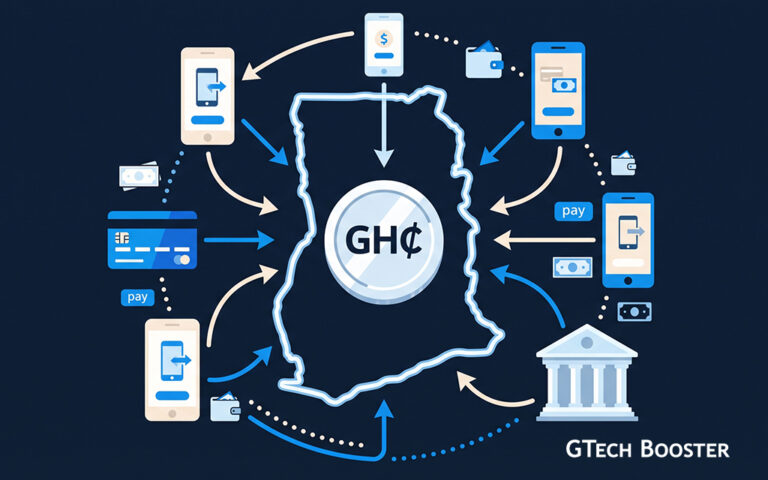
Zeepay was founded by Andrew Takyi-Appiah and grew into one of Ghana’s most prominent fintech companies, building its core business around cross-border remittances and mobile money services. The company’s pitch was straightforward and genuinely valuable: it let people abroad send money home to family in Ghana and other African markets quickly, often landing in a recipient’s mobile money wallet almost instantly, a service that mattered enormously in economies where mobile money has become a primary tool for everyday financial transactions.
Zeepay’s scale by 2023 was genuinely impressive for a homegrown African fintech company, having cleared billions of dollars in remittance volume, secured partnerships with established global players like MoneyGram and Remitly, and won privileged remittance licenses from the Bank of Ghana. Financial commentator Bright Simons, who has closely tracked the company’s unraveling, has described Zeepay as representing a genuine high-water mark of Ghanaian entrepreneurship and innovation, which is part of what makes its subsequent collapse such a significant story for the country’s broader fintech sector rather than an isolated corporate failure.
The Business Model’s Hidden Fragility
Understanding what eventually went wrong at Zeepay requires understanding a structural feature of its underlying business model, something analysts have referred to as a liquidity air-gap. When someone abroad sends money through Zeepay to a recipient in Ghana, the recipient typically expects to see that money land in their mobile wallet nearly instantly. However, the actual settlement of funds coming through international payment corridors does not move at that same instant speed. It typically takes anywhere from one to three days for the money to actually settle from the international sending side back to Zeepay.
To bridge that gap and preserve the instant, real-time experience customers expected, Zeepay had to pre-fund payouts using its own operational capital, effectively fronting the money to the recipient before it had actually received the corresponding funds from the sender’s side. During periods of high transaction volume, this exposure could balloon significantly. At one point, this dynamic reportedly left Zeepay holding a liability of around GHS 150 million to a tier-one settlement bank, according to industry sources. One especially notable piece of financial engineering the company adopted to manage this pressure was a USD 18 million shared-collateral debt facility, an arrangement allowing multiple lenders to hold equal-weight claims against a common pool of collateral, which let Zeepay scale up the liquidity needed to support its instant remittance model more rapidly.
This structure worked as long as volumes, settlement timing, and available capital stayed in reasonable balance. When that balance broke down, according to analysis of the situation, a bank that had fronted liquidity through Ghana’s interbank settlement system to preserve the real-time customer experience found itself holding unsecured credit risk, setting the stage for the litigation and loss of confidence that followed.
The Legal Trouble Escalates
Zeepay’s regulatory and legal difficulties did not begin all at once in 2026. The Bank of Ghana had briefly suspended the company’s foreign exchange license for eleven days in late 2023, from November 27 to December 8, over a breach of foreign exchange rules concerning use of the average interbank rate, though that particular issue was resolved relatively quickly at the time.
The more serious troubles began accumulating through early and mid-2026. In February 2026, a creditor and investor, Obsidian Achernar Ltd, filed a petition in the Commercial Division of Ghana’s High Court seeking to wind up Zeepay entirely over an unpaid debt of approximately 1.22 million US dollars, stemming from a 2024 foreign exchange and working capital agreement. That winding-up petition remained pending as the broader situation continued to develop.
A far more consequential ruling arrived in April 2026, when the Commercial Division of the High Court ordered Zeepay and its founder and CEO Andrew Takyi-Appiah personally to pay more than 11.6 million US dollars to a customer over a failure to execute fund transfers. Justice Afi Agbanu Kudomor granted summary judgment in the case after concluding that no reasonable defense had been raised. A particularly significant aspect of that ruling was the court’s decision to hold Takyi-Appiah personally liable alongside the company itself, a decision reportedly grounded in evidence that a substantial portion of the disputed funds had been deposited directly into his personal mobile money account rather than into a clearly separated corporate account.
The trouble then spread beyond Ghana’s borders. In May 2026, the Central Bank of Barbados suspended the license of Zeepay’s subsidiary, Zeemoney (Barbados) Limited, citing concerns about the subsidiary’s financial condition, governance, and operational continuity. Rather than contest or resolve those concerns, the Barbados subsidiary voluntarily applied to wind down its operations there, effectively marking the collapse of that specific piece of Zeepay’s international footprint.
Domestically, matters escalated further still. In the weeks before the license revocation, officers of the Ghana Police Service raided the residence of CEO Andrew Takyi-Appiah. Around the same period, the company also came to the attention of Ghana’s Economic and Organised Crime Office, EOCO, following what has been described as payment termination issues affecting some customers.
The License Revocation
The most consequential single action came on July 14, 2026, when the Bank of Ghana revoked Zeepay Ghana Limited’s Dedicated Electronic Money Issuer, or DEMI, license with immediate effect. The central bank’s public notice, issued under Section 13 of the Payment Systems and Services Act, 2019, cited multiple regulatory breaches and a persistent failure to comply with supervisory directives.
The specific technical violation described by the Bank of Ghana was serious: Zeepay had reportedly issued electronic money without maintaining the corresponding cash backing required of electronic money issuers, creating what the central bank termed a negative variance between the value of electronic money the company had issued and the actual cash reserves it held to back those balances. In plain terms, this meant customer wallet balances on paper were not fully matched by real money sitting in reserve to cover them, a fundamental breach of the basic trust relationship any electronic money issuer is supposed to maintain with its customers. The central bank stated that despite repeated directives requiring Zeepay to inject sufficient funds to restore full backing for customer balances, and separately to begin winding down its e-money issuance business in an orderly fashion, the company failed to comply with either directive. The Bank of Ghana concluded plainly that Zeepay’s continued operation under its DEMI license constituted a threat to the stability of the national payment system, and advised affected wallet holders, agents, and merchants to contact the central bank’s own support team for assistance.
The Personal MTN Wallet Controversy
Alongside the regulatory and financial collapse, a specific and more personal allegation gained significant public attention: the claim that customer funds had been processed through what was described as CEO Andrew Takyi-Appiah’s own personal MTN Mobile Money wallet, rather than through a properly separated corporate account.
Subsequent reporting based on documents filed in the ongoing court proceedings has complicated that narrative somewhat. According to court documents reviewed by Techfocus24, the wallet in question was actually registered as a merchant wallet under the name ZeepayCIN, with Takyi-Appiah’s personal identity appearing on the registration because his Ghana Card, the country’s national identification document, had been used during the account’s original setup process, a common practical requirement for registering merchant mobile money accounts. The same documents reportedly indicate that operational access to this wallet was not restricted to the CEO alone but extended to other authorized personnel within the company as well.
However, the documents also reveal a detail that complicates any simple defense of the arrangement. Court filings show that Zeepay itself wrote to MTN Ghana as far back as November 2023, formally requesting that the merchant wallet’s registered name be changed from “Andrew Takyi-Appiah (ZeepayCIN)” to “Zeepay Ghana Limited” outright. The fact that the CEO’s personal name remained attached to the wallet’s registration well beyond that point strongly suggests that requested name change was never actually completed, leaving the account in a state where a company wallet handling significant customer funds continued to carry an individual executive’s name and identity attached to it for reasons that remain unclear.
Coverage of this specific issue has generally urged caution about drawing firm conclusions either way. As one analysis put it, merchant wallet registration in Ghana’s mobile money system requires an individual’s Ghana Card by design, which creates inherent ambiguity around ownership that can be easily misread from the outside, while at the same time regulators like the Bank of Ghana have suspended Zeepay’s license citing multiple breaches without yet detailing every specific breach publicly, and mobile money operators like MTN have generally stayed largely silent on the precise factual classification of the wallet in question, a silence that has left room for narratives to spread and harden before the underlying facts were fully established.
What Remains Genuinely Unresolved
It is important to be clear about where the Zeepay situation actually stands rather than treating every allegation currently circulating as settled fact. Multiple matters remain before Ghana’s courts and its financial and law enforcement regulators, and several of the central questions in dispute have not been conclusively determined. The winding-up petition brought by Obsidian Achernar remains pending. The broader EOCO investigation into payment termination issues has not, as of the most recent public reporting, been resolved with formal charges or findings disclosed publicly. And the precise nature and full extent of the “multiple regulatory breaches” cited by the Bank of Ghana in revoking Zeepay’s DEMI license have not been exhaustively detailed in public communications beyond the specific unbacked e-money violation described in the central bank’s notice.
What has been conclusively established, through actual court judgment rather than allegation, is the April 2026 ruling ordering Zeepay and Andrew Takyi-Appiah personally to pay more than 11.6 million dollars over failed fund transfers, along with the personal liability finding tied to that specific case. Everything else connected to the broader saga, including the fuller picture around the merchant wallet controversy, the total scope of the company’s regulatory breaches, and any potential criminal liability arising from the EOCO investigation, remains actively contested or still under review as of the most recent reporting available.
Why This Case Matters Beyond Zeepay
Financial commentator Bright Simons has argued that the Zeepay situation deserves to be understood as a systems-level affair rather than simply a story about one company’s individual misconduct, and that Ghana’s tendency to treat complex financial policy failures primarily as law enforcement matters, rather than examining the underlying systemic and regulatory issues that allowed the situation to develop, risks leaving the deeper structural problems unaddressed even after this particular case concludes.
Several structural issues raised by the Zeepay saga extend well beyond the company itself. The liquidity air-gap risk inherent in instant cross-border remittance services is not unique to Zeepay, and other fintech companies offering similar instant-settlement remittance products face a version of the same underlying structural exposure. The ambiguity built into Ghana’s merchant wallet registration process, requiring an individual’s national ID even for accounts meant to represent a company rather than a person, creates exactly the kind of ownership confusion that fueled public confusion in this case and could easily recur elsewhere. And the pattern of a highly regarded, rapidly scaling fintech company facing a sudden, severe unwinding once liquidity pressure meets regulatory scrutiny is a scenario regulators and industry participants across other African markets are likely watching closely as their own fintech sectors continue to grow at a similarly rapid pace.
All three active
The Zeepay saga is, in the fullest sense of the word, still unfolding. A company that had built a genuinely significant cross-border payments business, expanding across more than twenty African markets and partnering with major global remittance players, found that business unraveling rapidly once a structural liquidity mismatch collided with mounting legal claims, a subsidiary collapse abroad, and ultimately the loss of its core operating license at home. Some of the more sensational allegations that circulated publicly, particularly around the CEO’s personal MTN wallet, appear more nuanced upon closer examination of the actual court record than the initial framing suggested, even as other elements of the situation, including a multi-million dollar personal liability judgment and a revoked banking license citing unbacked customer funds, are matters of clear, established record rather than mere allegation. With litigation, a winding-up petition, and a law enforcement investigation all still active, the full picture of what happened at Zeepay, and what it should change about how Ghana regulates and monitors its fast-growing fintech sector, is very much still being written.
More Information ℹ












Conversation
Login to comment.
Log In / Register