Why you shouldn’t use the same password for everything
There is a particular kind of false security that feels completely rational until the moment it fails catastrophically.
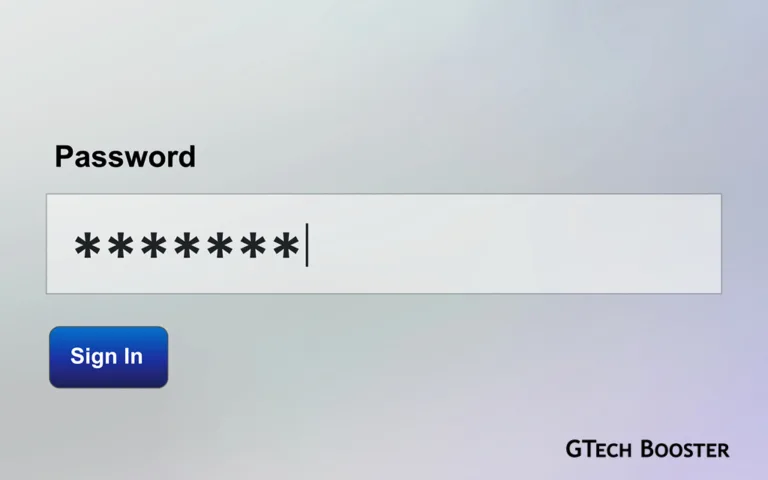
We all do it. Keeping track of dozens of complex passwords is a headache, so it’s tempting to use one “perfect” password for everything: your bank account, your email, and even a random shopping site. But in the world of cybersecurity, reusing a password is like having one master key that opens your house, your car, your safe, and your office. If you lose it once, you lose everything.
Using the same password for every account is exactly that kind of false security. It feels manageable. It feels practical. It sidesteps the genuine frustration of remembering dozens of different credentials. And it works perfectly right up until the moment it does not, at which point it does not just fail for one account. It fails for all of them, simultaneously, with consequences that can take months or years to fully resolve.
Understanding why this is so dangerous requires understanding how breaches actually happen, what attackers do with stolen credentials, and why the scale of the problem is far larger than most people appreciate.
The world is full of breached databases
The starting point for understanding password reuse risk is accepting an uncomfortable fact about the modern internet. Data breaches are not rare events that happen to careless companies. They are continuous, widespread, and affect organisations of every size and sophistication — including ones you would expect to be secure.
Some of the largest breaches on record include companies and platforms that hundreds of millions of people trusted with their credentials. Yahoo lost data on three billion accounts. LinkedIn had over 700 million records exposed. Adobe, Dropbox, MySpace, Canva, Marriott, Facebook, Twitter, Equifax; the list of major organisations that have suffered significant breaches reads like a directory of the internet itself. These are not obscure companies with negligible security. These are household names that employed security professionals and invested in protection, and they were still breached.
The credentials stolen in these breaches; usernames, email addresses, and passwords do not disappear. They circulate. They are sold on dark web marketplaces, shared in criminal forums, compiled into massive aggregated databases, and eventually distributed so widely that they become freely available to anyone who knows where to look. There are databases containing billions of username and password combinations that have been assembled from decades of accumulated breaches. Security researchers have documented collections containing over ten billion unique credential pairs.
If you have been using the internet for any meaningful length of time, there is a reasonable probability that at least one of your passwords is in one of these databases right now. You can check this yourself using legitimate services like Have I Been Pwned, which allows you to enter your email address and see which known breaches it has appeared in. Many people who do this for the first time are surprised and not pleasantly.

The chain reaction
Password reuse does not just expose individual accounts. It creates a chain reaction that can cascade through every aspect of your digital and real life. Understanding this chain is important because it illustrates why a breach of a seemingly inconsequential account can ultimately be catastrophic.
Consider a realistic sequence of events. Your credentials from a small online retailer you used years ago are included in a breach. The retailer was not a critical service — you barely remember the account. But you used your main email address and your standard password. An attacker runs those credentials against email providers and successfully logs into your email account.
Your email account is not just email. It is the master key to your digital life. Every other service you use has a password reset option that sends a link to your email address. With access to your email, an attacker does not need your passwords for anything else. They simply request password resets for your bank, your investment accounts, your social media, your cloud storage, your workplace tools. Each reset email arrives in the inbox they now control. Each account falls in turn.
From your bank account they initiate transfers. From your social media they harvest personal information, impersonate you to your contacts, or lock you out and hold the account for ransom. From your cloud storage they access years of documents, photos, and sensitive files. From your workplace tools they may be able to access your employer’s systems, creating liability that extends beyond your personal life.
The entire chain started with a breach of a minor service you barely remember using. The vulnerability at every link in that chain was the same password.
The biggest threat isn’t a hacker guessing your password; it’s a data breach. Large companies lose user data to hackers more often than we’d like to admit.
- The Scenario: A minor fitness app you haven’t used in two years gets hacked
- The Reality: Hackers now have your email and your universal password
- The Attack: They use automated scripts to try that same combination on Amazon, PayPal, Gmail, and banking portals. This is called Credential Stuffing, and it works because humans are creatures of habit.
Why “but it’s a strong password” doesn’t help
A common response to this concern is that the password being reused is a strong one — long, complex, not a dictionary word. This misses the point entirely.
Password strength is relevant when someone is trying to guess or crack your password. A strong password is much harder to crack through brute force than a weak one, and this matters when a breached database stores passwords in a form that needs to be cracked rather than read directly.
But credential stuffing does not involve cracking anything. It uses the actual password that was stolen, exactly as it was, against other services. If the attacker has your real password, not a hashed version that needs to be cracked, but the actual string of characters; then how strong or complex that password is becomes completely irrelevant. A 40-character password containing symbols, numbers, and mixed case provides zero additional protection against credential stuffing if it is the same across multiple services.
The strength of a password and the uniqueness of a password are separate properties that protect against different threats. Strength protects against cracking. Uniqueness protects against reuse attacks. You need both.
The safety first approach
Think of unique passwords as internal firewalls. If one account is compromised, the damage is contained to that single platform. By using the same password everywhere, you are essentially inviting a thief to take a guided tour of your entire digital life.
How to Fix It (Without Losing Your Mind)
You don’t need a photographic memory to stay safe. Here is the modern professional’s strategy:
1. Use a Password Manager
Tools like Bitwarden, 1Password, and tons of safe FOSS apps and software or even built-in options like iCloud Keychain generate and store complex passwords for you. You only have to remember one master password.
2. Enable Two-Factor Authentication (2FA)
Two-factor authentication deserves mention independently. Even if an attacker has your correct username and password, two-factor authentication requires them to also have access to a second factor typically a code sent to your phone or generated by an authenticator app, before they can log in. This does not make password reuse safe, but it significantly raises the bar for any account on which it is enabled. Even if a hacker gets your password, 2FA acts as a secondary deadbolt that requires a code from your phone or an app to get in.
3. Prioritize Your Big Three
If you can’t change every password today, start with your Email, Banking, and Primary Social Media. These are the keys to your identity.
Convenience is the enemy of security. Taking ten minutes to set up a password manager today could save you hundreds of hours of fraud-recovery headaches tomorrow. The practical consequences of a credential stuffing attack that succeeds because of password reuse range from annoying to life-altering. At the minor end, you spend hours changing passwords, contacting services, and recovering accounts. At the serious end, you lose money that may not be recoverable, your credit is damaged, your identity is used for fraud, your employer’s systems are compromised, and years of personal data are in the hands of strangers.
The same password for everything is not a convenience. It is a single point of failure for your entire digital life, sitting in databases you have no control over, waiting to be used by automated tools that never sleep and never stop trying.
More Information ℹ











Conversation
Login to comment.
Log In / Register