Why the thermometer gun – The science of modern screening
If you grew up before the digital age, a temperature check usually meant sitting still with a cold glass rod tucked under your armpit for three long minutes. Today, we use guns that do the job in a second. Here is the science, safety, and why this shift happened.
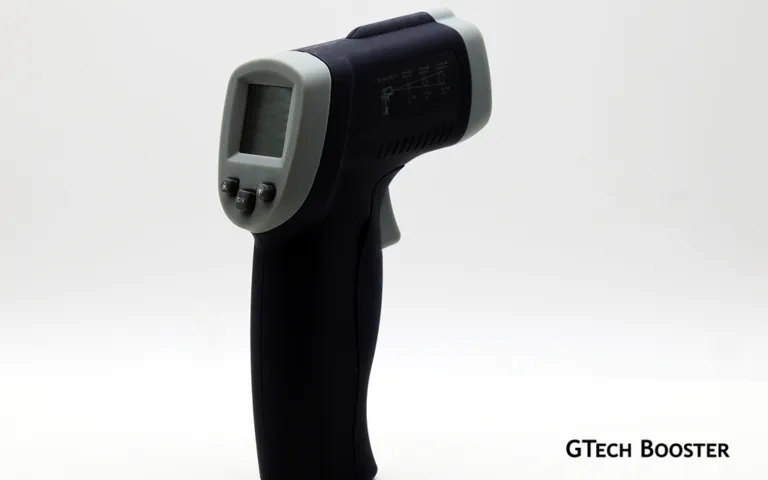
Walk through any airport, hospital entrance, school gate, or office building in the years since the pandemic and you will almost certainly have encountered it; a person pointing what looks like a small pistol at your forehead, glancing at a number, and waving you through. The non-contact infrared thermometer, colloquially known as the thermometer gun, became one of the most visible symbols of mass health screening in modern times.
Billions of people had their temperatures taken with one. Very few of them understood what was actually happening in the half-second between the trigger being pulled and the number appearing on the screen.The science behind it is elegant, the physics is centuries old, and the limitations are more significant than the widespread deployment of these devices during public health emergencies ever suggested.
The science behind it is elegant, the physics is centuries old, and the limitations are more significant than the widespread deployment of these devices during public health emergencies ever suggested.
The physics that makes it possible
Everything starts with a principle established in the nineteenth century and formalized by the German physicist Max Planck in 1900. Every object that has a temperature above absolute zero — which is to say, every object that exists in the observable universe — emits electromagnetic radiation. This radiation is not a special property of hot things. It is a universal property of all matter. The temperature of the object determines the intensity and the wavelength distribution of that radiation.
At the temperatures of everyday objects, including the human body, this radiation falls predominantly in the infrared portion of the electromagnetic spectrum — wavelengths longer than visible light, between roughly 0.7 and 1000 micrometres. This is why humans cannot see each other glowing in a dark room even though we are constantly emitting radiation. The wavelengths our bodies emit are invisible to the human eye. Infrared cameras and sensors, however, can detect them precisely.
The relationship between temperature and emitted radiation is described by the Stefan-Boltzmann law, which states that the total energy radiated per unit surface area of a body is proportional to the fourth power of its absolute temperature. In practical terms, this means that even small changes in temperature produce measurable changes in the intensity of infrared radiation. A fever of just one degree produces a detectably different infrared signature than a normal body temperature, and a well-designed infrared sensor can capture that difference.
What the thermometer gun actually measures
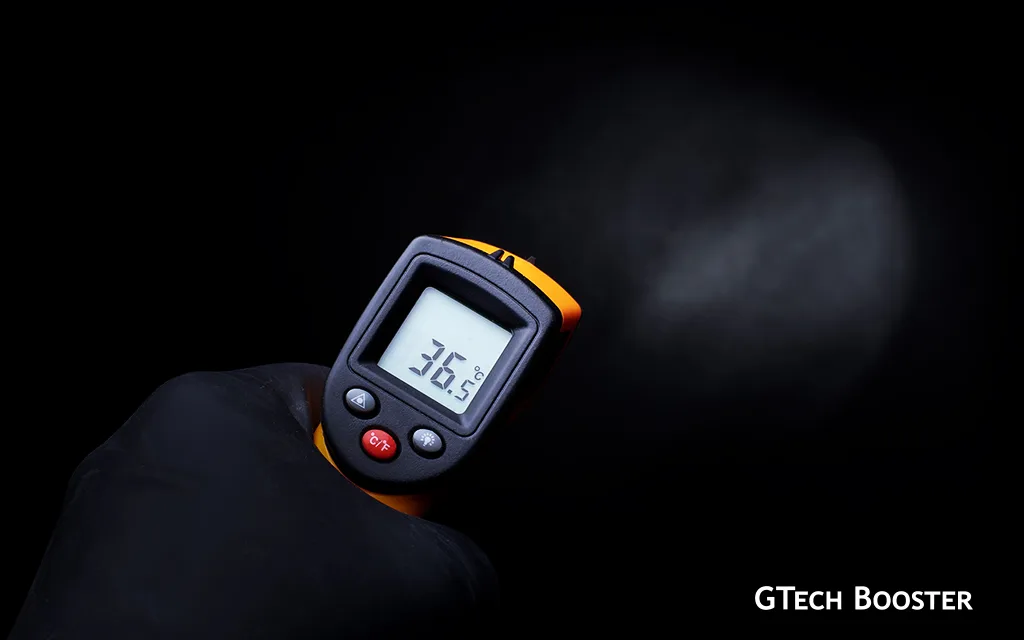
This is the first and most important nuance to understand. The thermometer gun does not measure the temperature inside your body. It does not measure your core temperature, your blood temperature, or even your skin temperature in a direct physical sense. It measures the infrared radiation emitted from the surface of the skin in the area pointed at typically the forehead, the temporal artery region, or the inner corner of the eye; and converts that measurement into an estimated temperature reading.
Inside the device, a small thermopile sensor does the work. A thermopile is an array of thermocouples, junctions of two different conductive materials that generate a small voltage when there is a temperature difference between them. When infrared radiation from the target surface strikes the thermopile, it warms the sensor slightly. The magnitude of that warming, and therefore the voltage produced, corresponds to the intensity of the incoming radiation. The device’s internal processor then applies a mathematical conversion, based on the known relationship between radiation intensity and temperature, to calculate what temperature of surface would have emitted that level of radiation.
The result is displayed in less than a second. The entire process; collection of infrared radiation, conversion to electrical signal, mathematical processing, display; happens faster than the human eye can follow.
The role of emissivity
There is a critical concept buried in this process that significantly affects accuracy, and it is one that most users of thermometer guns never think about. It is called emissivity.
Emissivity is a measure of how efficiently a surface emits infrared radiation relative to a perfect theoretical emitter called a blackbody. A perfect blackbody has an emissivity of 1.0, it emits the maximum possible radiation for its temperature.
Real surfaces have emissivities between 0 and 1. Human skin, across all ethnicities and skin tones, has a remarkably consistent and high emissivity — approximately 0.98, very close to a perfect blackbody. This is fortunate, and it is part of why infrared thermometry works reasonably well for human temperature screening.
The device assumes a fixed emissivity when converting radiation intensity to temperature. If the actual emissivity of the surface being measured is different from the assumed value; because you are measuring a metal surface, a wet surface, a surface covered in certain types of makeup, or a surface at an unusual angle, the reading will be inaccurate. For human skin measurement, the high and consistent emissivity of skin minimises this source of error. For other applications of infrared thermometry, emissivity variation is a serious challenge.
From skin temperature to core temperature; the critical gap
The fundamental challenge of using a thermometer gun for fever screening is that it measures skin surface temperature, but fever is a phenomenon of core body temperature. These two values are related but not identical, and the gap between them is where much of the controversy about thermometer gun accuracy originates.
Core body temperature — the temperature of the blood, the internal organs, and the deep tissues is regulated by the hypothalamus and maintained within a narrow range, typically 36.1°C to 37.2°C (97°F to 99°F) in healthy adults. Skin surface temperature, by contrast, is influenced by a much wider range of variables and can diverge substantially from core temperature depending on circumstances.
Ambient temperature has a significant effect. If you have just walked in from cold weather, the blood vessels in your skin constrict to conserve heat. The skin surface becomes cooler even if core temperature is normal or elevated. A thermometer gun measuring the forehead of someone who just came in from a cold environment may read lower than their actual core temperature, potentially missing a fever.
Sweating complicates matters further. Evaporation of sweat cools the skin surface. A person with a high fever who is also sweating profusely may have a forehead temperature that appears lower than expected because the sweat is actively cooling the surface being measured.
Physical activity drives blood to the muscles and skin, temporarily altering surface temperature patterns. Someone who has just been running may have an elevated forehead temperature that reflects exertion rather than fever.
Direct sunlight heats the skin surface independently of body temperature, and measurement immediately after sun exposure can produce falsely elevated readings.
The temporal artery region of the forehead, which is the most common target for thermometer guns, was chosen because it is relatively well-perfused; supplied with blood vessels that carry blood close to the surface — making it a reasonably good proxy for core temperature under controlled conditions. But the conditions of mass screening are rarely controlled.
The anatomy of the temporal artery measurement
The temporal artery runs along the side of the forehead and is one of the branches of the external carotid artery. It carries blood that has relatively recently come from the body’s core, which is why the skin above it reflects core temperature more faithfully than many other surface sites.
When a thermometer gun is aimed at the centre of the forehead, it is capturing radiation from an area that includes the temporal artery’s superficial path as well as surrounding tissue. More sophisticated temporal artery thermometers — the wand-style devices swept across the forehead — are designed specifically to maximise the area of temporal artery tissue sampled, improving the correlation with core temperature.
The inner canthus of the eye, the corner nearest the nose; is another site used for infrared temperature screening, particularly in surveillance-type thermal imaging systems. This site has been shown in some studies to correlate more reliably with core temperature than the forehead, partly because it is less exposed to environmental variation and partly because it is highly vascularised.
Thermal imaging cameras – the mass screening version
The individual thermometer gun is the personal-scale version of this technology. The large-scale version, deployed at airport checkpoints and large venue entrances during the pandemic, is the thermal imaging camera sometimes called a fever detection camera or thermal scanner.
These systems work on the same physical principles but use a two-dimensional array of infrared sensors, a focal plane array to produce a real-time thermal image of every person in the camera’s field of view simultaneously. The camera assigns a colour to each temperature value, producing the characteristic false-colour images where warmer areas appear red or yellow and cooler areas appear blue or green.
In theory, a thermal imaging system can screen dozens of people per minute without requiring any individual to stop or interact with an operator. In practice, the accuracy challenges of individual infrared thermometry are amplified at this scale. Environmental conditions affect every person being screened. People arriving from outdoors have variable skin temperatures.
Makeup, glasses, and headwear affect readings. And the critical question of what temperature threshold constitutes a screening failure becomes enormously consequential when applied to crowds too low a threshold produces overwhelming numbers of false positives, while too high a threshold misses genuine fevers.
The WHO and various public health bodies that reviewed thermal imaging for the past pandemic screening concluded that while the technology could identify individuals with elevated skin temperature, its sensitivity for detecting fever, and therefore its usefulness as a pandemic screening tool specifically was limited by the many variables that separate skin surface temperature from core temperature and by the asymptomatic transmission patterns of that particular virus.
Accuracy, validation, and what the numbers actually mean
Clinical-grade infrared thermometers, used correctly under appropriate conditions, can achieve accuracy within ±0.2°C to ±0.3°C of a reference measurement. Consumer-grade devices vary more widely. The ISO standard for clinical thermometers (ISO 80601-2-56) sets requirements for accuracy and repeatability that distinguish medical-grade instruments from lower-quality alternatives.
In the mass deployment that occurred during the pandemic, many devices in use had not been validated to clinical standards. Studies conducted during this period found considerable variation in accuracy across devices and operators. A 2020 review published in the Journal of Travel Medicine found that thermal scanners at airports had sensitivity rates for fever detection ranging from as low as 4 percent to around 80 percent depending on the study, the equipment, the conditions, and the reference method used for comparison.
The low end of those figures is striking. A device detecting fever in as few as four percent of people who actually have a fever is, from a purely clinical standpoint, almost useless as a screening tool. The wide range reflects the enormous variability in how these systems were deployed rather than an inherent deficiency in the underlying technology — proper calibration, controlled environments, appropriate measurement sites, and trained operators produce significantly better results than hastily implemented mass screening at building entrances.
Proper technique and the variables operators control
The accuracy of a thermometer gun reading is not solely a function of the device. Technique matters considerably.
Distance is critical. Every device is calibrated for a specific measurement distance; typically between 3 and 15 centimetres for handheld models. Measuring from too far away means the sensor captures radiation from a larger area that includes ambient air and surrounding tissue, diluting the signal from the target site. Measuring from too close concentrates the reading on a very small area that may not be representative. Reading the device’s specification and maintaining the correct distance is not optional for accurate results.
Waiting time after environmental exposure is routinely ignored in mass screening but genuinely important. Allowing subjects who have come from cold environments to acclimatise for 10 to 15 minutes before measurement significantly improves the correlation between forehead temperature and core temperature.
Avoiding measurement over sweat, hair, or cosmetics improves accuracy. The lateral forehead, cleared of hair, is a better site than the centre in some protocols. Calibration of the device itself requires periodic verification against a known reference standard. Devices drift over time, and a device that was accurate when new may produce systematically biased readings months later without the operator’s knowledge. Ambient temperature of the device itself matters. A thermometer gun that has been sitting in a cold car will produce inaccurate readings until it has equilibrated to room temperature.
The broader role beyond pandemic screening
The thermometer gun’s high-profile deployment during the pandemic somewhat obscures its longer history and wider legitimate applications. Non-contact infrared thermometry has been used in clinical and industrial settings for decades.
In neonatal and paediatric care, non-contact measurement is valuable because it avoids disturbing sleeping infants and eliminates the distress associated with rectal or ear thermometry in young children. Forehead infrared thermometers are standard equipment in paediatric wards globally.
In industrial settings, infrared thermometry and thermal imaging are essential tools for monitoring equipment temperature, identifying overheating components in electrical systems, detecting heat loss in building insulation, and quality control in manufacturing processes where surface temperature is a critical variable.
In food safety, infrared thermometers allow rapid non-contact measurement of food surface temperatures, supporting HACCP compliance without requiring contact that could cause contamination.
In veterinary medicine, non-contact infrared thermometry allows temperature screening of animals without the stress of contact measurement, important for wild animals, large livestock, and animals in pain.
The pandemic elevated public awareness of a technology that had been quietly essential in many fields for a long time.
The Mechanics of it
1. It Listens, It doesn’t Shoot
A common misconception is that the gun shoots a beam into your brain. In reality, it is a passive receiver.
- Every human body emits infrared radiation (heat)
- When the trigger is pulled, a lens captures this heat and focuses it onto a sensor called a thermopile.
- The sensor converts that heat into an electrical signal, which the device translates into a temperature.
- So it doesn’t put anything into you; it only reads what you are already giving off.
2. Speed vs. Contact
The old-school armpit method relied on conduction, requiring the thermometer to physically heat up to match your body. This was slow and required constant sterilization
- The Gun”Advantage
Because it uses light-speed sensors, it provides a reading in less than a second from 3–5 cm away. It is the ultimate tool for hygienic, high-speed screening in a crowded world.
3. The Accuracy Trade-Off
The gun is a masterpiece of convenience, but it has a weakness: environment.
- It measures surface skin temperature, not internal core temperature.
- Sweat, cold wind, or even heavy makeup can trick” the sensor into a lower reading. For the best result, the sensor needs a clean, dry forehead at room temperature.
What the thermometer gun cannot tell you
For all its convenience and the genuine science behind it, the thermometer gun has hard limits that are worth stating clearly.
It cannot tell you whether a person has a specific infectious disease. A normal temperature does not mean a person is not infectious, many diseases, are transmitted by people who are pre-symptomatic or asymptomatic and have entirely normal temperatures at the time of screening.
It cannot replace clinical thermometry for diagnostic purposes. A fever detected by a thermometer gun is a starting point, not a diagnosis. Confirmation with a calibrated clinical thermometer, oral, rectal, tympanic, or axillary is required before any medical decision is made on the basis of the reading.
It cannot account for antipyretic medication. A person who has taken paracetamol or ibuprofen to manage a fever may pass a thermometer gun screening with a normal reading while remaining infectious and genuinely unwell.
And it cannot overcome physics. If the conditions of measurement; ambient temperature, recent physical activity, environmental exposure create a gap between skin surface temperature and core temperature, no amount of technological sophistication in the device will bridge that gap.
The thermometer gun is a genuine scientific instrument based on well-established physics, capable of real accuracy under appropriate conditions, and useful in a wide range of legitimate applications. It is also a tool whose limitations were consistently underestimated during the largest mass deployment in its history, leading to widespread use in conditions that substantially degraded its performance and in a context; detecting a respiratory virus with high rates of asymptomatic transmission, where even perfect temperature screening would have been insufficient.
The era of the glass rod is over, and for good reason. We traded the three-minute armpit wait for a one-second click because the world moved on. Understanding what it actually measures, what affects that measurement, and where the gap lies between what it reads and what clinicians actually need to know is not a reason to dismiss it. It is the foundation for using it correctly which is, in the end, what good science has always required of its instruments.
More Information ℹ













Conversation
Login to comment.
Log In / Register