
When robots start to think
Africa views machine "thinking" not as a distant Western sci-fi horizon, but as an extension of millennia-old communal wisdom systems now fused with silicon, demanding decolonized data and sovereignty to avoid repeating colonial extractivism.
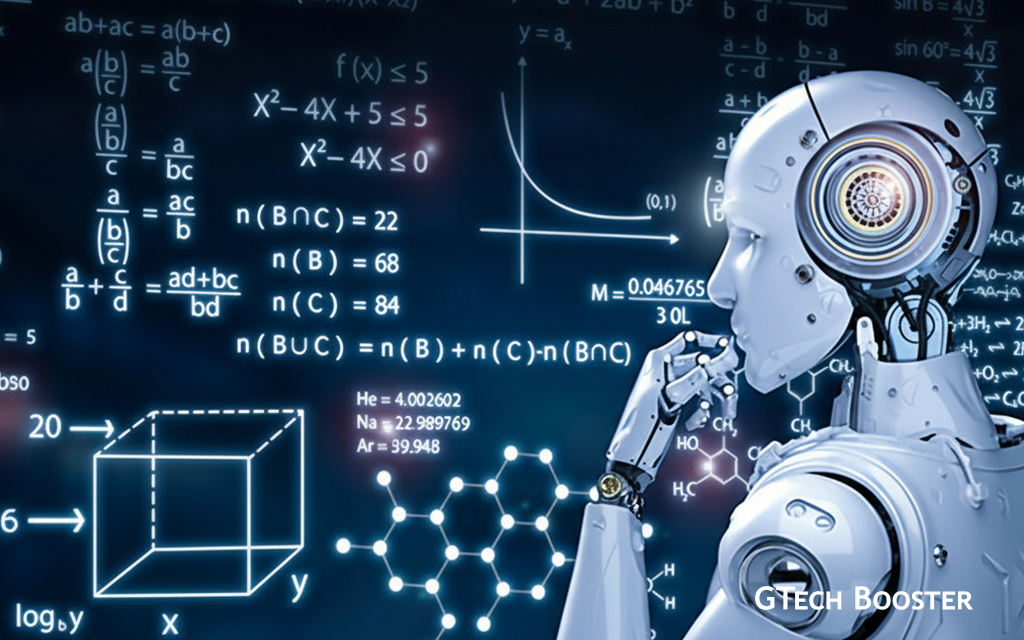
Look closely at this image. A robot standing in deep thought, surrounded by glowing equations and scientific symbols. It’s more than just futuristic art. It’s a reflection of the world we’re stepping into.
For a long time, machines only followed commands. They were built to calculate, lift, assemble, and repeat. But today, artificial intelligence is pushing beyond that. It’s no longer just about speed or automation. It’s about understanding, learning, and even reasoning.
The math and chemistry symbols in the background remind us of how far human knowledge has come. What took us centuries to figure out, AI can process in seconds. From solving complex problems to finding new solutions in medicine, energy, and science, machines are becoming more than tools, they’re turning into partners.
But here’s the real question: when a machine starts to “think,” what does that mean for us? Will AI remain a helper that pushes humanity forward, or will it challenge us to redefine intelligence altogether?

The dawn of machines “thinking” rewrites our continent’s overlooked legacy in computation, from ancient divination systems rooted in binary logic to today’s AI innovators challenging global erasure.
Ancestral Roots
African divination practices, like Ifá in Yoruba tradition, harnessed data patterns and binary choices millennia before Turing’s 1950 query on machine thought—mirroring modern algorithms in their mathematical precision. Scholars link these spiritual technologies directly to computer science foundations, proving Africa’s ingenuity predates Western narratives.
Modern Trailblazers
Pioneers like Senegal’s Moustapha Cisse, who launched Google’s AI lab in Ghana in 2018, Herman Kojo Chinery-Hesse and Tunisia’s Karim Beguir with InstaDeep in 2014, build AI solving African realities—from Nairobi traffic to food security via Tambua Health. Groups like Black in AI (founded 2017 by Cisse, Timnit Gebru, and Rediet Abebe) and Deep Learning Indaba amplify Black and African voices, countering exclusion in datasets and indices.
Ethical Imperatives
Machines mimic thought today through tools like AlphaGo, but true sentience demands consciousness Africa uniquely questions—embodied in communal ubuntu philosophy over isolated silicon cognition. As coltan from Congo powers these systems amid exploitation, African AI pushes equitable futures: disease prevention, crime reduction, and culturally attuned models in Wolof or Swahili, not just Western biases. No fixed timeline exists; progress accelerates via homegrown ecosystems, urging investment over dependency.

Pre-Colonial Foundations
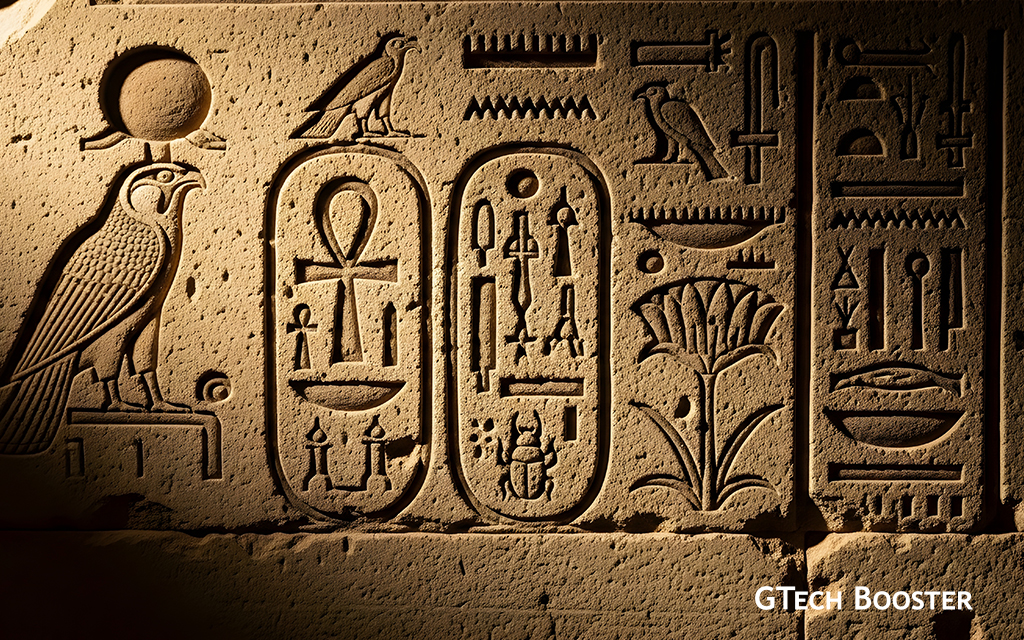
Yoruba Ifá divination, operational since at least 500 BCE, employs a 256-pattern binary system—eerily akin to Leibniz’s I Ching inspiration for binary code—where priests (babalawo) process probabilistic “data” from palm nuts to divine outcomes, embodying proto-AI logic without hardware. Dogon cosmology in Mali mapped Sirius B’s orbit centuries before telescopes confirmed it, showcasing pattern recognition rivaling neural nets, while Ethiopian Ge’ez script algorithms preserved knowledge in fractal-like structures. These aren’t metaphors; they’re verifiable mathematical systems predating Turing by ages, yet erased from global AI histories dominated by 1950s Dartmouth
Post-Independence Surge
Africa’s AI ignition sparked in the 2010s: Tunisia’s InstaDeep (2014) pioneered reinforcement learning for protein folding, acquired by BioNivia in 2023; Kenya’s BRCK and Ushahidi layered ML on crisis mapping post-2007 elections; Nigeria’s Data Science Nigeria trained 10,000+ in AI since 2016 amid blackouts. Ghana’s Google AI lab (2018, led by Moustapha Cissé) birthed Masakhane for African language NLP, translating 200M+ sentences in low-resource tongues like isiZulu. South Africa’s AI for climate models at Stellenbosch tackles droughts, while Rwanda’s Zipline drones use predictive AI for blood deliveries, logging 1M+ flights by 2025.
Philosophical Reckoning
Ubuntu—”I am because we are”—challenges Cartesian individualism baked into Western AI, insisting true thought emerges from relational networks, not isolated nodes; African ethicists like those at Deep Learning Indaba argue sentience requires embodiment in community and ecology, not disembodied LLMs trained on scraped Global North data that biases against dark skin or pidgin English. Congo’s coltan mines fuel GPUs yet yield no local compute clusters, echoing how 90% of AI papers ignore Africa despite 20% of global youth population. Progress metrics: 50+ African AI startups raised $1B+ by 2025, but “thinking machines” arrive when datasets reflect oral histories, not just Oxford commas—potentially by 2030 via federated learning hubs in Lagos and Cape Town.
The future of knowledge won’t just be human anymore. It will be shared with the very machines we once built. Africa views machine “thinking” not as a distant Western sci-fi horizon, but as an extension of millennia-old communal wisdom systems now fused with silicon, demanding decolonized data and sovereignty to avoid repeating colonial extractivism.
More Information ℹ

Focal Point














Be polite and constructive with your point.